


Walk into any pet shop in Karachi or Lahore, or scroll through a delivery app, and you will find a wall of cat litter options. Clumping, natural, crystal, scented, unscented, imported, budget. For a new cat owner it is confusing, and even experienced owners often stick with one brand without knowing whether something else would suit their home better.
The right litter keeps your home fresh, your cat comfortable and your cleaning routine simple. The wrong one can leave a smell in the house, track dust across the floor or even make your cat refuse the box. This guide explains the three main types of cat litter available in Pakistan, how each one performs in local conditions, and how to choose the right one for your home.
Why Litter Choice Matters More in Pakistan
Most cat litter advice online is written for cooler countries. Pakistani homes face different challenges.
Heat and humidity. Karachi’s humid summers and the extreme heat of Lahore, Multan and Hyderabad speed up the breakdown of waste, so odour builds faster than in cooler climates.
Compact living spaces. Many cat owners live in flats where the litter box sits close to bedrooms, kitchens or lounges. Smell control is not a luxury here, it is essential.
Dust and power cuts. Homes already deal with outdoor dust, and during load-shedding fans and exhausts stop running. A litter that locks in odour and stays low on dust makes a real difference.
Budget and availability. Most litter in Pakistan is imported, so prices shift with the rupee. Owners need something that performs well and is easy to reorder.
With these conditions in mind, let us look at the three main types.
Clumping Litter
Clumping litter is the most popular type in Pakistan. It is usually made from bentonite clay, a natural mineral that swells and binds together when it gets wet.
How it works. When your cat urinates, the litter forms a firm clump around the moisture. You scoop out the clump along with any solid waste, and the rest of the litter stays clean and dry.
Pros:
-
Easy daily cleaning, since you only remove what is used
-
Good odour control when scooped regularly
-
Widely available and usually the most affordable option
-
A sandy texture that most cats accept naturally
Cons:
-
Lower-quality clay litters can be dusty
-
Heavier to carry than other types
-
Not biodegradable, so used litter goes to household waste
Best for: Most households, especially first-time owners and homes with one or two cats, as long as you can scoop once or twice a day.
Natural Litter
Natural litter is made from plant-based or naturally sourced materials, such as tofu (soybean fibre), corn, wheat, wood or other natural ingredients. Some natural litters clump, while others absorb moisture without forming clumps.
How it works. The natural fibres soak up moisture quickly and trap odour inside the material. Many natural litters are lighter than clay and produce less dust.
Pros:
-
Gentler on cats with sensitive paws or noses
-
Often low dust, which is better for cats and people with allergies
-
Many are biodegradable, and some can be composted
-
Free from harsh synthetic chemicals
Cons:
-
Usually priced higher than basic clay litter
-
Some cats need time to adjust to a new texture
-
Quality varies a lot between brands
Best for: Owners who want a cleaner, gentler option for their cat and home, households with allergy concerns, and anyone who prefers natural materials over synthetic ones.
Crystal (Silica Gel) Litter
Crystal litter is made from silica gel, the same material found in the small “do not eat” packets that come with new shoes and electronics. It comes as small, translucent crystals or beads.
How it works. Silica crystals absorb urine directly into their structure and trap the moisture and smell inside. Crystal litter does not clump. You scoop out solid waste and stir the crystals so they absorb evenly.
Pros:
-
Excellent at absorbing urine and controlling its smell
-
Very low dust when the crystals are larger
-
One bag can last longer than the same volume of clay
-
Lightweight and easy to carry
Cons:
-
Usually the most expensive type per bag
-
Less effective at covering solid waste odour
-
Some cats dislike the hard, crunchy texture
-
Not ideal for multi-cat homes, as crystals saturate faster
Best for: Single-cat households that want long-lasting urine odour control and do not mind paying more.
Quick Comparison
|
Feature |
Clumping |
Natural |
Crystal |
|
Odour control |
Good with daily scooping |
Good to very good |
Very good for urine |
|
Dust level |
Low to medium |
Low |
Very low |
|
Weight |
Heavy |
Light |
Light |
|
Eco-friendly |
No |
Often yes |
No |
|
Price in Pakistan |
Low to mid |
Mid |
Mid to high |
|
Cat acceptance |
Very high |
High |
Mixed |
How to Choose the Right Litter for Your Home
Ask yourself these four questions before you buy.
-
How many cats do you have? Multi-cat homes do best with clumping or absorbent natural litters that handle frequent use.
-
How often can you clean? If you can scoop daily, clumping litter works well. If you need longer gaps, a highly absorbent litter is a safer choice.
-
Does anyone at home have allergies? Choose a low-dust natural or crystal litter.
-
What does your cat prefer? Cats are fussy. If your cat avoids the box after a switch, change back or mix the old and new litter over about a week.
Where JASON Fits In
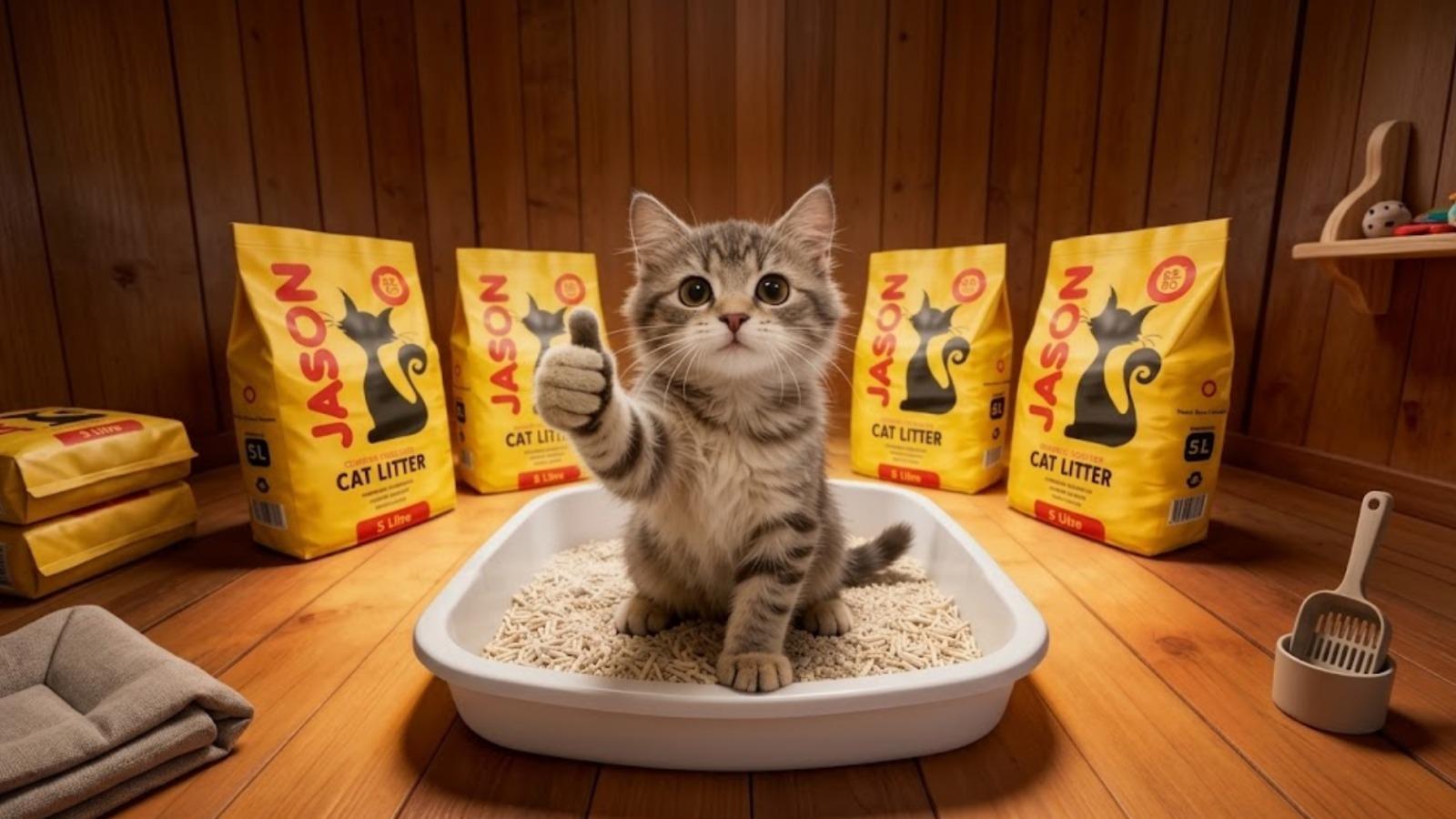
JASON Cat Litter is made from a purely natural material with a highly absorbent formula that helps slow the development of unpleasant odours. That makes it well suited to Pakistan’s hot and humid conditions, where smell is the biggest complaint cat owners have.
JASON is also designed not to stick to your cat’s paws or coat, so less litter gets tracked through your home. It is available in 5 litre, 8 litre and 16 litre packs, so single-cat homes and multi-cat households can both choose a size that fits their routine and budget.
Frequently Asked Questions
1. Which type of cat litter is best for Pakistan’s weather?
A highly absorbent litter works best in hot and humid conditions, because it locks in moisture before odour builds. Clumping and natural litters both perform well if you scoop daily. Keep the box in a ventilated spot during summer.
2. Is natural cat litter better than clumping litter?
Neither is better for every home. Clumping clay litter is affordable and easy to scoop, while natural litter is usually lower in dust, gentler on cats and often biodegradable. Choose based on your cat’s comfort, your budget and how much dust matters to you.
3. Is crystal cat litter safe for cats?
Silica gel crystal litter is generally considered safe for adult cats when used as directed. Supervise kittens, as some may try to eat litter. If your cat dislikes the texture, switch to a softer clumping or natural litter.
4. How often should I change cat litter completely?
For one cat, scoop daily and replace all the litter every two to three weeks. Multi-cat homes need a full change more often. Wash the box with mild soap and water during each full change.
5. How do I switch my cat to a new type of litter?
Switch gradually over about a week. Start by mixing a small amount of the new litter into the old, then increase the share each day. Sudden changes can make cats avoid the box.
Conclusion: Choose the Litter That Fits Your Home
Clumping, natural and crystal litters each have their strengths. Clumping litter is affordable and easy to manage, natural litter is gentle and low dust, and crystal litter offers strong urine odour control at a higher price. The best choice depends on your cat, your space and your daily routine.
For Pakistani homes that need dependable odour control, low tracking and easy availability, JASON Cat Litter is a smart place to start. Its natural, highly absorbent formula keeps your home fresh through the heat, and its 5, 8 and 16 litre packs make it easy to find the right fit. Try JASON today and give your cat a cleaner, more comfortable litter box.
