

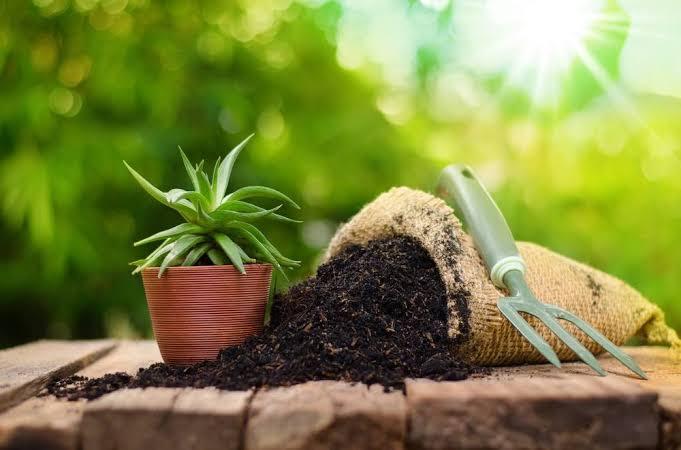

IMARC Group's report, "Organic Manure Manufacturing Plant Project Report 2026: Industry Trends, Plant Setup, Machinery, Raw Materials, Investment Opportunities, Cost and Revenue", offers a comprehensive guide for establishing a manufacturing plant. The organic manure manufacturing plant setup cost report offers insights into the manufacturing process, financials, capital investment, expenses, ROI, and more for informed business decisions.
Organic Manure Manufacturing Plant Project Report Summary: -
- Comprehensive guide for setting up organic manure manufacturing plant.
- Covers market trends and industry outlook for 2026.
- Detailed project setup, including unit operations and processes.
- Raw material and utility requirements.
- Infrastructure and machinery specifications.
- Workforce and staffing requirements.
- Packaging and transportation details.
- Financial aspects: investment opportunities, cost analysis, and revenue projections.
In addition to covering operational aspects, the report offers detailed insights into the organic manure manufacturing plant process and project economics.
- Detailed insights into the organic manure manufacturing plant
- In-depth project economics and financial metrics.
- Covers capital investments and project funding.
- Analysis of operating expenses and income projections.
- Breakdown of fixed and variable costs, direct and indirect expenses.
- Evaluation of ROI (Return on Investment) and NPV (Net Present Value).
- Profit and Loss account analysis.
- Comprehensive financial analysis for decision-making.
- Provides a roadmap for successfully establishing an organic manure manufacturing plant.
Request for a Sample Report: https://www.imarcgroup.com/organic-manure-manufacturing-plant-project-report/requestsample
What is organic manure?
Organic manure is a natural fertilizer derived from decomposed plant residues, animal dung, agricultural waste, compost, and other biodegradable materials. It enriches the soil with essential nutrients, including nitrogen, phosphorus, and potassium, while improving soil structure, moisture retention, and microbial activity. Common types of organic manure include farmyard manure, compost, vermicompost, green manure, and poultry manure. Unlike synthetic fertilizers, organic manure releases nutrients gradually, supporting sustained plant growth and reducing nutrient leaching. It also enhances soil fertility, promotes beneficial microbial populations, and contributes to long-term agricultural productivity. Organic manure is widely used in the cultivation of fruits, vegetables, cereals, pulses, and ornamental plants. It is increasingly incorporated into sustainable farming practices, including organic agriculture and integrated nutrient management. Additionally, converting agricultural residues and organic waste into manure supports waste recycling and reduces environmental pollution. Growing awareness of soil degradation and sustainable food production is encouraging farmers, agricultural enterprises, and horticultural businesses to adopt organic manure as an effective soil amendment.
Market Trends and Drivers:
The organic manure market is primarily driven by the growing adoption of sustainable agricultural practices, increasing demand for organically produced food, and rising awareness of soil health. Farmers are increasingly incorporating organic manure into cultivation practices to improve soil fertility, enhance nutrient availability, and reduce dependence on chemical fertilizers. Government initiatives promoting organic farming, regenerative agriculture, and environmentally responsible waste management are further supporting market expansion. Additionally, the increasing availability of composting facilities and commercial vermicompost production units is improving product accessibility across agricultural regions.
Growing concerns regarding soil degradation, declining organic matter, and the environmental consequences of excessive chemical fertilizer use are encouraging the transition toward natural soil amendments. North America holds the largest share of the organic manure market, accounting for over 30% of the market share, supported by increasing interest in organic food production, established sustainable farming practices, and growing awareness of soil conservation. Furthermore, advancements in organic waste processing and manure formulation are improving product quality and nutrient consistency. The expansion of urban gardening, landscaping, and horticulture is also creating additional demand. Together, these factors are strengthening the adoption of organic manure across commercial farming and residential gardening applications.
Organic Manure Manufacturing Business Plan and Project Cost Analysis
Developing a comprehensive organic manure manufacturing business plan requires a detailed assessment of production capacity, plant location, raw material availability, machinery, infrastructure, utilities, workforce, and financial projections. According to the IMARC Group report, the proposed organic manure manufacturing plant is designed with an annual production capacity of 10,000 metric tons, supporting efficient production while maintaining operational flexibility. The manufacturing process involves composting, fermentation, drying, screening, and granulation, using raw materials such as animal dung, crop residues, and microbial cultures. The project cost analysis covers land acquisition, site development, civil construction, machinery installation, packaging, transportation, and other operational requirements. A detailed feasibility study also evaluates capital expenditure (CapEx), operating expenditure (OpEx), project funding, income and expenditure projections, taxation, depreciation, and product pricing. These financial assessments help investors determine the investment requirements, break-even point, return on investment (ROI), net present value (NPV), and long-term commercial viability of establishing an organic manure production facility.
Organic Manure Plant Investment, Operating Costs, and Profitability Forecast
The organic manure plant cost structure is primarily influenced by raw material procurement, utilities, labour, maintenance, packaging, and transportation. As outlined in the IMARC Group report, raw materials, particularly animal dung, account for approximately 30–40% of total operating expenditure, while utilities contribute around 10–15% of OpEx. Capital expenditure includes land and site development, civil works, machinery, and other initial investment requirements, with machinery representing the largest portion of total capital expenditure. The financial analysis incorporates fixed and variable costs, production capacity utilization, selling prices, and projected revenues to assess the profitability of the proposed facility. Under normal operating conditions, the project demonstrates gross profit margins of 40–55% and net profit margins of 20–30%. Evaluating these financial indicators alongside cash flow projections, payback period, and sensitivity analysis enables investors to assess cost efficiency, manage financial risks, and develop a sustainable organic manure manufacturing business.
Key Aspects Required for Setting Up an Organic Manure Manufacturing Plant
Detailed Process Flow:
- Product Overview: Comprehensive description of the organic manure product and its characteristics.
- Unit Operations Involved: Step-by-step breakdown of the various operations in the production process.
- Mass Balance and Raw Material Requirements: Calculations for material inputs and outputs, along with required quantities of raw materials.
- Quality Assurance Criteria: Standards and procedures to ensure the quality of the final product.
- Technical Tests: Essential tests and evaluations to maintain product consistency and compliance.
Ask Analyst for Customization: https://www.imarcgroup.com/request?type=report&id=19393&flag=C
Customization Options Available:
- Plant Location: Selection of optimal location for the plant.
- Plant Capacity: Customization based on desired production capacity.
- Machinery: Choice between automatic, semi-automatic, or manual machinery.
- List of Machinery Providers: Identification of suitable machinery suppliers.
Key Questions Addressed in This Report:
- How has the organic manure market performed so far and how will it perform in the coming years?
- What is the market segmentation of the global organic manure market?
- What is the regional breakup of the global organic manure market?
- What are the price trends of various feedstocks in the organic manure industry?
- What is the structure of the organic manure industry and who are the key players?
- What are the various unit operations involved in an organic manure manufacturing plant?
- What is the total size of land required for setting up an organic manure manufacturing plant?
- What is the layout of an organic manure manufacturing plant?
- What are the machinery requirements for setting up an organic manure manufacturing plant?
- What are the raw material requirements for setting up an organic manure manufacturing plant?
- And more...
How IMARC Can Help?
IMARC Group is a global management consulting firm that helps the world's most ambitious changemakers to create a lasting impact. The company provide a comprehensive suite of market entry and expansion services. IMARC offerings include thorough market assessment, feasibility studies, company incorporation assistance, factory setup support, regulatory approvals and licensing navigation, branding, marketing and sales strategies, competitive landscape and benchmarking analyses, pricing and cost research, and procurement research.
Services:
- Plant Setup
- Factoring Auditing
- Regulatory Approvals, and Licensing
- Company Incorporation
- Incubation Services
- Recruitment Services
- Marketing and Sales
Contact Us:
IMARC Group
134 N 4th St. Brooklyn, NY 11249, USA
Email: [email protected]
Tel No:(D) +91 120 433 0800 / 7827100593
United States: +1-201971-6302
