

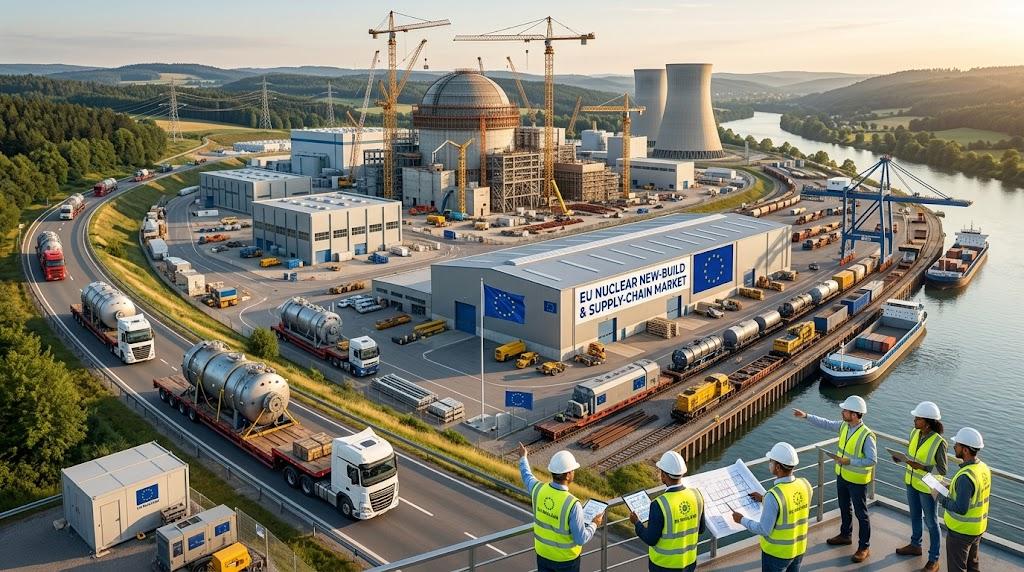
EU Nuclear New-Build & Supply-Chain Market: Growth Drivers and Future Outlook

The Future of European Nuclear Energy: Policy, Technology and Supply-Chain Priorities
Europe's energy transition requires a reliable electricity system capable of serving households, transport, digital infrastructure and industrial production. Wind and solar generation are expanding, but their variable output increases the importance of flexibility, networks, storage and firm low-carbon resources. Nuclear power is part of this discussion because reactors can generate electricity independently of weather conditions and operate over long periods. National choices remain different, reflecting public opinion, existing assets, policy priorities and access to alternative resources. The EU Nuclear New-Build & Supply-Chain Market is developing within this wider debate about energy security, climate targets and industrial competitiveness.
Policy frameworks influence whether nuclear proposals become actual projects. Governments establish energy strategies, define the role of nuclear generation and determine the rules for public support. Regulators independently assess safety, environmental protection and security. Utilities evaluate system needs, commercial risks and available technologies. Local authorities and communities consider land use, infrastructure, employment and emergency preparedness. These responsibilities must be coordinated without compromising regulatory independence. Policy stability is particularly important because nuclear projects have long development cycles. Frequent changes to eligibility rules, revenue mechanisms or political priorities can weaken investment confidence and interrupt supplier planning.
Nuclear new-build also intersects with Europe's industrial decarbonisation agenda. Reliable electricity can support electrification in chemicals, metals, refining, transport and other energy-intensive sectors. Some reactor concepts may provide heat or steam for industrial processes, although site integration and technical feasibility must be assessed individually. Data centres and other high-availability users may also value firm power, but commercial arrangements and grid constraints will determine whether direct supply is practical. These potential applications broaden the stakeholder base beyond traditional utilities and create opportunities for engineering, energy services and infrastructure companies.
Environmental and lifecycle responsibilities must be addressed from the beginning. Project planning includes land and water impacts, construction emissions, radioactive waste management, spent fuel arrangements and eventual decommissioning. Transparent plans help regulators and communities evaluate long-term obligations. Supply-chain companies contribute through material efficiency, waste minimisation, responsible sourcing and durable equipment design. Digital monitoring can improve maintenance planning and help operators understand asset condition. Cybersecurity and physical protection are essential because connected systems must remain dependable throughout decades of operation. Responsible lifecycle management is therefore a technical, commercial and social requirement, not an afterthought.
Cross-border cooperation can strengthen Europe's nuclear capabilities. Shared research, component standards, training initiatives and collaborative regulatory work may reduce duplication and support consistent quality. However, differences in national law, reactor designs and procurement systems continue to shape project execution. Suppliers operating internationally must understand export controls, local content expectations, certification rules and contract practices in each jurisdiction. Partnerships between established nuclear companies and new entrants can transfer expertise while expanding industrial capacity. Cooperation is most effective when responsibilities are explicit and technical information is exchanged through secure, controlled processes.
The EU Nuclear New-Build & Supply-Chain Industry outlook will be shaped by policy credibility, project execution and the ability to maintain public trust. Market participants should follow national energy plans, regulatory milestones, procurement announcements and evidence of industrial investment. Companies can prepare by strengthening safety culture, workforce capabilities, supplier qualification and environmental reporting. Nuclear power will not provide a single solution for every European market, but well-governed projects may contribute to diversified low-carbon electricity systems.
Durable opportunity depends on measurable progress, responsible lifecycle planning and consistent delivery standards. Public communication should explain both benefits and trade-offs in accessible terms, including costs, waste responsibilities, safety oversight and construction uncertainty. Independent evidence and meaningful consultation can improve decision quality. For suppliers, transparent standards and stable procurement pipelines make it easier to invest in facilities, people and long-term technical partnerships across several European countries.
