

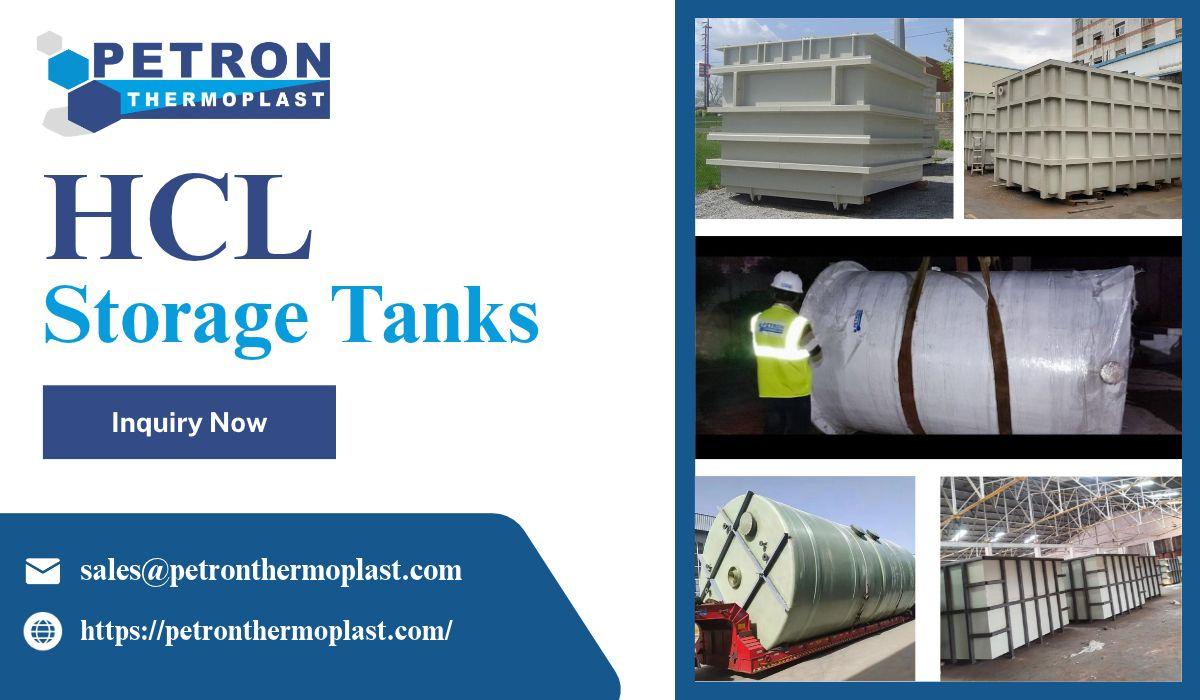

HCL Storage Tank Fabrication is an important requirement for industries that handle hydrochloric acid in their daily operations. Chemical processing plants, water treatment facilities, metal finishing units and manufacturing industries require suitable storage arrangements to manage corrosive chemicals safely. A properly designed HCL storage tank supports organized chemical storage, transfer and process operations.
For large industrial facilities, purchasing tanks in bulk requires careful planning. Buyers must consider tank capacity, material compatibility, fabrication quality, and installation space and connection arrangements. Choosing an experienced HCL Storage Tank Manufacturer helps businesses coordinate product specifications and manage project-based procurement.
Petron Thermoplast offers industrial thermoplastic tank solutions for customized chemical storage requirements, including project specifications and bulk order enquiries.
What Is an HCL Storage Tank?
An HCL Storage Tank is a specially designed container used for storing hydrochloric acid in industrial facilities. Hydrochloric acid is a corrosive chemical used in several manufacturing and processing applications. Therefore, the storage tank must be manufactured using materials and construction methods suitable for the intended chemical service.
These tanks can be designed in different capacities and configurations depending on the facility's requirements. They may include inlet and outlet connections, drain arrangements, inspection openings, level indicators and other accessories. The complete design should consider the chemical concentration, operating temperature, storage duration, tank capacity and site conditions.
Importance of Proper HCL Storage Tank Fabrication
Hydrochloric acid requires careful handling because unsuitable storage materials or poorly designed connections can create leakage and maintenance problems.
Professional tank fabrication helps address important requirements such as:
- Material Compatibility: Selecting a tank material suitable for the actual hydrochloric acid concentration and operating temperature.
- Structural Design: Planning the tank body, bottom, roof and support arrangement according to capacity and installation conditions.
- Leak Prevention: Using appropriate fabrication procedures and suitable connections to minimize leakage risks.
- Operational Convenience: Providing suitable access points, inspection openings and level monitoring arrangements.
- Installation Planning: Designing the tank around available site space, foundation conditions and connected pipelines.
- Maintenance Access: Including suitable arrangements for inspection and cleaning.
Material Selection for Hydrochloric Acid Storage Tanks
Material selection is one of the most critical decisions in HCL tank fabrication. Not every plastic material is suitable for every hydrochloric acid application. Compatibility depends on concentration, temperature, exposure duration, mechanical stress and other operating conditions.
1. PP HCL Storage Tanks
Polypropylene (PP) is used in selected industrial chemical storage applications. It offers useful chemical resistance and can be fabricated into different tank shapes and sizes.
PP may be considered for certain hydrochloric acid storage requirements after verifying the material's suitability for the actual service conditions.
2. PPH HCL Storage Tanks
Polypropylene Homopolymer (PPH) is another thermoplastic material used in industrial tank fabrication. It can be considered for suitable chemical processing and storage applications.
PPH tank design should account for the required capacity, wall construction, operating temperature and mechanical loading.
3. HDPE Chemical Storage Tanks
High-Density Polyethylene (HDPE) is used in various industrial liquid storage applications. It may be evaluated for specific hydrochloric acid services, subject to compatibility verification and appropriate tank design.
4. PVDF Storage Tanks
PVDF is a high-performance fluoropolymer considered for demanding chemical applications. It may be appropriate for selected corrosive environments where its chemical and thermal properties meet the process requirements.
The correct material must be selected using reliable compatibility data rather than general material descriptions.
Types of HCL Storage Tanks for Industrial Projects
Industrial facilities have different storage capacities and installation layouts. Tank configuration can be customized according to site conditions and process requirements.
|
Tank Type |
Typical Application |
|
Vertical HCL Storage Tank |
Industrial facilities with limited floor space |
|
Horizontal HCL Storage Tank |
Installations requiring a horizontal arrangement |
|
Cylindrical Storage Tank |
General industrial chemical storage |
|
Rectangular Chemical Tank |
Locations with specific space requirements |
|
Customized HCL Tank |
Project-specific storage and process requirements |
Important Design Features of Industrial HCL Storage Tanks
A well-designed tank should include suitable features for safe operation and convenient maintenance.
1. Customized Tank Capacity
Tank capacity should be determined by chemical consumption, delivery frequency, storage duration and available installation space. The working volume and necessary freeboard must be considered during design.
2. Inlet and Outlet Connections
Suitable connections help integrate the tank with chemical transfer pipelines. Their size, material and location should match the approved piping layout.
3. Drain Arrangement
A properly planned drain connection supports controlled emptying and maintenance. Its material and design must be suitable for hydrochloric acid service.
4. Level Indicator Arrangement
A level indicator helps operators monitor the quantity of chemical stored inside the tank. The selected device and its wetted components must be compatible with the chemical.
5. Inspection Opening and Cover
Suitable inspection openings allow access for inspection and maintenance. Covers should be designed to support the required operational and safety arrangements.
6. Venting Arrangement
Tank venting must be designed according to the chemical storage system, filling and emptying conditions, and applicable safety requirements. Hydrochloric acid fumes require appropriate handling and ventilation measures.
HCL Storage Tank Fabrication for Bulk Industrial Orders
Large industrial projects often require multiple tanks with consistent specifications. Bulk procurement makes planning and coordination particularly important.
Before beginning fabrication, buyers and manufacturers should finalize the following details:
- Total number of tanks required.
- Capacity and dimensions of each tank.
- Preferred material and chemical compatibility details.
- Tank orientation and installation location.
- Inlet, outlet and drain connection specifications.
- Level indicator and inspection arrangements.
- Operating temperature and storage conditions.
- Technical drawings and applicable project standards.
- Inspection, testing and documentation requirements.
Industrial Applications of HCL Storage Tanks
Hydrochloric acid is used in different industrial processes. Suitable storage tanks can support these operations when designed for the actual chemical service.
Chemical Processing Plants: Used for storing hydrochloric acid required in selected production and chemical treatment processes.
Water Treatment Facilities: Support chemical storage arrangements for compatible water treatment operations.
Steel and Metal Processing: Hydrochloric acid is used in pickling and surface treatment processes. Suitable storage arrangements are important for these facilities.
Manufacturing Industries: Used in industrial operations that require controlled storage and transfer of hydrochloric acid.
Pharmaceutical and Specialty Chemical Facilities: May be used in selected process applications, subject to the facility's material, safety and regulatory requirements.
Industrial Cleaning Operations: Support storage and supply arrangements for compatible acid-based cleaning processes.
How to Choose the Right HCL Storage Tank Manufacturer?
Selecting the right manufacturer is important for obtaining a tank that matches the project's technical and operational requirements.
Consider these points before placing a bulk order:
- Fabrication Experience: Review experience in manufacturing industrial thermoplastic storage tanks.
- Material Knowledge: Confirm the ability to evaluate hydrochloric acid compatibility.
- Customization Capability: Check whether tank dimensions, capacities and connections can be developed according to project drawings.
- Quality Inspection: Discuss dimensional checks, fabrication inspection and appropriate testing procedures.
- Technical Documentation: Request relevant material details, drawings and inspection records.
- Bulk Order Coordination: Confirm the manufacturer's ability to coordinate quantities and agreed production schedules.
- Installation Requirements: Discuss foundation, support, access and connected pipeline arrangements before fabrication.
Why Choose Petron Thermoplast for HCL Storage Tank Fabrication?
Petron Thermoplast provides industrial thermoplastic product and tank fabrication solutions for chemical handling and process applications. The company supports project-based requirements where material selection, tank dimensions and customized fabrication arrangements are important.
Customers can discuss their HCL Storage Tank requirements based on:
- Required tank capacity and quantity.
- Hydrochloric acid concentration and operating temperature.
- Suitable material selection, subject to compatibility.
- Vertical, horizontal or customized tank configuration.
- Inlet, outlet, drain and level indicator arrangements.
- Project drawings and installation requirements.
- Bulk industrial procurement and export project specifications.
Conclusion
HCL Storage Tank Fabrication requires careful attention to material compatibility, tank capacity, structural design and chemical handling arrangements. For bulk industrial orders, clear technical specifications and proper coordination are essential to maintain consistency across the project.
Selecting a suitable HCL Storage Tank Manufacturer helps industrial buyers plan customized storage solutions according to their operating requirements. Petron Thermoplast welcomes enquiries for industrial thermoplastic tank fabrication and project-based chemical storage requirements. Contact Petron Thermoplast to discuss your HCL storage tank specifications and bulk order requirements.
