

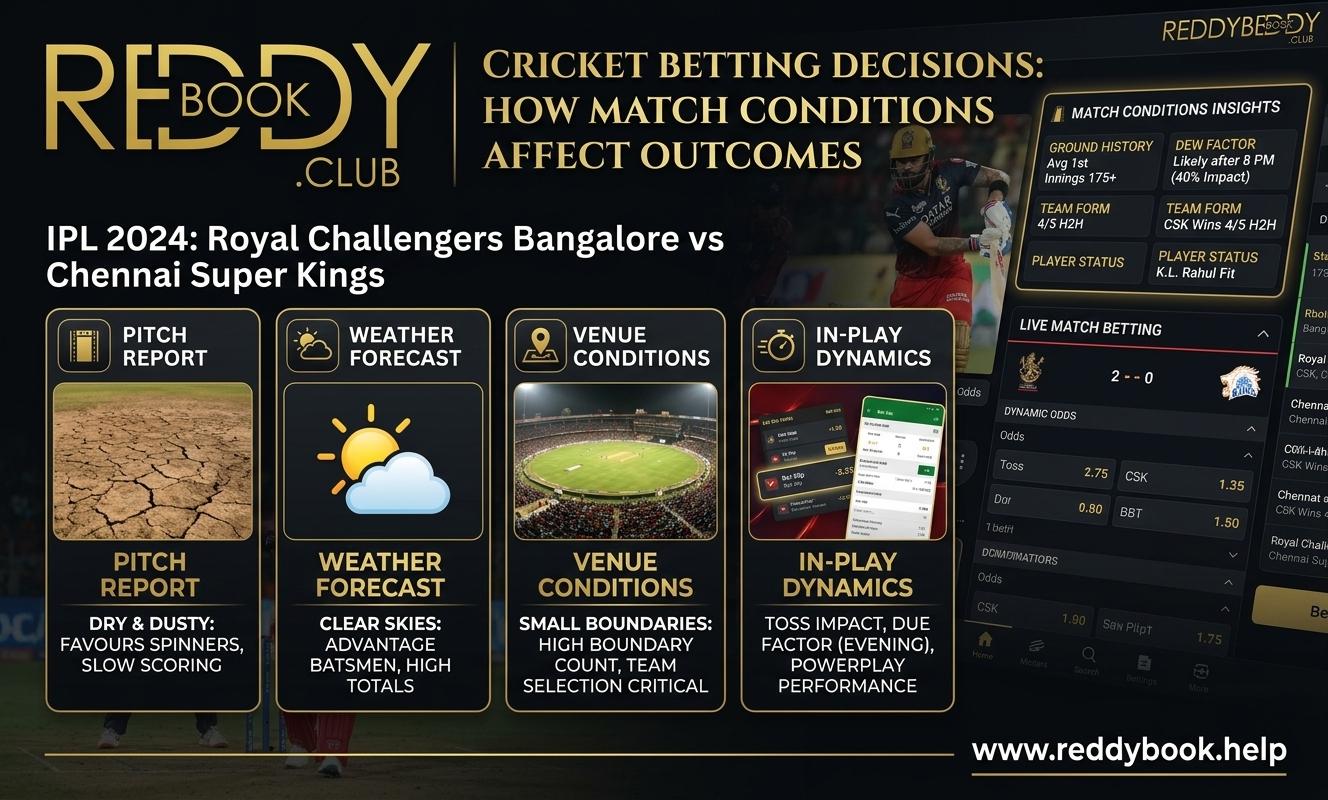

Cricket is a game where conditions can change the direction of a match within a few overs. Pitch behaviour, weather, ground dimensions, and team combinations all influence how players perform. Understanding these factors helps readers evaluate match situations more carefully. On ReddyBook, learning how different match conditions work can provide useful context before exploring available cricket markets. Rather than relying on assumptions, users should consider relevant information and recognise that no analysis can guarantee an outcome.
1. Pitch Conditions and Their Influence on Match Performance
The pitch plays an important role in determining how a cricket match develops. Some surfaces support batters, while others offer more assistance to bowlers. Therefore, understanding the pitch can help explain the possible challenges each team may face.
For example, a dry surface may support spin bowling as the match progresses. In contrast, a fresh pitch with grass covering can offer movement to fast bowlers, particularly during the early overs.
Before assessing a match, consider:
-
Pitch type: Check whether the surface generally supports batting, pace, or spin.
-
Recent performances: Review how teams performed on the same ground.
-
Pitch deterioration: Consider whether the surface may become harder to bat on later.
-
First-innings scores: Compare previous totals to understand the ground's scoring pattern.
These details provide useful context, although past performances cannot predict future results.
2. Weather Conditions and Their Impact on Cricket Matches
Weather can influence both individual performances and the overall match schedule. Rain, humidity, temperature, and cloud cover may change playing conditions.
For instance, cloudy weather can sometimes help fast bowlers generate swing. Similarly, high humidity may influence how the ball behaves. However, these effects depend on several factors, including pitch conditions and bowling techniques.
Rain also creates uncertainty because it can reduce the number of available overs. In limited-overs formats, interruptions may lead to revised targets under the applicable playing rules.
When reviewing weather conditions, pay attention to:
-
Rain forecasts and possible interruptions.
-
Cloud cover and humidity levels.
-
Temperature during different match sessions.
-
Wind direction and its potential influence on bowling.
Checking reliable weather updates alongside match information helps create a more complete understanding of the conditions.
3. Ground Dimensions and Boundary Sizes
Every cricket ground has different dimensions. Some venues have shorter boundaries, while others offer larger playing areas. These differences can influence batting strategies, field placements, and scoring opportunities.
For example, shorter boundaries may give batters more opportunities to clear the ropes. However, larger grounds can make boundary hitting more challenging and increase the importance of running between the wickets.
Understanding venue characteristics can help users interpret cricket markets with better context. Nevertheless, ground dimensions alone should never determine an assessment because player ability, bowling quality, and match situations also matter.
4. Toss Decisions and Their Importance
The toss can influence a team's initial strategy, particularly when weather and pitch conditions favour one approach.
Some captains prefer batting first to establish a competitive total. Others choose to bowl first when they expect early assistance from the surface or want to understand the target before starting their innings.
A few factors that may influence the decision include:
-
Pitch behaviour during the opening overs.
-
Weather forecasts for both innings.
-
Possibility of dew during evening matches.
-
Previous results at the venue.
However, winning the toss does not automatically provide an advantage. Teams must still execute their plans effectively.
5. Team Combinations and Player Availability
Match conditions become more meaningful when considered alongside team selection. A team playing on a spin-friendly surface may include additional spin options, whereas a venue supporting fast bowling may encourage a different combination.
Player availability also matters. An injured key batter or an unavailable frontline bowler can change the team's overall balance.
Before reviewing a match, check the confirmed playing XI, recent player performances, injury updates, and the role of each selected player.
Users accessing the platform through Reddybook login should also distinguish between confirmed team announcements and early predictions. Similarly, an ID provides account access, not a guarantee of accurate match information.
6. Why Combining Different Match Factors Matters
Looking at one condition in isolation can create an incomplete picture. For example, a batting-friendly pitch does not necessarily mean both teams will score heavily. Bowling quality, weather interruptions, player availability, and match pressure can influence the final performance.
A more balanced assessment considers several factors together:
-
Compare pitch reports with recent venue statistics.
-
Review weather forecasts before the match.
-
Check confirmed team combinations.
-
Understand the strengths and limitations of both sides.
-
Avoid treating historical statistics as guaranteed outcomes.
Whether users access information through the Reddybook app or explore details associated with pro, they should prioritise reliable information over unsupported predictions. The same approach applies when reviewing a Reddybook cricket ID and related account information.
Conclusion
Match conditions play an important role in shaping cricket performances. Pitch behaviour, weather, ground dimensions, toss decisions, and team combinations can all influence how a match develops. Understanding these elements helps readers look beyond basic statistics and evaluate cricket information more carefully.
ReddyBook users should approach match analysis with a balanced perspective, verify information through reliable sources, and remember that cricket remains unpredictable. Betting also involves financial risk, so users should follow applicable local laws, respect age restrictions, and never risk money they cannot afford to lose.
