

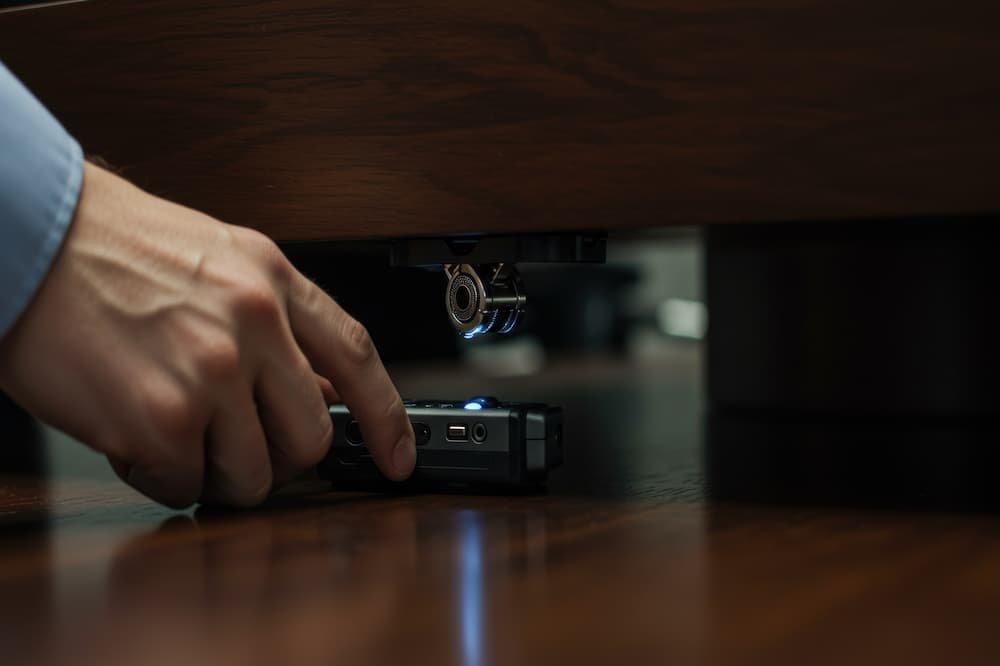
Commercial Hidden Listening Device Service: Protect Your Business from Hidden Surveillance Risks

Businesses handle sensitive information every day, from financial discussions and employee records to client meetings and confidential business strategies. Protecting this information is important for maintaining trust and avoiding unnecessary risks. A commercial hidden listening device service helps organisations identify potential listening devices and investigate unauthorised surveillance concerns within their workplaces. Through professional security inspections, businesses can take practical steps to protect private conversations and maintain a secure working environment.
Hidden surveillance is a growing concern for organisations that regularly discuss confidential matters. Meeting rooms, executive offices, conference areas, and private business spaces may require additional security attention. Even when there is no confirmed threat, a professional inspection can provide reassurance and help business owners understand whether their premises have potential privacy weaknesses.
Why Business Privacy Should Be a Priority
Business privacy involves more than protecting computers, passwords, and digital records. Verbal communication also contains valuable information that should remain accessible only to authorised individuals.
For example, a company may discuss an upcoming product launch, financial plans, partnership agreements, or internal management decisions during private meetings. If these conversations are accessed without permission, the information could potentially be misused.
Several business situations require additional attention:
-
Financial discussions: Sensitive information about budgets, investments, and business transactions should remain confidential.
-
Client meetings: Private conversations with customers and business partners deserve appropriate protection.
-
Executive offices: Senior management frequently discusses decisions that can affect the entire organisation.
-
Legal consultations: Confidential discussions with legal professionals must be protected from unauthorised access.
-
Research and development: New ideas, product designs, and business strategies represent valuable company assets.
A professional privacy assessment helps businesses understand these risks before they become more serious problems.
Understanding the Risks of Hidden Listening Devices in Commercial Buildings
Unauthorised audio surveillance can create serious privacy concerns, particularly in workplaces where confidential information is regularly discussed.
Listening devices may be concealed within ordinary objects or installed in areas where private conversations take place. However, unusual equipment or electronic interference does not automatically indicate surveillance. Professional assessment is important because legitimate electronic equipment can sometimes create similar concerns.
A qualified security specialist can evaluate the premises, assess suspicious findings, and recommend appropriate next steps.
Common Areas That May Require Inspection
Some commercial spaces deserve greater attention because of the nature of the conversations conducted there.
These may include:
-
Boardrooms and executive meeting rooms.
-
Private offices used by senior management.
-
Conference rooms where external partners are invited.
-
Interview rooms containing confidential employee information.
-
Legal and financial consultation areas.
-
Research departments handling commercially sensitive projects.
The inspection process should be conducted with appropriate authorisation and respect for employee privacy.
How a Commercial Hidden Listening Device Service Helps Businesses
A commercial hidden listening device service provides professional assistance to organisations concerned about unauthorised audio surveillance. Rather than relying on assumptions or attempting to investigate suspicious equipment without proper knowledge, businesses can request an assessment from experienced security professionals.
The objective is to identify potential privacy threats and provide practical recommendations.
1. Initial Security Assessment
The process generally begins with an understanding of the property's layout, security concerns, and areas requiring attention.
The service provider may discuss previous incidents, suspicious observations, and the types of confidential activities conducted within the premises.
This information helps establish an appropriate inspection scope.
2. Professional Electronic Inspection
Specialist equipment may be used to assess potential electronic surveillance risks. The inspection is conducted according to the property's requirements and the professional's authorised scope of work.
Any unusual findings should be examined carefully before conclusions are reached. This helps prevent ordinary electronic equipment from being incorrectly identified as a surveillance threat.
3. Assessment of Suspicious Findings
When potentially unauthorised equipment is identified, further assessment may be required to understand its purpose and relevance.
Findings should be documented appropriately, and evidence should be handled carefully. If a suspected device may be connected to unlawful surveillance, the business should consider seeking legal advice and contacting the relevant authorities.
4. Security Recommendations
After the inspection, the organisation can receive recommendations based on the findings.
These may include improving physical access controls, reviewing visitor procedures, restricting access to sensitive meeting areas, and arranging further technical assessments when necessary.
Signs That Your Business May Need a Privacy Inspection
Not every unusual occurrence indicates hidden surveillance. However, certain situations may justify a professional security assessment.
Business owners and management teams should consider requesting an inspection when they notice unexplained circumstances that raise reasonable privacy concerns.
Some examples include:
-
Unauthorised individuals entering restricted business areas.
-
Suspicious electronic equipment appearing in private offices.
-
Confidential business information becoming known to people who should not have access to it.
-
Unexplained changes to meeting room equipment.
-
Concerns following a security incident or employee access violation.
-
Preparation for a sensitive business transaction or confidential meeting.
These observations should be treated as reasons for investigation rather than proof that surveillance is taking place.
Choosing the Right Commercial Security Inspection Provider
Selecting a suitable provider is an important decision because the quality of an inspection can influence how effectively potential privacy risks are addressed.
Businesses should look beyond advertising claims and evaluate the provider's professional experience, inspection procedures, and reporting standards.
Consider the following factors before making a decision.
Relevant Industry Experience
Look for professionals with experience in commercial security assessments and technical surveillance countermeasures.
Experience with office environments, corporate buildings, and confidential business facilities can be particularly valuable.
Appropriate Inspection Equipment
A reliable provider should be able to explain the type of assessment being offered and the equipment used during the process.
Businesses should also understand the limitations of the inspection. No single technical assessment can guarantee that every possible surveillance threat has been identified.
Confidentiality and Professional Conduct
Privacy inspections involve access to sensitive business environments. Therefore, confidentiality should be treated as a fundamental requirement.
The provider should follow clear procedures for handling information, documenting findings, and communicating results.
Clear Reporting
A professional inspection should not end with verbal assurances alone. A written report can help management understand what was examined, what was identified, and whether additional action is recommended.
This documentation may also support future security planning.
Why Regular Privacy Inspections Matter for Commercial Organisations
Business security should not be treated as a one-time responsibility. Office layouts change, employees join and leave, visitors enter commercial premises, and new equipment is regularly introduced.
These changes can create different security requirements over time.
Regular privacy assessments can help organisations maintain awareness of potential surveillance risks.
Some important benefits include:
-
Better confidentiality: Private business conversations receive additional protection.
-
Improved security awareness: Management gains a clearer understanding of workplace privacy concerns.
-
Reduced exposure: Potential security weaknesses can be identified and addressed.
-
Client confidence: Strong privacy practices help demonstrate responsibility when handling sensitive discussions.
-
Better internal procedures: Inspection findings can support improvements to access management and workplace security policies.
The frequency of inspections should depend on the organisation's risk profile, security requirements, and previous findings.
Protecting Confidential Business Information Beyond Physical Inspections
Although professional inspections are valuable, they should form part of a wider business security strategy.
Organisations should also review their internal policies and establish procedures that reduce the possibility of unauthorised access to sensitive information.
Practical measures include:
-
Limiting access to confidential meeting rooms.
-
Keeping sensitive documents in secure storage.
-
Establishing clear visitor management procedures.
-
Reviewing access permissions when employees leave the organisation.
-
Using appropriate security controls for meeting room equipment.
-
Training employees to recognise and report suspicious activity.
-
Reviewing confidentiality agreements and internal information-sharing policies.
These measures create an additional layer of protection and help develop a workplace culture where privacy is taken seriously.
When Should a Business Arrange a Professional Inspection?
There is no single situation in which every organisation must arrange a privacy inspection. The decision should be based on the company's activities, security concerns, and the sensitivity of the information being discussed.
For example, financial institutions, legal firms, corporate offices, private consultation facilities, and research organisations may have stronger reasons to review their physical privacy arrangements.
An inspection may also be appropriate before an important acquisition, confidential negotiation, major investment discussion, or sensitive management meeting.
A commercial hidden listening device service can help address these concerns through a structured assessment of the premises. The findings can then be used to guide further security decisions.
Businesses should always ensure that inspection activities are legally authorised and that the rights of employees, visitors, and other occupants are respected.
Final Thought
Protecting confidential conversations is an important part of maintaining business security. Unauthorised listening devices can create privacy concerns, expose sensitive information, and affect the trust between organisations and their clients. A professional commercial hidden listening device service can help businesses assess these risks, investigate suspicious findings, and develop appropriate security measures. By combining regular inspections with responsible workplace policies and access controls, organisations can create a more secure environment where important business discussions remain private.
