

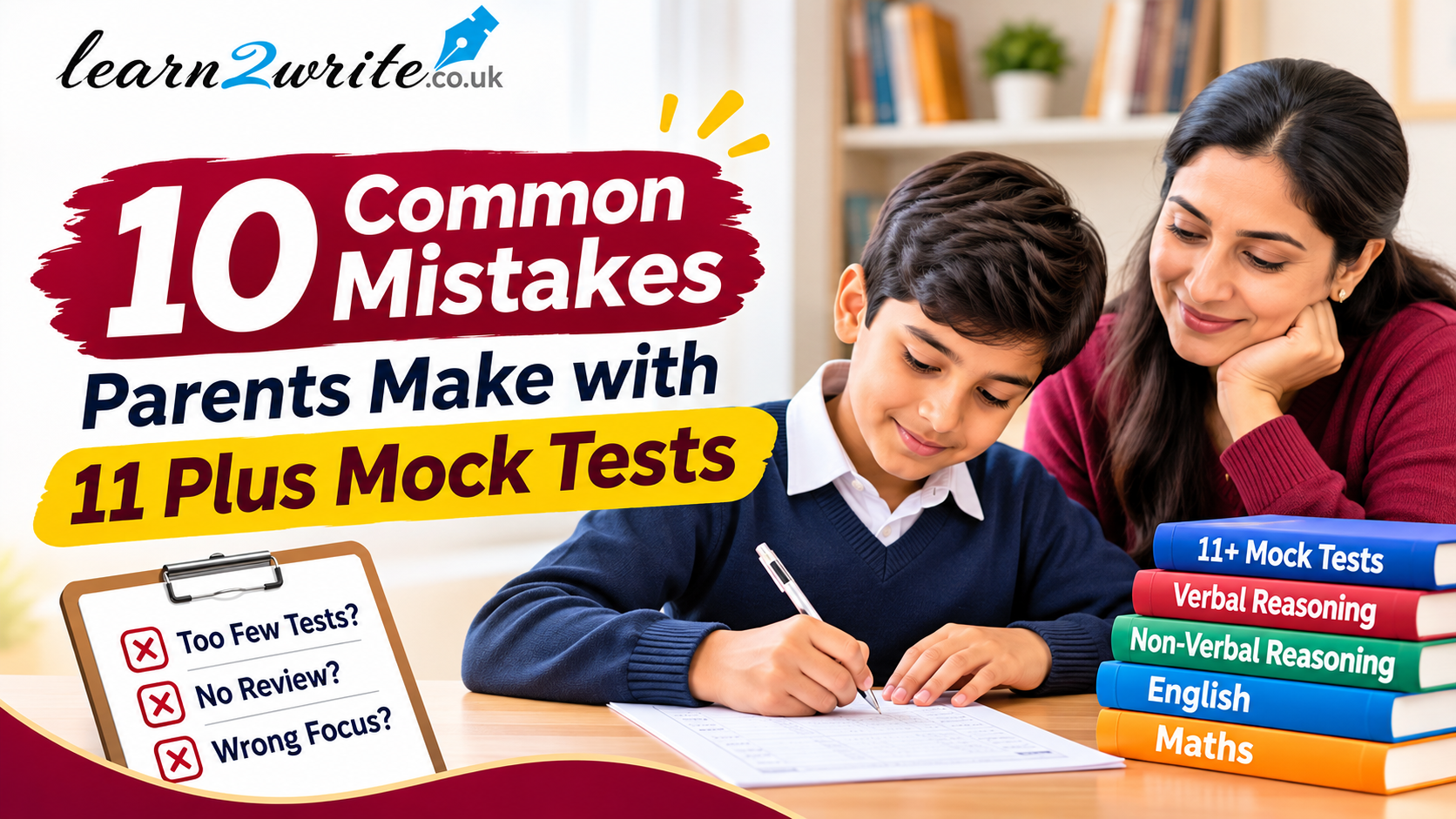

Preparing for grammar school entrance exams can be challenging for both children and parents, especially when expectations are high and preparation time is limited.
An 11 Plus Mock Tests helps children understand exam formats, develop time management skills, and identify areas where they need additional support. However, many parents unintentionally make mistakes that reduce the effectiveness of these assessments. Understanding these common mistakes can help families create a more balanced, productive, and confidence-building preparation experience.
1. Starting Mock Tests Too Late
One of the most common mistakes parents make is introducing mock tests only a few weeks before the actual examination. This leaves children with limited opportunities to become familiar with question formats, improve their speed, and address learning gaps.
Starting earlier allows children to develop their skills gradually without unnecessary pressure. Parents should introduce age-appropriate practice activities before progressing to timed assessments. A consistent preparation schedule provides enough time to review mistakes and strengthen weaker subjects.
2. Focusing Only on Test Scores
Many parents judge their child's progress entirely by mock test scores. Although marks provide useful information, they do not explain why a child answered questions incorrectly or struggled with particular sections.
Instead of concentrating exclusively on percentages, parents should examine the types of mistakes made. Are errors caused by misunderstanding concepts, rushing through questions, or running out of time?
Detailed feedback helps identify these patterns. Recognising improvements in reasoning, accuracy, and confidence is equally important for long-term academic development.
3. Making Children Take Too Many Mock Tests
Regular assessments are valuable, but excessive testing can create stress and reduce motivation. Some parents believe that completing more papers automatically leads to better results.
However, taking multiple tests without reviewing previous mistakes often produces limited improvement.
A better approach is to balance mock assessments with focused learning sessions. Children need sufficient time to understand difficult concepts, practise unfamiliar questions, and develop effective problem-solving strategies.
Quality preparation is generally more beneficial than simply increasing test frequency.
4. Ignoring Weak Areas After Each Assessment
Mock tests are designed to highlight strengths and weaknesses, yet parents sometimes move directly to another paper without analysing the results.
For example, a child who consistently struggles with verbal reasoning may require targeted vocabulary exercises. Similarly, difficulties with mathematical problem-solving may indicate gaps in foundational knowledge.
Parents should review assessment reports carefully and prioritise topics that need improvement. Addressing specific weaknesses helps children make meaningful progress rather than repeatedly encountering the same difficulties.
5. Neglecting Time Management Skills
Time management plays an important role in grammar school entrance examinations. Children may understand the correct answers but struggle to complete all questions within the allocated time.
Parents sometimes focus heavily on accuracy while overlooking examination timing.
Introducing timed practice gradually can help children develop a comfortable working pace. Encourage them to identify challenging questions, avoid spending excessive time on individual problems, and return to unanswered questions when appropriate.
These strategies can improve efficiency without sacrificing accuracy.
6. Comparing Children with Other Students
Comparing mock test results with classmates, siblings, or other children can negatively affect confidence. Every learner develops academic skills at a different pace and may have unique strengths.
Constant comparisons can make children feel that their efforts are insufficient, even when they are improving.
Parents should focus on individual progress instead. Celebrate improvements in accuracy, understanding, and independent problem-solving.
Creating a supportive learning environment encourages children to approach challenges positively and remain motivated throughout their preparation journey.
7. Overlooking English and Creative Writing Skills
Some parents concentrate primarily on mathematics and reasoning while giving insufficient attention to English comprehension, vocabulary, grammar, and writing.
Although requirements vary between grammar schools and examination providers, strong English skills support reading comprehension and effective communication.
Regular reading, vocabulary development, and comprehension exercises can strengthen language abilities. Where writing is assessed, structured creative writing practice can also help children organise ideas and express themselves clearly.
Parents should always check the specific entrance examination requirements before choosing preparation materials.
8. Using Mock Tests That Do Not Match the Exam Format
Not every grammar school follows the same entrance examination structure. Question styles, assessment subjects, timing, and test providers may differ depending on the school or region.
Using unsuitable practice materials can leave children unfamiliar with the actual assessment.
Before selecting mock tests, parents should research their preferred schools and understand the relevant examination requirements.
Choosing appropriate resources helps children practise the question types and timing conditions they are more likely to encounter.
9. Creating Too Much Pressure Around Results
High expectations can sometimes turn preparation into a stressful experience. When children feel that every assessment determines their future, they may develop anxiety or lose interest in learning.
Parents should explain that mock tests are opportunities to practise rather than final judgments of ability.
Maintaining a balanced routine that includes rest, hobbies, physical activity, and family time is essential.
Positive encouragement and realistic expectations can help children approach examinations with greater confidence and emotional resilience.
10. Failing to Create a Personalised Study Plan
Every child has different learning needs, yet some parents follow generic preparation schedules without considering individual strengths and weaknesses.
A personalised study plan should reflect assessment results, available preparation time, and specific academic goals.
For example, children who perform well in mathematics but struggle with comprehension may benefit from additional reading exercises and targeted English practice.
Reviewing the plan regularly allows parents to adjust learning activities as their child's abilities develop.
How Parents Can Make Mock Test Preparation More Effective
Successful preparation involves more than completing practice papers. Parents should combine realistic assessments with constructive feedback, targeted revision, and consistent encouragement.
Tracking progress over time can reveal improvements that individual test scores may not capture. It also helps families recognise when a particular learning strategy needs adjustment.
Most importantly, children should understand that making mistakes is a natural part of 11+ exam preparation. Each assessment offers an opportunity to build knowledge, strengthen examination techniques, and develop confidence.
Supporting Your Child's Learning Journey with Learn2Write
Choosing suitable educational support can make preparation more structured and manageable. Learn2Write offers educational resources and learning support focused on developing children's English, comprehension, creative writing, and examination skills. Parents can explore its services to support individual learning needs and encourage steady academic progress. By combining regular practice, meaningful feedback, and a supportive learning environment, families can build a stronger foundation for 11+ exam preparation.
