

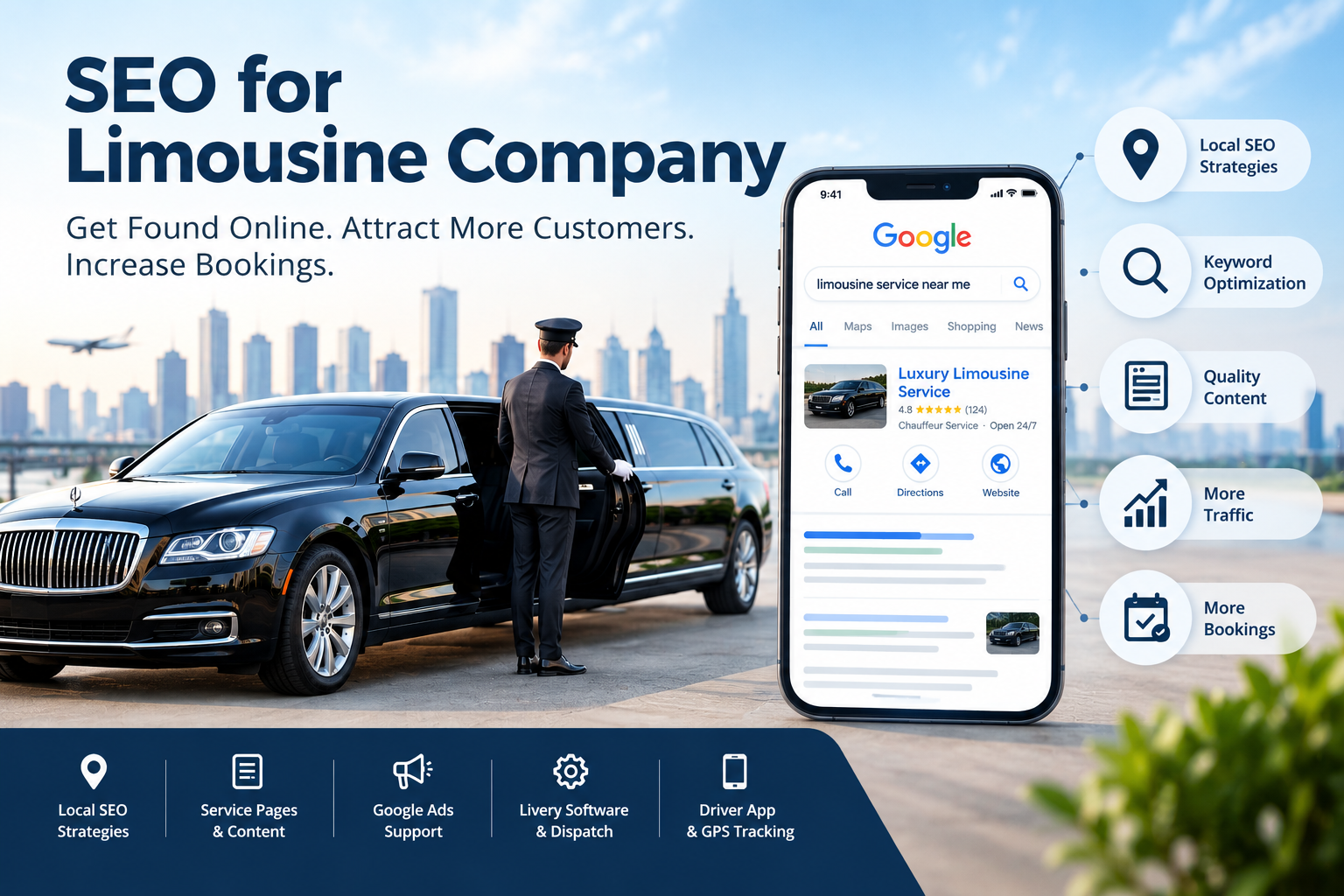

Running a successful limousine business takes more than maintaining luxury vehicles and providing exceptional transportation. Potential customers often begin their search online, comparing services, checking reviews, and looking for reliable transportation providers. Without strong search visibility, even an established limousine company can miss valuable booking opportunities.
An effective SEO limousine company strategy helps transportation businesses appear in relevant searches, attract qualified customers, and generate consistent inquiries. Whether your company specializes in airport transfers, corporate transportation, weddings, or private chauffeur services, search engine optimization connects your services with people actively looking to book.
Understanding how limousine SEO works can help operators compete in their local markets while building a stronger online presence.
Why SEO Matters for Limousine Companies
Customers searching for limousine transportation usually have a specific destination, occasion, or travel requirement in mind. Someone searching for an airport limousine service may need an immediate reservation, while another customer researching wedding transportation might compare providers weeks before booking.
Search engine optimization helps businesses reach both audiences.
A well-planned limo company SEO strategy improves website accessibility, strengthens local relevance, and makes transportation services easier to discover.
Effective optimization can help limousine businesses:
-
Increase visibility in relevant local searches.
-
Attract customers searching for specific transportation services.
-
Generate qualified reservation inquiries.
-
Build credibility through useful website content.
-
Reduce long-term dependence on paid advertising.
-
Improve the overall online booking experience.
Unlike paid advertisements, organic visibility does not disappear automatically when an advertising budget ends. However, maintaining rankings requires ongoing attention to content quality, technical performance, and competition.
Build a Strong Local SEO Foundation
Local SEO is particularly important because limousine companies typically serve defined cities, airports, and surrounding regions.
Optimize Your Google Business Profile
A complete Google Business Profile helps customers discover relevant transportation providers through Google Search and Maps.
Ensure your listing includes accurate company information, service categories, operating hours, contact details, and authentic fleet photographs.
Consistency matters. Your business name, phone number, and other contact information should match across your website and important business directories.
Encourage customers to leave genuine reviews after completed trips. Respond professionally to feedback, including complaints, to demonstrate reliability and customer care.
Google also recommends maintaining accurate business information to help customers recognize and contact businesses through Search and Maps.
Target Relevant Service Locations
Transportation businesses often operate across several nearby cities. Creating useful location-specific pages can help potential customers find services available in their area.
For example, a Toronto limousine operator might develop pages targeting Mississauga airport transportation, Brampton limousine services, and Vaughan corporate chauffeur bookings.
Each page should contain meaningful local information rather than simply repeating content with different city names.
Explain the service area, available transportation options, relevant pickup considerations, and reservation process.
Avoid creating pages for locations your company does not genuinely serve.
Choose Keywords That Match Booking Intent
Successful SEO for limo companies begins with understanding how customers search.
Broad phrases such as "limousine service" can attract general traffic, but location-based and service-specific searches often reveal clearer booking intent.
Focus on Service-Based Keywords
Identify keywords that match your actual transportation offerings.
Examples include:
-
Airport limousine service in Toronto
-
Corporate chauffeur service near me
-
Wedding limousine rental
-
Luxury SUV airport transportation
-
Private chauffeur for business meetings
-
Executive transportation services
Use these phrases naturally in page titles, headings, descriptions, and helpful content.
Rather than placing every keyword on one page, organize your website around separate services and the needs of customers researching them.
Understand Customer Search Intent
Someone searching for "limousine rental prices" may still be comparing options. A visitor searching for "book airport limousine Toronto" may be closer to making a reservation.
Both searches deserve relevant content.
Informational articles can explain pricing factors, vehicle selection, and travel planning. Service pages should focus on availability, booking details, and clear next steps.
Matching content to search intent creates a more useful experience and supports stronger conversion opportunities.
Improve Your Limousine Website for Search Engines
A visually attractive website is valuable, but appearance alone will not produce consistent organic traffic.
Technical performance, website structure, and usability all influence how effectively visitors discover and interact with your services.
Create Clear Service Pages
Every major transportation service should have a dedicated, informative page.
An airport transfer page, for example, should explain pickup procedures, flight information requirements, vehicle options, luggage considerations, and how customers request transportation.
Use descriptive headings and straightforward language.
Internal links should connect relevant pages, helping visitors move from general information to specific booking services.
Prioritize Mobile Performance
Many transportation searches happen on smartphones, particularly when customers need airport transfers or immediate travel arrangements.
Your website should load efficiently, display correctly across screen sizes, and provide accessible booking controls.
Keep reservation forms simple. Request essential details such as pickup location, destination, travel date, passenger count, and contact information.
Avoid unnecessary fields that make completing a booking frustrating.
Add Relevant Structured Data
Structured data helps search engines interpret information about a business.
Eligible limousine operators can use appropriate LocalBusiness schema to describe accurate business details, including their name, location, and contact information.
Follow Google's structured data guidelines and avoid marking up information that does not appear on the page. Structured data does not guarantee enhanced search appearances.
Turn SEO Traffic Into Actual Reservations
Generating website traffic is only part of a successful limo SEO strategy. Visitors must also find it easy to request and confirm transportation.
A limousine website with confusing navigation or an inefficient booking process can lose interested customers before they complete a reservation.
Simplify Online Booking
Customers appreciate clear transportation options, transparent reservation details, and convenient communication.
Integrating professional booking software helps connect website inquiries with daily transportation operations.
For example, Limo Captain provides limo booking software and reservation management tools that help operators organize incoming bookings.
A streamlined reservation process can reduce manual entry and help office staff manage customer requests more efficiently.
Connect Bookings With Dispatch Operations
An increase in bookings also creates additional coordination responsibilities.
Dispatch teams must assign chauffeurs, monitor scheduled trips, and communicate transportation details accurately.
Limo Captain's dispatch software, driver app, and real-time GPS tracking can support coordination between office teams and chauffeurs.
Its payment gateway integration can also support payment processing within the reservation workflow.
These operational improvements do not directly increase Google rankings, but they help transportation businesses handle the inquiries their SEO efforts generate.
Publish Content That Answers Customer Questions
Helpful blog content allows limousine companies to reach customers before they are ready to reserve transportation.
Instead of publishing generic promotional articles, address real questions customers ask.
Useful topics include airport pickup planning, wedding transportation timelines, choosing vehicles for group travel, and understanding hourly chauffeur bookings.
For example, an article explaining how early passengers should arrange airport transportation can naturally connect readers to an airport transfer service page.
Publish content based on customer concerns, seasonal demand, and available services.
Update older articles when transportation policies, service details, or customer expectations change.
Measure SEO Performance and Improve Results
Search optimization requires ongoing measurement.
Use Google Search Console to monitor search visibility, relevant queries, indexing issues, and organic clicks. Website analytics can help evaluate visitor behavior and completed booking actions.
Review important business indicators such as organic reservation inquiries, confirmed bookings, conversion rates, and the performance of individual service pages.
If a page attracts visitors but produces few inquiries, review its messaging, booking process, and relevance to customer needs.
Focus on improvements that support both search visibility and actual transportation revenue.
Conclusion
A successful SEO limousine company strategy combines local optimization, relevant keywords, helpful content, technical website improvements, and an efficient reservation experience.
Limousine operators should prioritize reaching customers with genuine transportation needs and making every booking step straightforward.
