

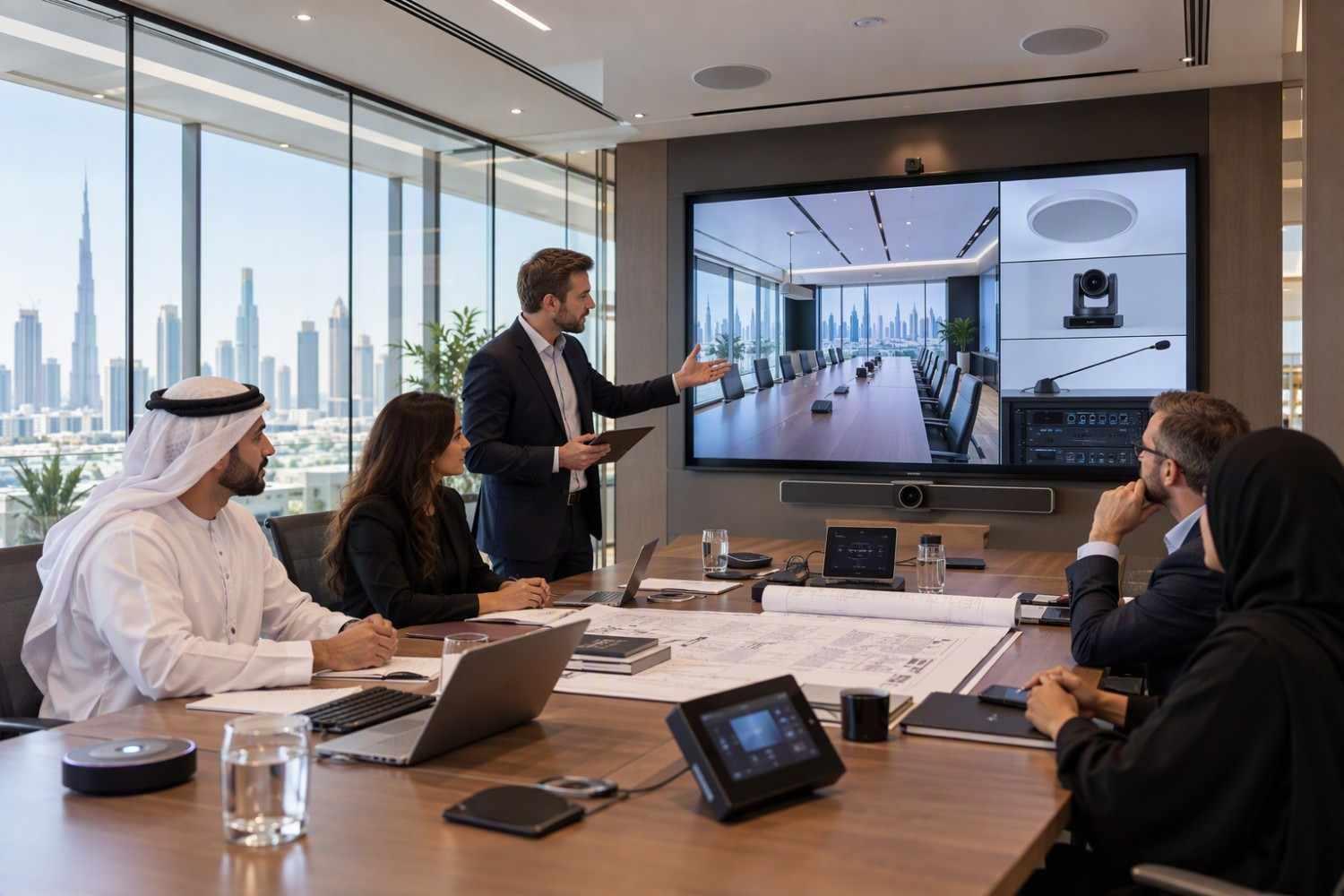

A professional video conferencing room needs the right equipment to make online meetings clear and easy to manage. Good cameras, microphones, speakers, displays, and a stable internet connection help people communicate without problems. When planning a meeting room, it is useful to understand how each device works and what features are important. Many businesses also compare solutions from AV integration companies in dubai to understand how different audio and video devices can work together in one meeting space.
1. High-Quality Video Conferencing Camera
A video conferencing camera is one of the most important parts of a meeting room. It allows people in other locations to see everyone in the room clearly. A poor camera can make faces look unclear and reduce the quality of communication.
For a professional meeting room, businesses can consider cameras with HD or 4K video quality. These cameras provide clear images and help remote participants follow discussions.
Some cameras also include useful features such as:
-
Auto framing: Adjusts the camera view to include people in the room.
-
Pan and tilt: Allows the camera to move in different directions.
-
Zoom: Makes it easier to show people sitting farther away.
-
Wide-angle view: Covers more space in larger meeting rooms.
The camera should match the room size and the number of people who usually attend meetings.
2. Professional Microphones for Clear Audio
Good sound quality is just as important as clear video. If people cannot hear the speaker properly, meetings can become difficult to follow. Background noise, echo, and low microphone volume can affect communication.
A professional meeting room should have microphones that can capture voices from different seating positions.
Common microphone options include:
-
Table microphones: Placed on meeting tables to capture nearby speakers.
-
Ceiling microphones: Installed above the meeting area to capture voices without using table space.
-
Wireless microphones: Allow people to speak while moving around the room.
-
Boundary microphones: Placed on flat surfaces to capture voices during group discussions.
When selecting a microphone, consider its pickup range, noise reduction features, and compatibility with the conferencing system.
3. Speakers for Better Sound Output
Speakers help everyone in the meeting room hear remote participants clearly. Built-in laptop speakers may work for small personal meetings, but they are not always suitable for professional meeting spaces.
Dedicated speakers can provide better sound coverage and volume. The correct speaker setup depends on the room layout, seating arrangement, and number of participants.
Some common options are:
-
Wall-mounted speakers: Useful when speakers need to be installed around the room.
-
Ceiling speakers: Provide sound without taking up floor or table space.
-
Conference speakers: Combine microphones and speakers in one device for smaller meeting rooms.
Speakers should be placed carefully to reduce echo and feedback. Their sound levels should also be suitable for the room size.
4. Large Display Screens or Interactive Displays
A display screen allows meeting participants to view presentations, documents, charts, and video calls. It helps people follow discussions and understand shared information.
The screen size should match the distance between the display and the meeting participants. A small screen may be difficult to read in a large room, while a very large screen may not be necessary for a small meeting space.
Businesses can choose from different display options:
-
LED displays: Suitable for clear presentations and video meetings.
-
Commercial displays: Designed for regular use in business environments.
-
Interactive displays: Allow users to write, draw, and make changes directly on the screen.
-
Video walls: Useful for large conference rooms and spaces that need multiple visual sources.
Resolution, brightness, screen size, and connection options are important factors when choosing a display.
5. Video Conferencing Software
Hardware alone cannot complete a video conferencing setup. Businesses also need software that allows people to join meetings, share screens, and communicate with remote teams.
Popular video conferencing platforms include Zoom, Microsoft Teams, and Google Meet. The right platform depends on the company's communication needs and existing software.
Before selecting a platform, check the following features:
-
Easy meeting access for employees and guests.
-
Screen sharing for presentations and documents.
-
Support for group meetings.
-
Recording options where required.
-
Compatibility with room cameras, microphones, and speakers.
It is also useful to check whether the software works properly with the selected room equipment.
6. Reliable Internet and Network Connection
A stable internet connection is necessary for smooth video conferencing. Even expensive cameras and microphones cannot provide a good meeting experience when the network connection is weak.
Slow internet can cause frozen video, delayed audio, and interrupted calls. These problems can make it difficult for people to communicate.
Businesses should consider a reliable broadband connection and a properly configured network. A wired Ethernet connection is often a good choice for fixed conferencing equipment because it can provide a stable connection.
Network planning should also consider the number of devices connected at the same time. Large meeting rooms may need additional network support to handle video calls and shared content.
7. Video Conferencing Control System
A control system makes it easier to operate different devices from one place. Without proper control, users may need to switch between several remotes, applications, and device settings before starting a meeting.
A central control system can manage different room functions, such as:
-
Turning displays on and off.
-
Selecting video and audio sources.
-
Adjusting speaker volume.
-
Controlling room cameras.
-
Starting or ending a meeting.
Touch panels are commonly used for this purpose. They allow employees to manage meeting room equipment through a simple screen.
The control system should be easy to understand so that employees can use the room without needing technical support every time.
8. Proper Lighting and Room Acoustics
Lighting and room acoustics are often overlooked when setting up a professional video conferencing room. However, both can affect the quality of online meetings.
Poor lighting can make faces look dark or unclear on camera. Natural light, suitable ceiling lights, and additional soft lighting can help improve visibility. Lights should be positioned to avoid strong shadows and glare on display screens.
Room acoustics are also important. Hard walls, glass surfaces, and empty spaces can create echo. This can make voices difficult to understand.
Some useful improvements include:
-
Installing acoustic wall panels.
-
Using carpets or soft furnishings where suitable.
-
Choosing curtains to reduce sound reflections.
-
Placing microphones in suitable positions.
These changes can make the meeting space more comfortable and improve audio quality.
9. Cables, Connections, and Equipment Compatibility
A professional conferencing room needs suitable cables and connection points to link all devices. HDMI, USB, Ethernet, and other supported connections may be required depending on the equipment.
Poor cable management can create problems during meetings and make the room difficult to maintain. Cables should be arranged safely and labelled where necessary.
It is also important to check device compatibility before purchasing equipment. Cameras, displays, microphones, speakers, and control systems should work together properly.
Planning these connections in advance can reduce installation problems and make future upgrades easier.
10. Choosing Equipment Based on Room Size and Usage
Not every meeting room needs the same equipment. A small meeting room may only require a camera, conference speaker, display, and suitable software. A large boardroom may need multiple microphones, ceiling speakers, larger displays, and a central control system.
Before purchasing equipment, consider the number of users, room dimensions, meeting frequency, and type of communication. A room used for daily team meetings may have different requirements from a training room used for presentations.
It is also helpful to plan for future needs. Selecting compatible equipment can make it easier to add new devices when business requirements change.
When planning a professional video conferencing room, focus on clear sound, good video quality, reliable connectivity, and simple controls. Each device should work properly with the other equipment to create a comfortable meeting experience. Understanding these requirements also helps businesses evaluate the technical solutions offered by AV integration companies in dubai and make informed decisions when planning their meeting spaces.
