

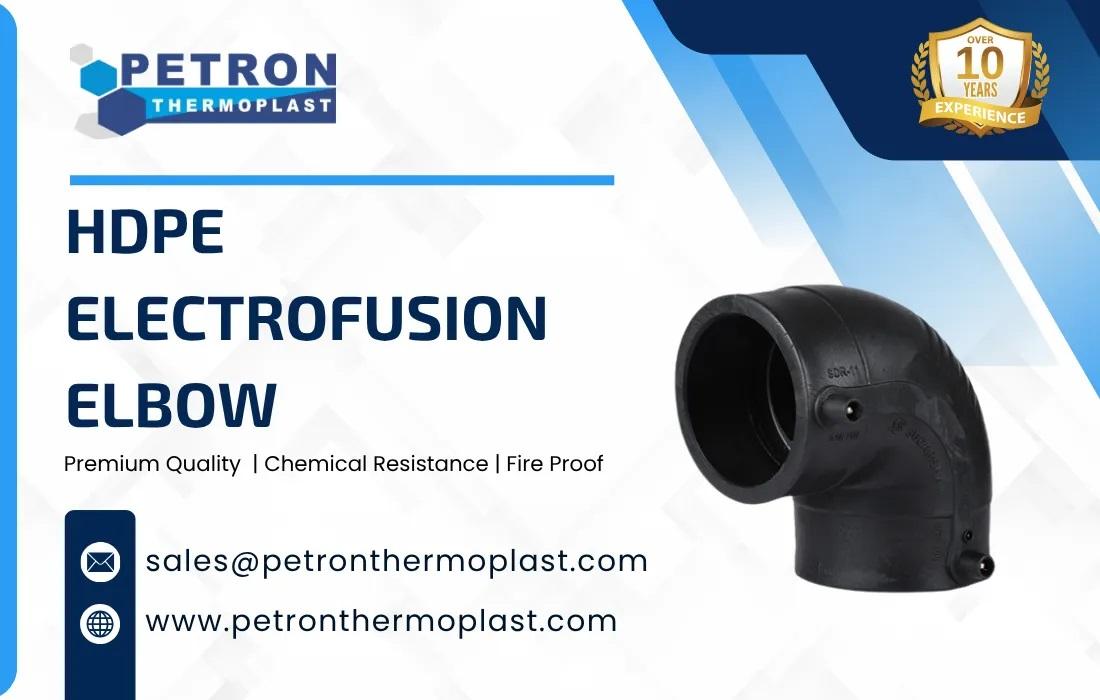

Customized HDPE elbow solutions play an important role in developing reliable pipeline networks for industrial and infrastructure projects. HDPE elbows are used to change the direction of fluid flow while maintaining a secure connection between pipeline sections. For international projects, selecting the right elbow design, dimensions, material grade, and fabrication method is essential for achieving long-term pipeline performance.
Petron Thermoplast manufactures customized HDPE pipe fittings for industrial requirements, including project-specific pipeline configurations. With attention to design specifications, dimensional accuracy, and application requirements, customized HDPE elbows can support complex piping systems across different industries and international markets.
What Are HDPE Elbows?
HDPE elbows are pipe fittings designed to change the direction of a pipeline. They are commonly used in water distribution, chemical processing, industrial fluid handling, irrigation, and infrastructure applications.
These fittings are available in different configurations, including 45-degree and 90-degree elbows. Other angles and fabricated designs can also be considered when a project requires a specific pipeline layout.
HDPE is widely used in industrial piping because of its lightweight structure, corrosion resistance, and flexibility. The material can also support reliable connections when the correct joining method and installation procedures are followed.
Why Choose Customized HDPE Elbows?
Standard fittings may not always meet the requirements of large industrial projects. Pipeline layouts can involve unusual angles, restricted installation spaces, large pipe diameters, or specific connection arrangements. Customized HDPE elbows help address these requirements.
Some important benefits include:
- Project-specific dimensions: Elbows can be manufactured according to approved drawings and dimensional requirements.
- Flexible pipeline design: Customized angles and configurations can help accommodate complex layouts.
- Corrosion resistance: HDPE offers resistance to many common corrosive environments, subject to chemical compatibility.
- Lightweight construction: HDPE fittings are generally easier to handle and install than many metal alternatives.
- Reduced maintenance requirements: Properly selected and installed HDPE systems can help reduce corrosion-related maintenance.
- Reliable connections: Suitable joining methods can create secure connections within compatible HDPE piping systems.
Types of Customized HDPE Elbows
Different projects require different elbow configurations. The selection depends on pipeline direction, available installation space, and engineering specifications.
1. HDPE 45-Degree Elbow
A 45-degree HDPE elbow changes the pipeline direction gradually. It is useful when a piping layout requires a moderate directional change.
These fittings are commonly considered for water distribution, industrial pipelines, and infrastructure networks.
2. HDPE 90-Degree Elbow
A 90-degree HDPE elbow is designed for a right-angle change in pipeline direction. It is frequently used where pipelines need to turn around equipment, structures, or installation areas.
The required dimensions and connection arrangement depend on the pipeline design.
3. Fabricated HDPE Elbow
Fabricated HDPE elbows are developed for project-specific requirements. They can be considered for large-diameter pipelines, special angles, and applications where standard molded fittings may not meet the design requirements.
Fabrication details should be reviewed to ensure dimensional accuracy and suitable joint construction.
4. Large-Diameter HDPE Elbow
Large-diameter HDPE elbows are used in major water distribution systems, industrial facilities, and infrastructure projects. Their design requires careful consideration of wall thickness, pressure requirements, dimensions, and installation conditions.
5. Customized Angle HDPE Elbow
Some pipeline systems require angles other than standard 45-degree or 90-degree configurations. Customized angle elbows can help engineers achieve the required pipeline direction without unnecessary changes to the overall layout.
Technical Specifications to Consider
Before selecting an HDPE elbow, project engineers should review the technical requirements. Specifications may vary according to the application, pipe dimensions, material grade, and manufacturing process.
|
Parameter |
Project requirement |
|
Material |
HDPE grade as specified |
|
Fitting type |
45°, 90°, or customized angle |
|
Nominal diameter |
As per pipeline drawing |
|
Wall thickness |
Based on pipe SDR and design |
|
Pressure rating |
According to operating conditions |
|
Connection type |
Butt fusion, electrofusion, or specified connection |
|
Manufacturing design |
Molded or fabricated |
|
Inspection |
Dimensional and applicable quality checks |
Applications of HDPE Elbows in International Projects
HDPE elbows are used in several industries because they can be incorporated into different pipeline configurations.
Water Supply and Distribution
Water supply projects use HDPE piping systems for transferring water across residential, commercial, and industrial networks. Elbows help connect pipeline sections around buildings, roads, equipment, and other structures.
Chemical Processing Plants
Chemical facilities use plastic piping systems for transferring compatible liquids. HDPE elbows may be considered where the chemical, concentration, and operating temperature are suitable for the selected material.
A chemical compatibility assessment is important before finalizing the fitting material.
Mining and Mineral Processing
Mining operations often require pipeline networks for water, slurry, and other process fluids. HDPE fittings may be selected for suitable applications based on abrasion, pressure, and operating conditions.
Irrigation and Agricultural Projects
Large irrigation networks use directional fittings to distribute water across fields and agricultural facilities. Customized elbows can help accommodate site-specific pipeline layouts.
Industrial Infrastructure
Manufacturing plants, utility facilities, and industrial infrastructure projects require piping systems that connect equipment and process areas. Customized HDPE elbows help meet different routing and installation requirements.
Important Factors When Selecting HDPE Elbows
Choosing the correct HDPE elbow involves more than selecting a diameter and angle. Buyers and project engineers should consider several technical factors.
1. Pipe diameter and wall thickness
The fitting dimensions should match the connected pipeline. Incorrect dimensions can create installation difficulties and affect joint quality.
2. Operating pressure
The elbow must be suitable for the system's design pressure. The pressure rating should be evaluated with reference to the material grade, SDR, temperature, and applicable design requirements.
3. Fluid compatibility
Although HDPE provides resistance to many chemicals, compatibility is not universal. The fluid composition, concentration, temperature, and exposure conditions should be reviewed.
4. Installation environment
Outdoor exposure, underground installation, mechanical loads, and site conditions can influence fitting selection and installation procedures.
5. Joining method
HDPE piping systems may use butt fusion or electrofusion, depending on the pipe and fitting design. Compatible equipment, trained personnel, and correct joining procedures are essential.
6. Project drawings
For customized orders, approved technical drawings help define the angle, dimensions, connection details, and other manufacturing requirements.
Manufacturing and Quality Considerations
The performance of a customized HDPE elbow depends on material selection, manufacturing accuracy, and quality control.
A typical manufacturing and inspection process may include:
- Reviewing customer drawings and technical specifications.
- Confirming the required HDPE material grade.
- Finalizing the fitting dimensions and angle.
- Selecting an appropriate molding or fabrication process.
- Checking dimensional accuracy and visual quality.
- Carrying out applicable inspections and tests.
- Preparing the finished fittings for packing and dispatch.
Customized HDPE Elbows for Global Buyers
International projects often involve different engineering standards, documentation requirements, and shipping arrangements. Buyers may also need fittings manufactured according to drawings prepared by consultants or engineering contractors.
When sourcing HDPE elbows for overseas projects, consider the following:
- Confirm the required dimensions and fitting angles.
- Share the pipe SDR and material grade.
- Provide operating pressure and temperature details.
- Specify the applicable project standards.
- Confirm the required connection method.
- Discuss inspection and documentation requirements.
- Finalize packing and export requirements before dispatch.
Why Choose Petron Thermoplast for Customized HDPE Elbows?
Petron Thermoplast focuses on manufacturing thermoplastic products and customized piping solutions for industrial applications. The company understands that different projects require different fitting dimensions, configurations, and material specifications.
Customers can discuss their HDPE elbow requirements based on project drawings, pipeline dimensions, fitting angles, and application details.
Key considerations when working with Petron Thermoplast include:
- Customized fitting requirements based on project specifications.
- Support for different industrial pipeline configurations.
- Manufacturing discussions based on customer drawings.
- Options for bulk project requirements.
- Coordination for domestic and international orders.
- Product selection based on application and technical requirements.
Conclusion
Customized HDPE elbow solutions are an important part of modern industrial and infrastructure pipeline systems. They help accommodate different pipeline directions, special installation conditions, and project-specific engineering requirements.
From standard 45-degree and 90-degree elbows to large-diameter and fabricated configurations, the right fitting should be selected according to pipe dimensions, pressure requirements, fluid compatibility, and installation conditions. Petron Thermoplast manufactures customized HDPE pipe fittings for industrial requirements and international projects. By sharing technical drawings and application details, buyers can discuss suitable HDPE elbow configurations for their pipeline networks.
