

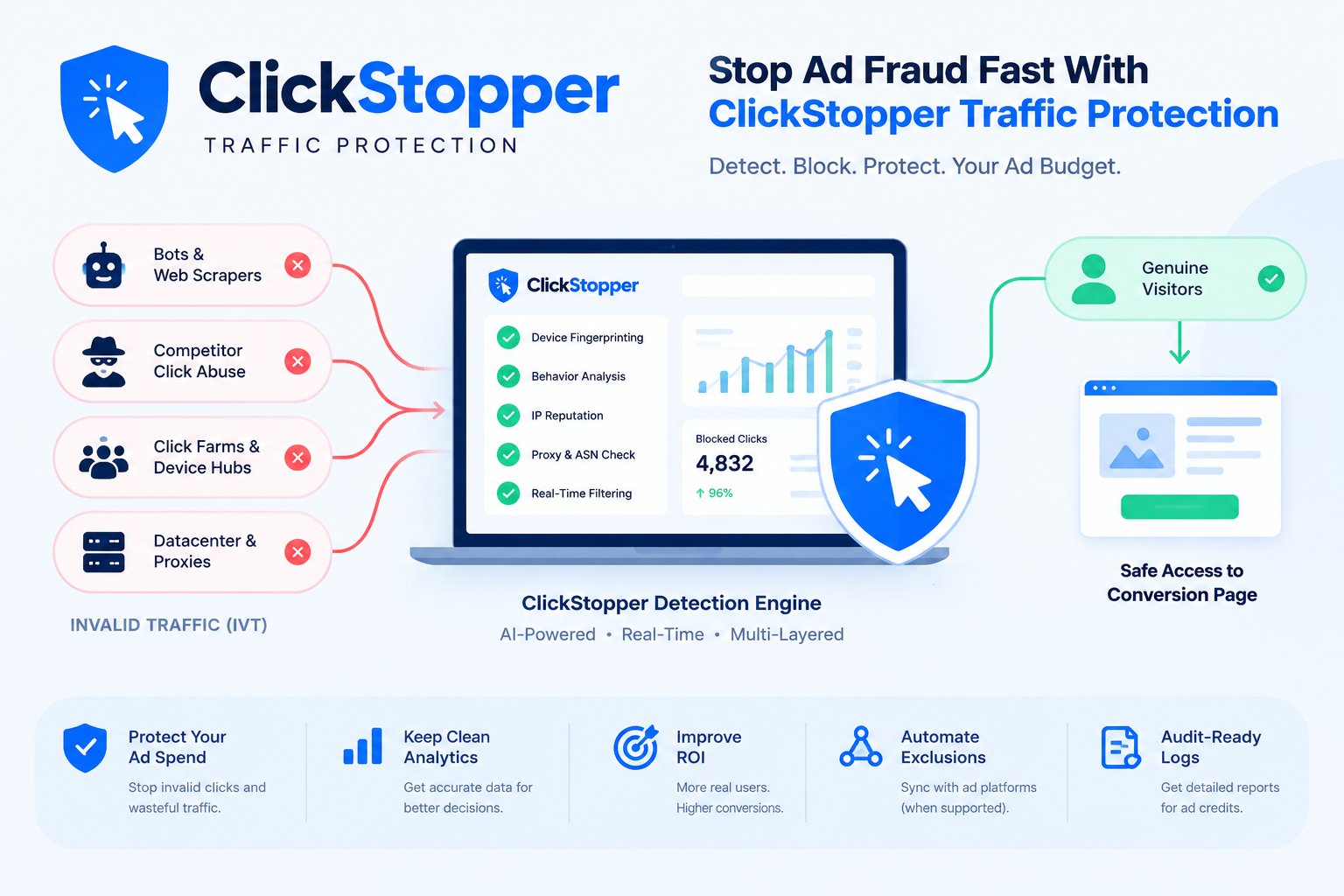

The application of ClickStopper bot protection can help address one of the key issues in digital advertising: distinguishing legitimate visitors from bot traffic. Automated visits, clicks, and low-quality interactions can affect advertising campaign results and lead to wasted budgets. A proper traffic management strategy should include traffic monitoring, traffic analysis, and data filtering.
Bot traffic is not always harmful. Search engines, automated monitoring tools, and other services use bots to perform legitimate tasks. The goal is to filter traffic that may affect advertising spend without blocking genuine customers or legitimate services.
1. What Is Bot Protection in Digital Advertising?
Bot protection in digital advertising involves detecting, monitoring, and managing automated activity that affects websites, advertising campaigns, and conversion tracking. These tools can help advertisers distinguish genuine visitors from traffic that may negatively affect campaign performance.
Common Sources of Suspicious Traffic
Suspicious traffic may come from several sources, including:
-
Repeated visits generated by scripts.
-
Bots that generate advertising clicks.
-
Proxy traffic.
-
Multiple clicks without meaningful interaction.
-
Automated form submissions that generate fake leads.
Not all suspicious traffic is generated by bots. For example, using a proxy server or VPN, or clicking an advertisement several times, may trigger suspicion. However, reliable bot detection should consider more than an IP address or a single visit.
How to Identify Potentially Invalid Traffic
For instance, an advertiser may notice a rapid increase in clicks while conversion volume remains unchanged. This pattern deserves further investigation, but it does not automatically indicate click fraud. Other factors, such as changes in targeting, ad placements, or audience behavior, may also explain the difference.
2. How ClickStopper Bot Protection Can Help
ClickStopper bot protection refers to using the ClickStopper traffic protection platform to address unwanted or suspicious activity associated with advertising campaigns. Its role is to help advertisers and performance marketers manage traffic quality and determine how suspicious activity should be handled.
Key Steps in Traffic Protection
A traffic protection process may include the following steps:
-
Traffic monitoring: Analyse incoming visits and identify potentially suspicious traffic patterns.
-
Detection of suspicious activity: Examine repeated visits, unusual click frequency, and other signs of automated behaviour.
-
Traffic filtering: Apply suitable measures to limit unwanted visits where the platform supports such actions.
-
Campaign performance analysis: Compare clicks, engagement, and conversions to assess traffic quality.
-
Periodic evaluation: Review filtering rules as traffic sources and user behaviour change.
Detection methods, integration options, reporting features, and filtering capabilities may vary depending on the platform. Advertisers should check the available features before choosing a service.
Choosing a Traffic Filtering Tool
For advertisers looking for a traffic filtering tool, several factors deserve attention:
-
Compatibility with advertising channels.
-
Access to reports about detected or blocked activity.
-
Ease of implementation.
-
The ability to review and adjust filtering decisions.
-
Visibility into how suspicious traffic is identified.
The goal is not simply to reduce traffic volume. Advertisers need to increase the share of visits with the potential to generate meaningful engagement, qualified leads, or conversions.
3. Why Are Bot Traffic Protection and Click Fraud Protection Important?
Bot traffic protection helps advertisers identify automated activity that may distort campaign performance data. When invalid interactions appear in campaign reports, it becomes harder to evaluate targeting, creative performance, bidding strategies, and landing pages accurately.
The Role of Click Fraud Protection
Click Fraud Protection involves detecting suspicious click activity, investigating campaign performance, identifying potentially problematic traffic sources, and reducing exposure where appropriate. However, no system can guarantee the detection of every invalid interaction.
Example of Campaign Performance Before and After Filtering
Consider the following illustrative campaign data:
|
Metric |
Before Investigation |
After Filtering and Analysis |
|
Reported clicks |
5,000 |
3,800 |
|
Confirmed conversions |
50 |
48 |
|
Conversion rate |
1.0% |
1.26% |
Note: These figures are illustrative only and do not represent actual ClickStopper results.
The example demonstrates how filtering may change reported traffic and conversion rates. However, fewer clicks do not automatically mean better campaign performance. Advertisers should also evaluate conversion quality, costs, attribution, and the value of acquired customers.
Best Practices for Evaluating Traffic Filters
To use traffic filtering correctly, advertisers should:
-
Compare advertising platform reports with analytics data and conversion logs.
-
Investigate traffic sources with unusual click-to-conversion ratios.
-
Check whether suspicious activity is concentrated during particular times of the day.
-
Review recurring sessions and unusual visitor behaviour.
-
Monitor cost per acquisition (CPA) and qualified lead rates.
-
Record the filters applied and assess their impact over time.
4. Building a Realistic Strategy for Bot Traffic Protection
A bot traffic protection tool should be part of a wider campaign management strategy rather than treated as a standalone fix. Traffic analysis, technical controls, conversion tracking, and ongoing performance evaluation all contribute to better advertising decisions.
Establish a Performance Baseline
Start by recording normal traffic levels, conversion rates, landing page engagement, and traffic source performance. These baseline figures help advertisers identify unusual changes and compare results before and after applying new filtering rules.
Investigate Before Blocking Traffic
An increase in clicks from a particular geographic area or advertising network does not necessarily indicate fraud. It may result from targeting changes, improved ad placement, shared IP addresses, or automated activity.
Before applying traffic filtering rules, investigate the source of the change and determine whether the traffic is genuinely harmful. This can reduce the risk of blocking legitimate visitors and losing potential conversions.
What to Check in a Traffic Protection Platform
When evaluating ClickStopper bot protection or another traffic protection platform, consider the following factors:
-
Detection visibility: Can you understand why traffic was classified as suspicious?
-
Filtering controls: Can you adjust rules without unnecessarily blocking legitimate visitors?
-
Reporting: Can you compare suspicious activity with campaign and conversion statistics?
-
Compatibility: Does the platform work with your advertising and analytics systems?
-
Testing: Can you measure the effect of new filtering settings?
Traffic Filtering vs. Invalid Click Refunds
Advertisers should understand that website traffic filtering and obtaining refunds for invalid advertising clicks are separate processes. A third-party traffic protection platform may help manage visits to a landing page, but it does not guarantee refunds for every invalid click, prevent all fraud, or replace the advertising platform's own review process.
5. Frequently Asked Questions About ClickStopper Bot Protection
What Is ClickStopper Bot Protection?
ClickStopper bot protection refers to using the ClickStopper platform to address suspicious or unwanted traffic associated with advertising campaigns. Advertisers should consult the platform's current documentation to verify its specific detection methods, integrations, reporting features, and filtering capabilities.
Does ClickStopper Bot Protection Eliminate All Click Fraud?
No. ClickStopper bot protection may help identify and manage certain types of suspicious traffic, depending on the platform's capabilities. However, no technology can detect every case of click fraud. Human-generated invalid clicks, sophisticated automation, tracking errors, and other factors can affect detection.
Conclusion
Bot protection can help advertisers monitor traffic quality and identify suspicious activity that may affect advertising campaigns. A practical approach combines ClickStopper bot protection, traffic analysis, click fraud protection, conversion tracking, and regular testing. By investigating unusual patterns before blocking traffic, advertisers can reduce the risk of wasting ad spend while protecting access for legitimate visitors.
Instead of evaluating performance by click count, it is important to focus on the number of qualified visits and acquisition costs. When choosing a protection tool, make sure that filtering will not block legitimate visitors
