

Toronto homeowners deal with different pest problems throughout the year, from ants entering kitchens in spring to mice seeking warmth inside basements during fall and winter. Condominiums, older houses, rental apartments and commercial properties can all experience infestations when pests find access to food, water and shelter.
Professional pest control services in Toronto help identify the source of infestations, manage existing pest activity and reduce the chances of pests returning. However, effective pest management involves more than simply removing visible insects or rodents. Property inspections, entry-point identification, appropriate treatment and preventive maintenance all play important roles.
Whether you are dealing with cockroaches in an apartment, rodents in your basement or bed bugs in your bedroom, this guide explains the warning signs, practical solutions and professional treatment options available to Toronto property owners.
Why Do Toronto Homes Experience Pest Problems?
Toronto's diverse residential environment creates different opportunities for pests to enter buildings. Older homes may have deteriorating foundations, gaps around windows and damaged exterior materials. Modern condominiums and apartment buildings have shared walls, plumbing connections and service areas that can allow pests to move between spaces.
Construction activity, seasonal temperature changes, accessible garbage and moisture problems can also contribute to pest activity.
Common conditions that attract pests include:
-
Unsealed gaps around pipes, doors and foundations.
-
Food crumbs, uncovered garbage and improperly stored food.
-
Leaking plumbing and damp basement areas.
-
Cluttered storage rooms and garages.
-
Damaged window screens, vents and exterior openings.
Identifying these conditions is an important first step in effective residential pest control in Toronto.
Common Household Pests in Toronto and How to Identify Them
1. Mice and Rats
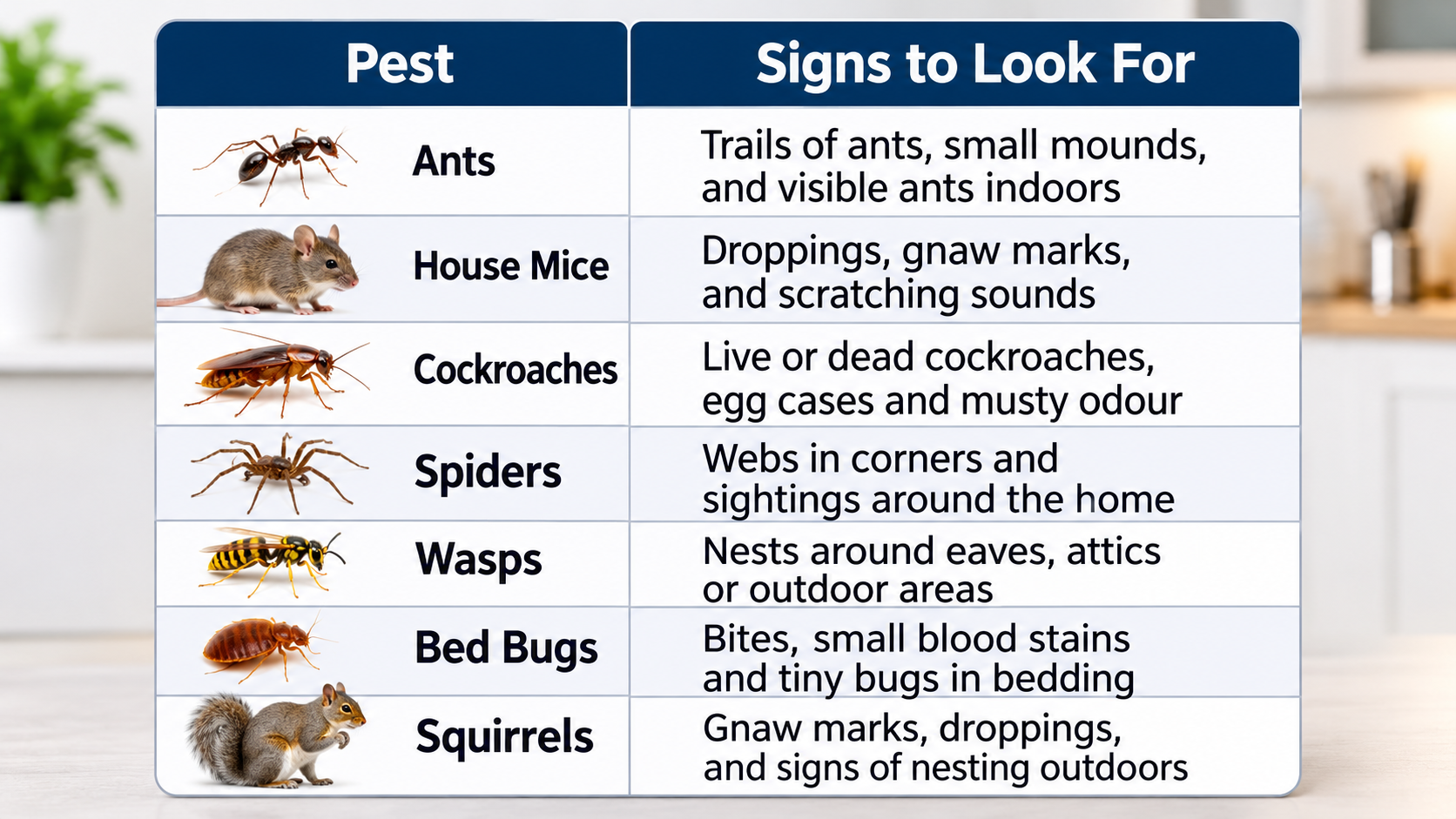
Rodents commonly enter homes through foundation openings, garage doors, utility connections and damaged vents. Warning signs include droppings, scratching sounds, gnaw marks, damaged food packaging and nesting materials.
What to do: Store food securely, inspect possible entry points and avoid disturbing dry droppings. Repeated rodent activity may require professional inspection and exclusion.
2. Ants and Carpenter Ants
Ants frequently enter kitchens, bathrooms and storage areas in search of food and moisture. Carpenter ants can establish nests in damp or damaged wood.
What to do: Clean food spills, seal accessible gaps and investigate repeated ant trails. Identifying the ant species helps determine the appropriate treatment.
3. Cockroaches
Cockroaches prefer warm, humid locations such as kitchens, bathrooms, plumbing areas and spaces behind appliances. Droppings, egg cases and nighttime sightings can indicate activity.
What to do: Remove accessible food and water, reduce clutter and inspect hiding places. Established infestations generally need a coordinated treatment plan.
4. Bed Bugs
Bed bugs hide around mattress seams, bed frames, upholstered furniture and nearby cracks. Small reddish stains, shed skins and live insects can indicate an infestation.
What to do: Inspect sleeping areas, avoid moving potentially infested furniture between rooms and arrange a professional assessment when bed bugs are suspected.
5. Wasps and Spiders
Wasps can establish nests around rooflines, sheds and exterior structures. Spiders are commonly found in basements, garages and quiet storage areas.
What to do: Avoid disturbing active wasp nests. For recurring spider activity, investigate other insects and possible entry points.
For additional guidance, read our complete residential pest control guide for Ontario homeowners.
Toronto Condos, Apartments and Older Homes: Why Pest Problems Differ
A pest problem in a detached house is not always the same as one in a condominium or apartment building.
Older Toronto homes: Aging foundations, basement windows, roof openings and utility gaps can provide access for rodents and insects. Moisture-damaged wood can also attract carpenter ants.
Condominiums and apartments: Shared plumbing, wall cavities, electrical openings and common areas can create pathways for cockroaches, bed bugs and rodents. Treating one affected unit may not resolve a problem if the source is elsewhere in the building.
Rental properties: Tenants, landlords and property managers should communicate sightings promptly and coordinate inspections where shared building areas may be involved.
If you manage a multi-unit property, a building-wide inspection and coordinated pest management strategy can be more effective than treating isolated symptoms.
How Seasonal Changes Affect Pest Control in Toronto
Toronto's seasonal weather influences pest activity and the preventive steps homeowners should take.
-
Spring: Watch for ants, carpenter ants and early wasp activity. Inspect foundations and exterior openings.
-
Summer: Monitor wasp nests, flies, mosquitoes and increased insect activity. Remove standing water and maintain outdoor cleanliness.
-
Fall: Mice and rats may seek indoor shelter. Inspect garage doors, basement windows and foundation gaps.
-
Winter: Check heated indoor spaces, attics, kitchens and basements for signs of ongoing rodent or insect activity.
Seasonal pest prevention helps identify developing problems before they become more difficult to manage.
Health and Property Risks of Ignoring Pest Infestations
Pests can create hygiene, health and property concerns.
Rodents may contaminate food and surfaces with droppings and urine. Their chewing can damage electrical wiring, insulation and stored materials.
Cockroaches can contaminate food preparation areas and contribute to allergy and asthma triggers. Bed bugs can cause itchy reactions, anxiety and sleep disruption. Wasps can sting, creating additional concerns for people with allergies.
The level of risk depends on the pest species, infestation and exposure. Prompt identification and appropriate treatment help reduce these problems.
DIY Pest Control vs Professional Extermination in Toronto
DIY pest control may help with minor issues, but it does not always address hidden nests, recurring entry points or established infestations.
| DIY prevention | Professional pest management |
|---|---|
| Cleaning and food storage | Detailed pest inspection |
| Sealing accessible gaps | Identifying concealed entry points |
| Monitoring visible activity | Species identification and assessment |
| Basic prevention | Targeted treatment recommendations |
| Routine property maintenance | Follow-up and prevention planning |
Store-bought sprays and foggers can be ineffective when pests are hiding in inaccessible areas. Incorrect pesticide use can also create unnecessary exposure risks.
Health Canada recommends using registered pest control products according to label directions. For more information, see its pesticide safety guidance.
What Does Professional Pest Control Treatment Include?
A professional pest management process should address the cause of the problem, not just visible pest activity.
1. Inspection and identification: Assess affected areas, identify the pest and look for droppings, nests, damage and possible entry points.
2. Treatment planning: Recommend appropriate control methods based on pest species, infestation severity and property conditions.
3. Targeted treatment: Apply suitable treatment methods according to product requirements and safety instructions.
4. Prevention and exclusion: Address accessible gaps, sanitation issues and other conditions that may attract pests.
5. Follow-up monitoring: Assess whether pest activity has reduced and whether further action is needed.
This approach aligns with Integrated Pest Management (IPM), which combines monitoring, prevention and appropriate control methods.
How Much Do Pest Control Services Cost in Toronto?
There is no single price for every pest infestation. The cost of pest control in Toronto depends on:
-
The pest species and infestation severity.
-
The size and layout of the property.
-
Accessibility of affected areas.
-
Treatment methods and materials required.
-
Whether follow-up visits are necessary.
-
Additional exclusion or prevention work.
A small, localized insect issue may require a different treatment plan from an established bed bug or rodent infestation.
Before booking an exterminator in Toronto, ask for an explanation of the inspection findings, proposed treatment, preparation instructions and any additional charges.
How to Choose a Reliable Pest Control Company in Toronto
Choosing a pest control provider requires more than comparing prices.
Look for:
-
Appropriate Ontario pesticide licensing and qualifications.
-
Experience with the pest species affecting your property.
-
A proper inspection before treatment recommendations.
-
Clear explanations of treatment methods and safety precautions.
-
Written preparation and aftercare instructions.
-
Transparent pricing and follow-up arrangements.
Ontario regulates commercial pesticide use through its Pesticides Act and Regulation 63/09. You can review the official Ontario pesticide licensing requirements before selecting a provider.
Protect Your Property With Pest Troopers
Recurring pest activity can affect your family's comfort, property condition and peace of mind. Whether you need help with mice, rats, ants, cockroaches, bed bugs or other household pests, identifying the source is essential for choosing the right solution.
Pest Troopers provides residential and commercial pest control services in Toronto and the GTA, with inspection, treatment and prevention options based on the pest problem and property requirements.
Our approach focuses on addressing pest activity while helping reduce the conditions that allow infestations to return.
Don't wait for a small pest problem to become a bigger concern.
Contact Pest Troopers to discuss your pest control requirements and arrange an inspection.
Call: (647) 885-9507
Website: https://pesttroopers.ca/
Frequently Asked Questions
What are the most common household pests in Toronto?
Mice, rats, ants, cockroaches, bed bugs, spiders and wasps are among the common household pests encountered in Toronto. Their activity depends on seasonal conditions, property construction and access to food, water and shelter.
How do I know if I need professional pest control?
Repeated pest sightings, droppings, scratching sounds, damaged food packaging, nests and recurring insect activity may indicate an infestation requiring professional assessment.
How much does pest control cost in Toronto?
The price depends on pest type, property size, infestation severity, treatment method and follow-up requirements. An inspection and written estimate help establish the actual cost.
Are pest control treatments safe for children and pets?
Safety depends on the product, application method and property conditions. Ask the technician about label instructions, preparation and re-entry requirements. Always follow the product label and professional guidance.
Can pests spread between Toronto apartments and condos?
Yes. Depending on the pest species and building construction, pests may move through shared walls, plumbing openings, service areas and common spaces. Coordinated inspections can help identify the source.
What is Integrated Pest Management?
Integrated Pest Management is an approach that combines pest identification, inspection, monitoring, sanitation, exclusion and appropriate control methods to manage infestations while reducing unnecessary pesticide use.
When is the best time to schedule pest prevention in Toronto?
Prevention is useful throughout the year. Spring is a good time to inspect for insect activity, while early fall is particularly useful for checking rodent entry points before colder weather arrives.
