

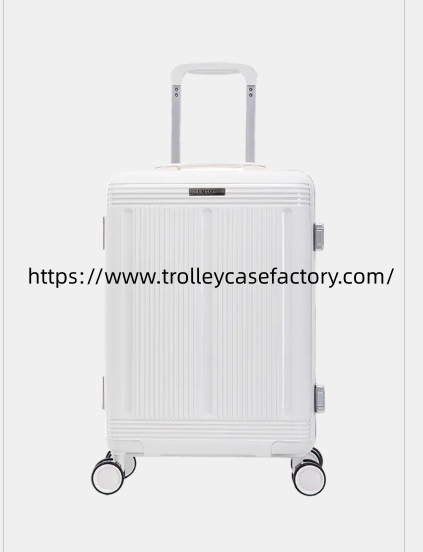

Silent Spinner Suitcase selection requires buyers to look beyond appearance, color, and advertised features. For luggage importers, retailers, and brand owners, the wheel assembly is an important part of the product development process. Its materials, rotating structure, mounting position, and connection with the case body can influence rolling behavior and everyday handling. A careful evaluation helps buyers define product requirements and communicate more clearly with manufacturing partners before placing bulk orders.
Examine the Wheel Material and Surface Structure
Wheel material is an important consideration when developing luggage for different customer groups. Softer elastic compounds may help reduce vibration and rolling noise on smooth indoor surfaces, while material hardness and wear characteristics also influence how the wheels respond to repeated use.
Buyers should ask suppliers about the available material options, tread construction, hardness specifications, and surface finish. They should also consider the intended retail market. Products designed mainly for airport terminals and hotel floors may have different requirements from models expected to travel frequently across outdoor pavement.
Visual inspection can help identify surface defects, uneven molding, and differences between individual wheels. However, material selection should also be evaluated through practical rolling and wear tests rather than appearance alone.
Review Bearings, Axles, and Rotating Connections
A wheel does not operate independently. Its movement depends on the relationship between the tread, hub, bearing or bushing, axle, and supporting housing.
Buyers should check whether the wheels rotate smoothly without unusual resistance, clicking, or visible side movement. The axle should remain properly positioned, and the connection between the wheel assembly and the case should be suitable for the intended load.
The swivel mechanism also deserves attention. Since a four-wheel design needs to change direction during movement, its rotating connection should allow controlled turning without excessive looseness. Buyers can test this by pushing the loaded sample forward, changing direction, and observing whether the wheels respond consistently.
These checks help purchasing teams identify design details that may affect the overall user experience.
Test Rolling Performance on Different Surfaces
A product that moves smoothly across a showroom floor may behave differently on tile joints, carpet, concrete, or outdoor pavement. Buyers should therefore evaluate samples under several representative conditions.
A practical test plan can include:
Rolling the loaded case across smooth flooring.
Changing direction through repeated turns.
Moving over small floor joints and surface transitions.
Checking wheel movement under different loading conditions.
Listening for clicking, scraping, or irregular rolling sounds.
If sound measurements are required, buyers should establish consistent testing conditions, including load, speed, distance, floor material, and microphone position. This makes comparisons between samples more meaningful.
It is also useful to inspect the wheel assemblies after repeated movement. Changes in rotation, visible wear, or increased looseness may indicate areas that need further engineering review.
Check How the Wheel Assembly Fits the Case Body
Wheel performance also depends on how the assembly connects to the luggage structure. Buyers should examine the mounting area, screw positions, housing dimensions, and reinforcement around the attachment points.
For hard-shell models, the wheel housing must be considered together with the shell thickness and internal structure. A suitable connection arrangement can help distribute forces during pulling, turning, and handling.
The external wheel position may also influence product dimensions and storage arrangements. Retail brands should review whether the selected configuration matches the planned case sizes and design language.
Before confirming a custom order, request drawings or sample assemblies for review. This allows the design team to check clearances, mounting positions, and possible interference with internal lining or storage compartments.
Evaluate the Complete Product, Not Only the Wheels
Although the wheel system receives considerable attention, buyers should also examine the handle, shell, zipper, lock, and interior layout. These parts work together during normal travel and handling.
The telescopic handle should extend and retract smoothly, with locking positions that are easy to operate. Buyers can check its stability under a representative load and inspect the connection between the handle tubes and case body.
Shell materials and structural design should match the intended product positioning. Interior dividers, straps, zipper arrangements, and storage pockets also influence how customers use the finished product.
A complete sample review helps buyers assess whether the selected components form a consistent product rather than treating each feature as an isolated specification.
Confirm Quality Control Before Bulk Production
Sample approval should establish a clear reference for the production order. Buyers can record wheel material, dimensions, bearing arrangements, housing design, shell specifications, and approved colors in the product documentation.
It is also useful to discuss inspection procedures with the factory. These may include incoming material checks, assembly inspections, rolling tests, handle operation checks, and final appearance reviews.
If a supplier proposes changing a wheel material, axle design, or other component, the change should be reviewed before production continues. Keeping an approved sample and written specifications helps purchasing teams compare later batches with the original requirements.
For overseas orders, buyers should also clarify packaging, carton dimensions, labeling, shipping arrangements, and spare component requirements. These details can affect inventory planning and communication with distributors.
Discuss Customization and Market Requirements
Different sales channels may require different combinations of colors, case sizes, wheel configurations, shell materials, and interior features. A retailer developing a coordinated collection may need several sizes with a consistent external appearance and shared component specifications.
Buyers should prepare target dimensions, expected order quantities, preferred materials, and reference designs before contacting a factory. Providing these details makes it easier to discuss sample development, production schedules, and quotation requirements.trolleycasefactory works with buyers on luggage product requirements and manufacturing arrangements. By discussing wheel configurations, shell designs, interior features, and order specifications, the company can help customers review suitable product options for their markets. Buyers interested in developing a new collection or reviewing available models can visit https://www.trolleycasefactory.com/product/ to view product information and contact the company about their purchasing requirements.
