

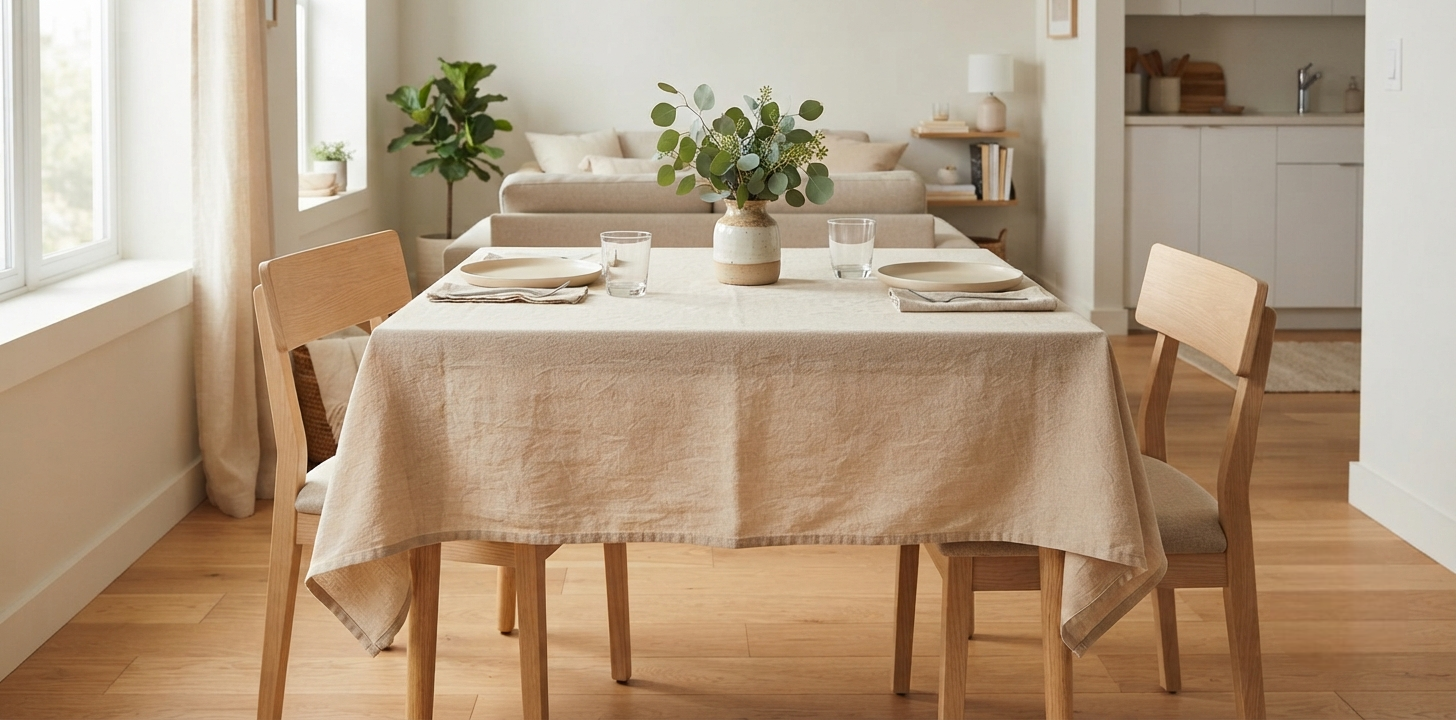

A dining table in a small apartment often serves more than one purpose. It may be where you eat breakfast, work on a laptop, enjoy dinner, or catch up with friends. Since the table is usually part of a shared living space, its appearance can influence how the entire room feels.
A well-chosen tablecloth can help define the dining area, add warmth, and protect the tabletop without making the room look crowded. The key is to consider the available space, furniture arrangement, and everyday needs before choosing a fabric or design.
1. Measure the Dining Table and Available Space
Before shopping for a tablecloth, measure the tabletop carefully. In a compact apartment, even a small amount of extra fabric can affect how easily people move around the table.
Record the length and width of a rectangular or square table, or measure the diameter of a round one. Decide how much fabric should hang over each edge. A shorter drop often works well in smaller rooms because it keeps the fabric away from chairs and walking areas.
Also consider the distance between the table and nearby walls, kitchen counters, or other furniture. Pull out the chairs and check that the tablecloth will not interfere with them.
2. Select a Color That Keeps the Room Feeling Open
Color can influence how a small dining space looks. Light and neutral shades such as cream, ivory, soft gray, and beige can create a calm appearance, especially when the dining area shares space with a living room.
A simple table cloth can help visually connect the dining table with nearby furniture. If your apartment already has colorful artwork, cushions, or rugs, a subtle tablecloth may provide a welcome visual break.
You do not have to avoid darker colors altogether. A deeper shade can add contrast to a light interior, particularly when repeated through smaller accessories. The important thing is to maintain a balanced color palette rather than introducing too many competing patterns.
3. Choose a Fabric That Fits Your Daily Routine
In a small apartment, the dining table may be used throughout the day. It helps to choose a fabric that is comfortable to handle and suitable for regular cleaning.
A cotton table cloth is a versatile option because it comes in different colors, patterns, and fabric weights. Depending on its construction and finish, cotton can be suitable for everyday dining and is often available in washable styles.
Consider how often you plan to remove and clean the covering. If the table doubles as a workspace, a practical fabric that is easy to take off and put back on can make daily use simpler.
Check the care label before washing, since fabric blends, decorative finishes, and construction methods may require different care.
4. Match the Tablecloth to the Table Shape
The right shape helps the tablecloth sit neatly and makes the dining arrangement look intentional.
For a round dining table, round table cloths follow the tabletop's outline and create an even drop around the edges. They can work especially well in a small breakfast corner or a compact dining nook.
If your apartment has a narrow rectangular table, a rectangle table cloth provides coverage along the full length. Measure both dimensions before selecting a size so the fabric does not hang too close to the seats.
For a square table, choose a covering that follows the tabletop's proportions. An even drop on all four sides helps create a tidy appearance without using unnecessary fabric.
5. Use Patterns Without Overwhelming the Space
Patterns can bring personality to a small dining area, but their scale matters. Large, busy prints may compete with nearby furniture, especially when the dining table is close to a sofa or kitchen island.
Small checks, narrow stripes, and understated botanical designs can introduce detail without dominating the room. A square table cloths style can also add a familiar, relaxed touch to a compact dining setup.
If the apartment already has patterned curtains or a detailed rug, consider a solid tablecloth. On the other hand, a simple room with plain walls and furniture may benefit from a subtle print.
Try to repeat one color from the pattern elsewhere in the room to make the arrangement feel connected.
6. Consider Dark Tablecloths for Contrast
A dark tablecloth can give a small dining area a defined focal point. Black, charcoal, and deep navy can look particularly striking against light walls or natural wood furniture.
A black table cloth can create contrast while giving the tabletop a clean, defined appearance. Pair it with light-colored plates, clear glassware, or a simple centerpiece to keep the setting balanced.
If the room has limited natural light, use dark fabric in moderation and avoid adding too many other dark elements around the table. A lighter centerpiece or nearby decor can help maintain visual balance.
7. Keep the Centerpiece Small and Functional
A compact dining table does not need a large decorative arrangement. A small vase, a shallow fruit bowl, or a single ceramic object can add interest while leaving enough room for meals.
Choose decorations that can be moved easily when you need extra serving space. A narrow runner is another option if you want to introduce texture without covering the entire tabletop.
Avoid tall or unstable objects that make conversation difficult or can be knocked over when people reach across the table. The arrangement should support everyday use rather than create extra work.
8. Make the Dining Area Easy to Maintain
In a small apartment, keeping surfaces clear can make the entire room feel more organized. Choose a tablecloth that can be removed without difficulty and avoid heavy trims that may catch on chairs.
After meals, clear away crumbs and spills according to the fabric's care instructions. If you use the table for work or other activities, consider folding the covering away when necessary or keeping a second option for dining.
A neat tablecloth, a simple centerpiece, and enough open space around the chairs can make even a compact dining corner feel welcoming.
Conclusion
A tablecloth can help a small apartment dining area feel more organized, comfortable, and connected to the rest of the home. Start with accurate measurements, choose a fabric that suits your routine, and select colors and patterns that complement the room without overwhelming it. With practical styling and the right fit, your dining table can remain both attractive and useful throughout the day. All Cotton and Linen offers tablecloth styles that can help bring a coordinated look to everyday apartment dining.
