

GCC Home Security Systems Market 2026 | Growth, Trends, and Demand by 2034

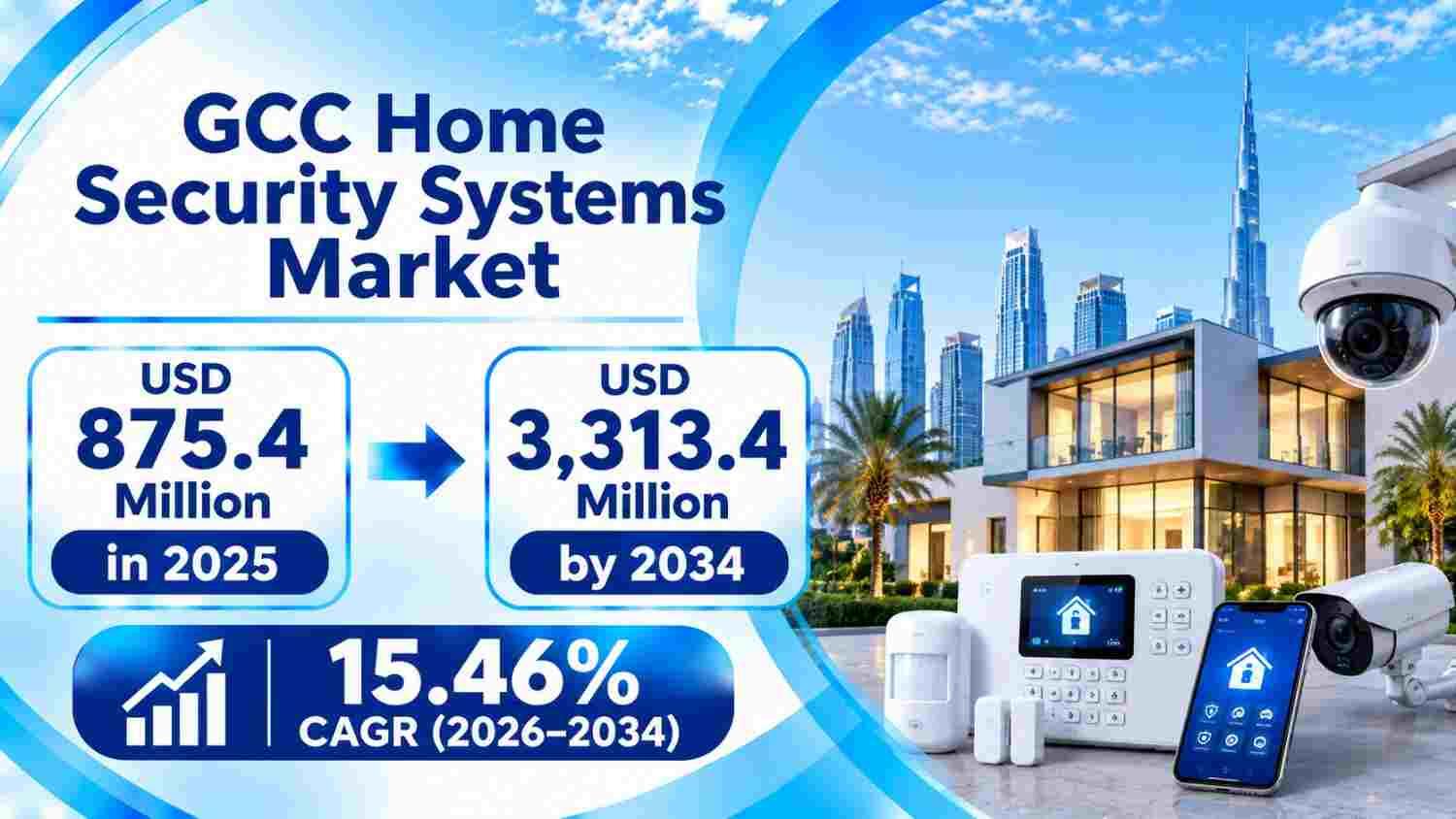
IMARC Group, a leading global market research and management consulting firm, has published its latest market intelligence report on the GCC Home Security Systems Market. The GCC home security systems market size was valued at USD 875.4 Million in 2025 and is projected to reach USD 3,313.4 Million by 2034, exhibiting a CAGR of 15.46% during 2026-2034. Growth is being driven by rising consumer awareness of appropriate security needs, falling prices of home security products, the adoption of new technologies, the booming construction industry, the rise of DIY systems and a large young population.
A home security system secures the entry points such as doors and windows as well as the interior space that contains valuables, and typically includes door and window sensors, wired or wireless security cameras, a high-decibel siren or alarm, motion sensors and a control panel. Over the past few years, prices of home security products have been decreasing, making these systems affordable for a larger population group, while manufacturers keep introducing technological innovations that raise demand for quality systems across the GCC. At the same time, a booming construction industry is adding new homes and communities that are specified with security from the outset, and a large young population is comfortable with app-controlled and DIY solutions. Combined with strong government backing for regulated, smart security, these forces are reshaping the competitive landscape across Saudi Arabia, the UAE, Qatar, Kuwait, Oman and Bahrain.
GCC Home Security Systems Market at a Glance:
- Market Size (2025): USD 875.4 Million
- Market Forecast (2034): USD 3,313.4 Million
- Growth Rate (2026-2034): CAGR of 15.46%
- Base Year: 2025 | Historical Period: 2020-2025 | Forecast Period: 2026-2034
- Leading Residence Type: Independent Homes, the largest segment on account of the rising rate of theft and burglary across the region
- Leading Product Type: Video Surveillance, which dominates the market as it can be accessed remotely and provides optimum vigilance
- Leading Country Markets: Saudi Arabia and the UAE, which currently hold the majority of the market share on account of increasing security threats and breaches
How AI is Reshaping the Future of the GCC Home Security Systems Market
- On-Premise AI Detection in Video Security: At Intersec Dubai in January 2026, Motorola Solutions announced new on-premise AI detection capabilities for its Avigilon video security platform, as AI-driven video analytics move closer to the camera and the edge. Such capabilities support faster alerts and reduce false alarms, relevant for the video surveillance segment that dominates home security.
- Security Convergence and AI-Driven Response: Intersec 2026, held in Dubai from 12 to 14 January, reflected the growing convergence of physical security, cybersecurity, fire protection and AI-driven emergency response, with themes dominating both the show floor and the conference program. The largest edition to date drew more than 50,000 trade visitors and over 1,200 exhibitors from more than 60 countries.
- Smart Access and Keyless Security: The agreement signed at Intersec 2026 underscored Dubai's push toward smart, regulated urban security systems, including the involvement of UXE in the emirate's Keyless Security Project for holiday homes, showing how connected access control is entering the residential market.
Grab a sample PDF of this report: https://www.imarcgroup.com/gcc-home-security-systems-market/requestsample
GCC Home Security Systems Market Trends and Drivers:
Demand for home security systems across the GCC is being underpinned by rising awareness of security needs. Consumers are paying closer attention to protecting their homes and valuables, and independent homes, with the rising rate of theft and burglary, represent the largest residence segment. Video surveillance dominates because it can be accessed remotely and provides optimum vigilance, while wireless sensors have been experiencing positive growth owing to rapid advancements in technology.
The region's structural differentiator is the combination of falling prices and rapid housing growth. The prices of home security products have decreased, making these systems affordable for a larger population group, and the booming construction industry keeps adding residential supply. Dubai's real estate sector recorded more than 270,000 transactions worth AED 917 Billion in 2025, up 20% year on year, and in the first half of 2026 around 104 real estate projects worth more than AED 100 Billion were recorded, adding more than 24,000 new units.
A third driver is the rise of DIY systems and a large young population. DIY installations let tech-savvy residents, including tenants in apartments and condominiums, set up wireless cameras and sensors without professional installation, while a young population that is comfortable with smartphone apps and connected devices is more open to smart home adoption, a dynamic that is set to intensify over the coming decade.
Government Schemes and National Programs Driving Demand:
- Dubai Security Industry Regulation and Smart Security Projects: The Security Industry Regulatory Agency (SIRA) regulates the security sector in Dubai, and at Intersec 2026 it presented initiatives supporting the development and regulation of the sector. The emirate's Keyless Security Project for holiday homes reflects the push toward smart, regulated urban security systems.
- Saudi Vision 2030 Housing Program: Saudi Arabia targets raising citizen homeownership to 70% by 2030, with the National Housing Company awarding SAR 5 billion across six projects in June 2026 alone, according to the Saudi Contractors Authority, expanding the base of newly built homes that need security systems.
- Dubai Real Estate Sector Strategy 2033: The strategy seeks to raise Dubai's real estate transaction volume by 70% to reach AED 1 Trillion, building on a record 2025 in which transactions exceeded AED 917 Billion, and driving a continuous pipeline of new residential units.
- UAE Digital Economy Strategy: The UAE Cabinet adopted the strategy to double the digital economy's contribution to GDP from 9.7% to 19.4% by 2031, backed by more than 30 initiatives and programmes, supporting the connected devices and digital platforms on which smart home security depends.
GCC Home Security Systems Industry Segmentation:
The report has segmented the market into the following categories:
Breakup By Residence Type:
- Independent Homes
- Condominiums
- Apartments
Independent homes represent the largest segment on account of the rising rate of theft and burglary across the region. The report also provides a detailed breakup and analysis of condominiums and apartments.
Breakup By Product Type:
- Video Surveillance
- Intruder Alarms
- Fire Protection
- Access Control
- Others
Video surveillance dominates the market as it can be accessed remotely and also provides optimum vigilance. The report also provides a detailed breakup and analysis of intruder alarms, fire protection, access control and others.
Breakup By Sensor Type:
- Wireless Sensors
- Wired Sensors
Wireless sensors have been experiencing positive growth over the past few years owing to rapid advancements in technologies, while the report also provides a detailed breakup and analysis of wired sensors.
Breakup By Installation Type:
- Professional Installation
- DIY Type Installation
The report provides a detailed breakup and analysis of the market by installation type, covering professional installation and DIY type installation, with the rise of DIY home security systems highlighted as a growth factor.
Breakup By Country:
- Saudi Arabia
- UAE
- Qatar
- Kuwait
- Oman
- Bahrain
Saudi Arabia and the UAE currently hold the majority of the market share on account of increasing security threats and breaches. The report provides a comprehensive analysis of all six country markets.
Competitive Landscape:
The report examines the competitive landscape of the GCC home security systems industry, along with the profiles of the key players. Global security technology providers, regional integrators and installers are competing through video analytics, wireless and DIY product ranges, smart access control and expanding installation and monitoring services.
What Does The Full Report Cover?
- Historical, current, and forecast market size for the GCC home security systems market from 2020 to 2034
- Market breakup by residence type, product type, sensor type, installation type, and country
- Country-level analysis covering Saudi Arabia, the UAE, Qatar, Kuwait, Oman, and Bahrain
- Key market drivers and challenges, along with the value chain of the market
- Porter's Five Forces analysis and SWOT analysis of the industry
- Competitive landscape and insight into the current positions of key players
- Detailed profiles of key players operating in the GCC home security systems market
Recent News and Developments in the GCC Home Security Systems Market
- January 2026: Intersec 2026 opened at the Dubai World Trade Centre on 12 January, the largest edition in the show's history, with more than 1,200 exhibitors from over 60 countries and more than 50,000 trade visitors, across five sectors including commercial and perimeter security and fire and rescue.
- January 2026: Motorola Solutions announced new on-premise AI detection capabilities for its Avigilon video security platform at Intersec Dubai, running from 12 to 14 January.
- January 2026: The Dubai Land Department reported that Dubai's real estate sector achieved its strongest year to date in 2025, with more than 270,000 transactions worth AED 917 billion, up 20% year on year, supporting the pipeline of new homes.
- June 2026: Saudi Arabia's National Housing Company awarded SAR 5 billion across six projects in June 2026, according to the Saudi Contractors Authority, as the Kingdom works toward its 70% citizen homeownership target.
- October 2026: Dubai Land Department officials reported around 104 real estate projects worth more than AED 100 billion in the first half of 2026, up 52% in project value, adding more than 24,000 new units, up 36% year on year.
Note: If you require specific details, data, or insights that are not currently included in the scope of this report, we are happy to accommodate your request. As part of our customization service, we will gather and provide the additional information you need, tailored to your specific requirements. Please let us know your exact needs, and we will ensure the report is updated accordingly to meet your expectations.
Key Questions This Report Answers
- How big is the GCC home security systems market and what is its growth outlook through 2034?
- What are the key growth drivers and challenges in the GCC home security systems market?
- How do independent homes, condominiums, and apartments compare as residence types?
- How do video surveillance, intruder alarms, fire protection, and access control compare as products?
- How do wireless and wired sensors and professional and DIY installation shape the market?
- How do Saudi Arabia, the UAE, Qatar, Kuwait, Oman, and Bahrain compare as country markets?
- Who are the key players in the GCC home security systems market, and how is the competitive landscape evolving?
About Us
IMARC Group is a global management consulting firm that helps the world's most ambitious changemakers to create a lasting impact. The company provides a comprehensive suite of market entry and expansion services. IMARC offerings include thorough market assessment, feasibility studies, company incorporation assistance, factory setup support, regulatory approvals and licensing navigation, branding, marketing and sales strategies, competitive landscape and benchmarking analyses, pricing and cost research, and procurement research.
Media and Sales Contact
IMARC Group
Email: [email protected]
United States: +1-201-971-6302
India: +91-120-433-0800
United Kingdom: +44-753-714-6104
