

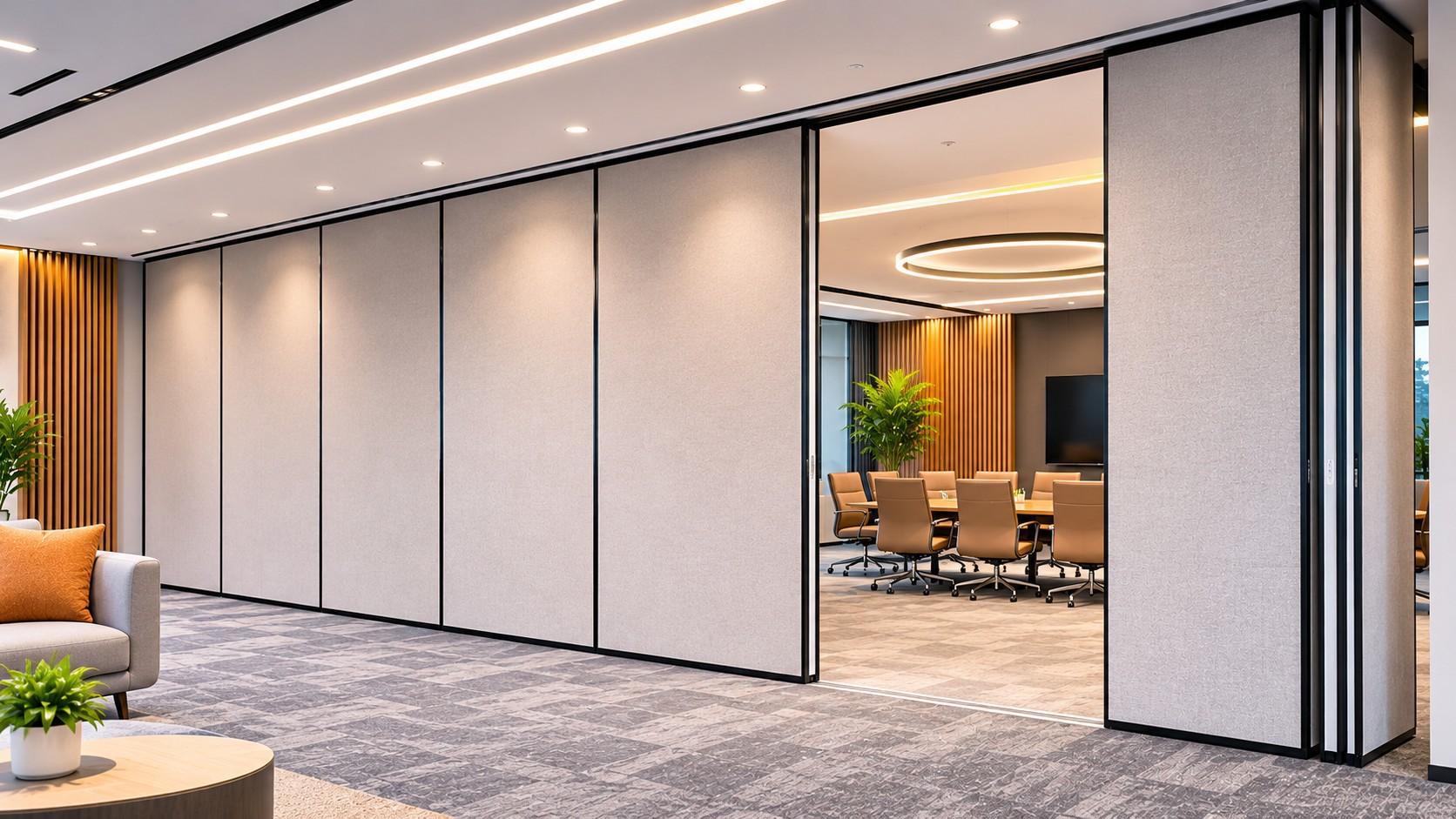
Sliding Partition: Flexible Walls That Let Commercial Rooms Switch Roles in Minutes

Commercial rooms rarely hold one layout from open to close. A ballroom may host a business seminar by day and a wedding reception at night, and a training hall may split into several rooms between sessions. A sliding partition from PackSound lets businesses divide or open a space in minutes while keeping each zone acoustically comfortable.
Inside the Partition
A sliding partition is a set of rigid panels suspended from an overhead track. The panels glide into position, lock together to form a continuous wall, and stack to one side when the room needs to open up. Each panel pairs a dense core with layered facings and sealing strips along its edges. When locked, the seals compress and close the gaps where sound normally leaks.
Where Commercial Projects Use Them
- Banquet halls, ballrooms, and convention centres
- Conference rooms and boardrooms
- Training centres, institutes, and classrooms
- Hotels, resorts, and event venues
- Co-working spaces and business centres
- Hospitals, clinics, and institutional buildings
Understanding the Acoustic Rating
Sound Transmission Class (STC) measures how well a partition blocks sound, and higher values mean less noise passes between rooms. Panel thickness, core density, and seal quality all influence the rating. Floor and ceiling seals count as much as the panels, so good systems use automatic drop seals and tight head and jamb details.
Commercial Advantages
Sliding partitions allow one room to serve several purposes, which improves space use and event revenue. They install faster and cost less than permanent construction, and layouts can change whenever business needs shift. Laminate, veneer, fabric, and painted finishes help panels match the interior, while fire-rated options support commercial compliance.
Questions to Ask Before Buying
Compare STC ratings, panel weight, track strength, and fire certification. Confirm the ceiling can carry the load, because overhead tracks support the full weight of the panels. Ask about stacking space, manual or motorised operation, and maintenance needs. Request finish samples, and use trained installers, since poor alignment weakens both sound performance and daily operation.
Keep in mind that sliding partitions rarely match the isolation of solid masonry. For highly confidential rooms, pair them with acoustic ceilings, sealed ceiling voids, and sound-rated doors.
Picking Experienced Suppliers
Look for commercial project experience, test-based specifications, and support through installation and servicing. Ask for sample reports, warranty terms, and references. Working with established Sliding Partition Manufacturers means panels, tracks, and seals are engineered as one system, backed by the technical support needed to keep them performing for years.
