

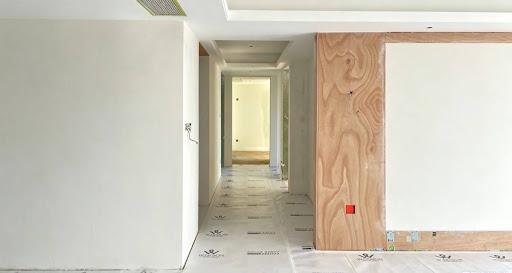

In a cool room with light traffic, standard carpet film can stay down for about thirty to forty five days, and long life grades stretch that to around sixty days in gentle conditions. Heat, direct sun and heavy traffic all shorten the safe period, sometimes by half. A film left down past its limit does not simply stop working: its adhesive keeps gripping harder week by week, until removal turns into a fight and the pile pays with lifted fibres or a grey shadow of residue. The safe answer is a range, not a date.
Four things decide where a job falls inside that range. The adhesive keeps flowing and bonding long after it feels set. Traffic presses the film deeper into the pile and works dust into the bond. Heat from radiators, underfloor heating and sunny windows speeds the bonding up. And the carpet itself has a say, because deep pile and wool punish a film that outstays its welcome. The range belongs to the room as much as to the roll, so the working habits are simple: write the laying date where everyone can see it, check the film every week, and replace tired sections before the whole floor reaches its limit at once.
What the adhesive is doing while nobody watches
Adhesive does not sit still under a film. Week by week it wets the fibres more fully, flowing into the pile and building a stronger bond than the one it had on day one. Warm rooms speed this up, and heavy traffic presses the adhesive deeper where boots turn and trolleys pass. At the same time the top of the film is being scuffed thin in the traffic lanes, so protection fades exactly where the grip grows strongest. That crossing point, weaker on top and stronger underneath, is where long jobs start to go wrong. Nothing on the surface warns you it is coming.
The guidance professionals work to
Most films carry a working window, and experienced teams treat the end of that window as a fence, not a target. Light films are meant for days, standard carpet films for a few weeks of ordinary traffic, and the toughest grades for longer commercial work where they are checked as they go. The exact figures vary by product, which is why the sheet that comes with the roll matters more than habit. A team that cannot find the window for its film has a simpler rule: the shorter the promise, the sooner the film should be lifted and judged. Guesswork is not a specification. Habit is not either. The wear time figures published by Surface Film Global follow the same ranges, and they are a sensible starting point for any long job.
Checking film that has to stay down for weeks
A long job does not need the whole floor lifted every week. It needs a corner. Pick the busiest doorway, peel back a hand span of film, and look at what the peel tells you. Clean fibres and an easy release mean the film can stay. Tacky fibres, a grey cast on the pile, or a strip that has worn thin in the traffic lane mean that section should come up and be replaced while the rest stays down. Ten minutes with a corner saves the argument at the end of the job, when the whole room is lifted at once. It is the cheapest inspection on the whole job.
Heat, sunlight and the rooms that age film fastest
Two rooms on the same job can age the same film at different speeds. A hall with underfloor heating keeps the adhesive warm and active all day. A south facing lounge bakes its strips through the glass, hour after hour, while the shaded bedroom next door stays cool and easy. Radiators dry the air and the fibres, and a wood stove turns one corner of a room into a small oven. Professionals learn to read the house as well as the roll, shortening the window in warm rooms and checking the strips near heat first, because that is where removal day will be decided. The house keeps its own timetable.
Replacing in sections instead of suffering to the end
On a long renovation the smart move is often to renew the film before it fails. Stair runs and hall strips take ten times the traffic of a bedroom, and they can be lifted and replaced on a quiet afternoon while the rest of the house stays covered. A fresh roll costs little compared with a carpet claim, and the swap resets the clock where the clock runs fastest. Teams that plan the job in phases, protection included, rarely meet the disaster of a whole house of film that has quietly turned into glue. It is maintenance, not waste.
The removal day test
In the end, a film should be judged by the day it comes up, not the day it goes down. Fresh film that peels away in clean sheets, leaving the pile springy and unmarked, has done everything asked of it. Film that fights, strings and shadows the carpet has stayed too long, whatever the calendar says. The teams who understand carpet protection film as a material with a working life, rather than a floor covering to forget about, are the ones whose clients lift the last strip and find the carpet they remember. That is the only deadline that really counts.
