

How warehouses and factories protect floors during maintenance and shutdown work

Warehouses and factories protect floors during maintenance and shutdown work by covering them before the first machine moves, because shutdown traffic is the heaviest traffic a floor ever meets. In one week the floor carries motors awaiting cranes, dragged production lines, hired plant standing where plant never stands, oil, swarf and chemical spills, and hundreds of contractor boots on the same lanes. A resin or polished industrial floor that took a decade to pay for can be scarred in those five days, and unlike a machine it cannot be sent away for repair.
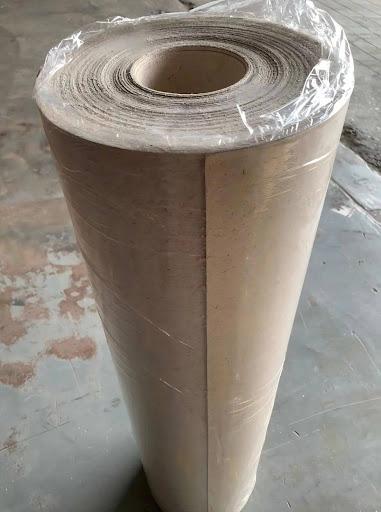
The covering that matches that week is heavy duty protection planned as a line item beside the cranes and the scaffolding, not an afterthought bought on the Friday. It goes down over the traffic lanes, the machine positions and the drip zones, in film and cushioned builds that spread loads and absorb impacts, and it stays down until the restart deadline, when removal becomes part of the recommissioning itself. Ordered against the shutdown plan in the widths and builds each floor actually needs, the covering arrives ready to lay in the right sequence instead of being improvised on the day from whatever the merchant happens to have in stock.
Shutdown week is not ordinary traffic
The loads in a shutdown belong to another world from building work. Machine feet concentrate tonnes onto pads the size of a saucer. Skates and rollers drag those tonnes across the floor on planned routes, grinding as they go. Forklifts run all day with tight turns that twist lesser coverings into ribbons. Contractors park toolboxes, welders and cable reels wherever the work is, and the work is everywhere. Ordinary protection is not insulted by this treatment; it is simply out of its depth within the first hour, which is why industrial teams reach for a different class of material from the first morning. They have usually learned this once already, the expensive way.
Oil, swarf and chemicals join the attack
A factory floor during maintenance is attacked chemically as well as mechanically. Gear oil finds every seam. Cutting fluid pools under machines. Swarf, the sharp confetti of machining, embeds itself in boots and coverings alike and then grinds against the floor with every step. Solvents splash, batteries leak, and hydraulic lines weep under pressure. The protection has to shrug off all of it, as a sealed skin the contaminants sit on, to be swept, contained and lifted away at the end. A covering that absorbs oil or tears under swarf merely moves the problem closer to the floor.
Laying protection in an industrial space
Laying out a plant is planned like a roadworks scheme. The drag routes for machinery are mapped first and given the strongest build, boards over film where the skates will run. Forklift lanes get continuous runs with seams taped flat and overlaps facing away from the direction of travel. Walkways for people are marked on top of the protection, so boots stay off the machine routes and everyone can read the floor at a glance. The work takes a crew the best part of a day, and it is treated as production work, not housekeeping, because the restart date depends on it as surely as on any spanner. A plant laid out properly on Saturday morning is a plant that can be worked in safely all week.
Protecting the coating is protecting the business
The economics are blunt. Repairing a resin floor means grinding out the damage, recoating a section that will never quite match, and closing that part of the plant while it cures, all to fix harm that a planned covering would have prevented for a fraction of the price. In food, pharmaceutical and electronics plants the stakes rise again, because a damaged coating can fail an audit as well as an inspection. Floors in such buildings are part of the licence to operate. Protecting them during the one week they are truly at risk is not caution. It is compliance with common sense.
Removal and the restart deadline
Shutdown protection is lifted against the clock, and it is planned backwards from the restart. Sections come up as each area is handed back, so the floor can be inspected, washed and marked again while the last machines are still being bolted down. Anything the protection reveals, a scuff, a stain that crept under a seam, is dealt with in hours, not discovered by the first shift on Monday. A covering that peels cleanly in long runs earns its money here most of all, because the last night of a shutdown has no slack in it for scraping adhesive. Time spent fighting the covering is time stolen from the restart itself.
What good shutdown protection looks like
When it is done well, the striking thing about shutdown protection is how little drama it creates. Machines move, oil stays on the surface it was spilled on, the restart happens on the hour, and the floor that emerges looks like the week never touched it. The plant manager walks the lines on Monday past a floor that tells no stories. Achieving that quiet result took a crew, a plan and the right material, chosen before the line stopped. In industrial work, that is simply what preparation means. The floor was ready for the week because somebody treated it as part of the plant, not part of the scenery.
