

Skin Care Products Market Size, Share and Growth to Reach USD 234.6 Billion by 2032

The global Skin Care Products Market continues to expand as consumers increasingly prioritize personal grooming, skin health, and beauty routines. Rising awareness of skincare benefits, growing demand for natural ingredients, and increasing popularity of premium beauty products are creating opportunities for manufacturers and retailers worldwide.
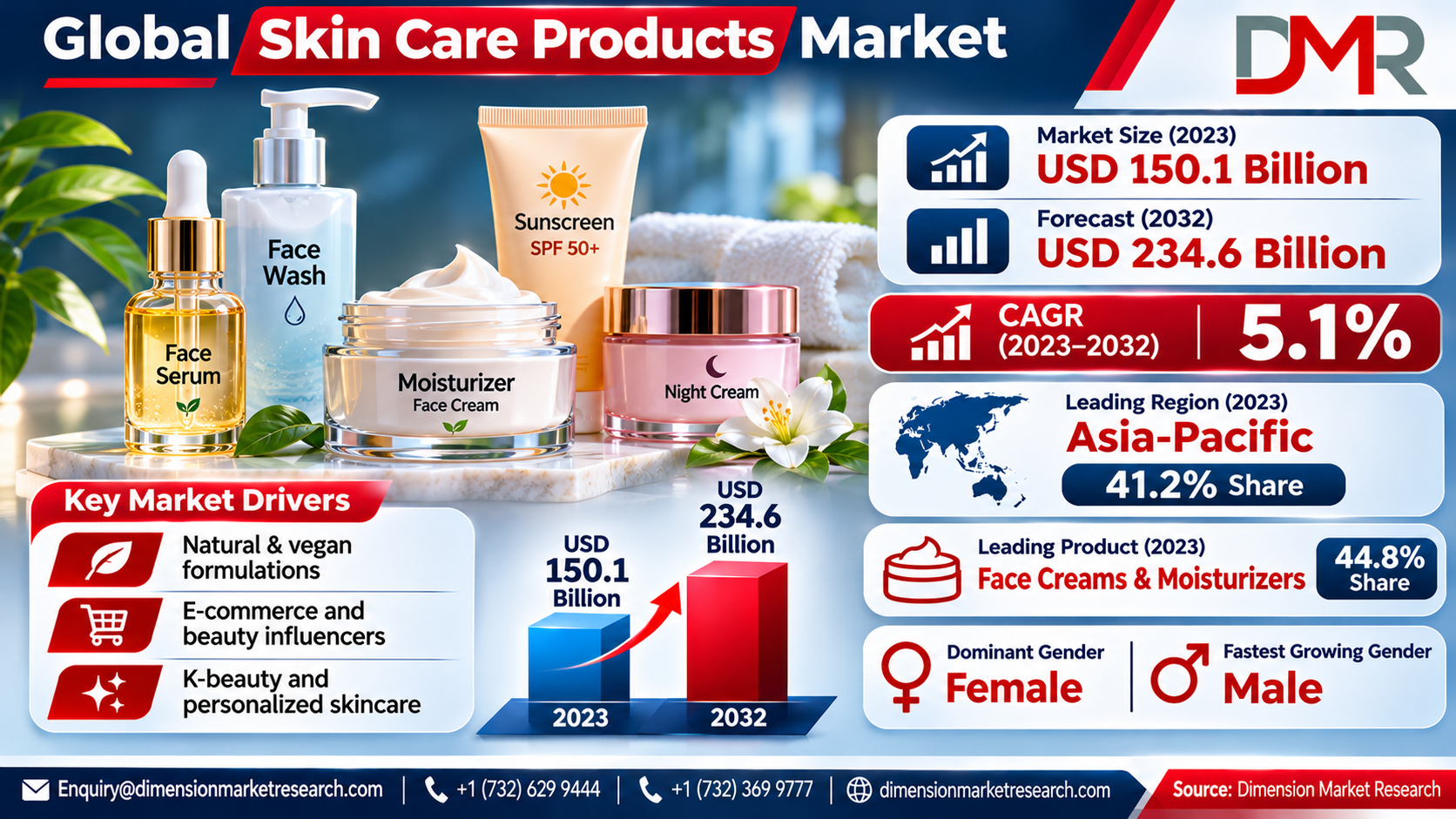
According to Dimension Market Research, the global Skin Care Products Market was valued at USD 150.1 billion in 2023 and is projected to reach USD 234.6 billion by 2032, registering a compound annual growth rate (CAGR) of 5.1% during 2023 to 2032.
Increasing demand for moisturizers, sunscreens, anti-aging creams, and specialized skincare formulations is supporting industry development. Meanwhile, eCommerce expansion, social media marketing, and personalized beauty solutions are changing how consumers discover and purchase skincare products.
What Is the Skin Care Products Market?
The Skin Care Products Market includes products designed to cleanse, moisturize, protect, and improve the appearance and condition of the skin.
Major product categories include cleansers and facewash, body creams and moisturizers, face creams and moisturizers, shaving lotions and creams, sunscreens, and other specialized skincare products.
These products are distributed through supermarkets, hypermarkets, pharmacies, convenience stores, and online retail platforms.
The industry serves female and male consumers across different age groups and skincare requirements. Manufacturers increasingly focus on ingredient quality, product effectiveness, convenient formulations, and personalized skincare experiences.
What Is Driving Skin Care Products Market Growth?
Increasing Awareness of Skin Health and Personal Care
Growing consumer awareness regarding skin hydration, sun protection, and preventive skincare is supporting demand for daily-use products.
Consumers are becoming more informed about ingredients, product benefits, and skincare routines through digital platforms and beauty professionals.
This awareness encourages spending on moisturizers, cleansers, sunscreen, and anti-aging formulations.
Rising Demand for Natural and Organic Skincare
Consumer preference for natural, vegan, and cruelty-free products is influencing skincare innovation.
Manufacturers are developing formulations containing plant-based ingredients and moisturizing compounds to address demand for more environmentally conscious beauty products.
The popularity of Korean beauty routines is also encouraging interest in hydration-focused products, serums, sheet masks, and multi-step skincare practices.
Expanding eCommerce and Social Media Influence
Online shopping platforms are improving product accessibility and enabling skincare brands to reach broader consumer audiences.
Social media influencers, beauty tutorials, and product reviews increasingly influence purchasing decisions, particularly among millennials and Gen Z consumers.
Digital platforms also allow manufacturers to introduce new products and communicate directly with customers.
Get a Free Sample of the Skin Care Products Market Report
https://dimensionmarketresearch.com/request-sample/skin-care-products-market/
Skin Care Products Market Share by Product, Gender and Distribution Channel
By Product: Face Creams and Moisturizers Lead with 44.8% Share
The Face Cream & Moisturizers segment accounted for approximately 44.8% of global market revenue in 2023, making it the leading product category.
This dominance is supported by frequent product usage, growing awareness of skin hydration, and demand for daily moisturizing solutions.
Consumers increasingly prefer products offering hydration, skin nourishment, and protection against environmental conditions.
Meanwhile, Shaving Lotions & Creams are projected to record strong growth through 2032, supported by increasing grooming awareness and demand for specialized shaving products.
By Gender: Female Consumers Dominate
The Female segment held the largest market share in 2023, reflecting established beauty routines and widespread use of multiple skincare products.
Demand includes moisturizers, cleansers, serums, masks, creams, and specialized treatment products.
However, the Male segment is projected to register the fastest growth during the forecast period.
Increasing awareness of personal grooming, skincare hygiene, anti-aging products, and sun protection is encouraging greater product adoption among male consumers.
By Distribution Channel: Offline Retail Maintains Leadership
The Offline segment dominated the market in 2023, with Hypermarkets & Supermarkets leading within offline distribution.
These stores offer extensive product selections, competitive pricing, and convenient access to established skincare brands.
Consumers can compare products, review packaging, and purchase multiple personal care items during regular shopping visits.
Convenience Stores are expected to experience strong growth, supported by accessible locations and demand for frequently purchased skincare products.
Meanwhile, Online channels continue gaining importance through product discovery, digital promotions, and direct-to-consumer brand strategies.
Skin Care Products Market Share and Regional Growth Analysis
Asia-Pacific Leads with 41.2% Market Share
Asia-Pacific dominated the global market with approximately 41.2% revenue share in 2023.
The region benefits from a large consumer population, expanding beauty awareness, and established skincare manufacturing capabilities.
China plays a significant role in both skincare consumption and production, supported by its extensive manufacturing ecosystem and domestic consumer demand.
India also presents opportunities through rising personal care awareness, expanding retail networks, and growing interest in premium skincare formulations.
Japan and South Korea contribute through established beauty industries and innovation in skincare ingredients and product formats.
North America Supports Premium Skincare Demand
North America represents an important market for premium skincare, anti-aging products, and ingredient-focused formulations.
The United States and Canada have established beauty retail infrastructure and consumers interested in specialized skincare routines.
Increasing demand for personalized products and skin health solutions supports regional market development.
Europe Expands Sustainable Skincare Opportunities
Europe represents a significant market for skincare products, supported by consumer interest in product quality, ingredient transparency, and sustainable beauty solutions.
Germany, the United Kingdom, France, and Italy are among the countries included in the regional market assessment.
Growing demand for plant-based formulations, premium products, and environmentally conscious packaging creates opportunities for manufacturers.
Emerging Trends Influencing Skin Care Products Market Growth
Personalized Skincare and AI-Based Recommendations
Artificial intelligence is increasingly being explored for skin analysis and personalized product recommendations.
Digital tools can help consumers identify products based on skincare preferences and individual concerns.
For manufacturers, personalized solutions create opportunities to strengthen customer engagement and differentiate product portfolios.
Growing Popularity of Korean Beauty Products
Korean beauty trends continue influencing global consumer preferences through hydration-focused formulations, serums, sheet masks, and layered skincare routines.
The popularity of K-beauty encourages product innovation and creates opportunities for international expansion.
Increasing Demand for Sustainable Beauty
Consumers are showing greater interest in vegan formulations, cruelty-free products, and environmentally conscious skincare.
Manufacturers responding to these preferences may benefit from stronger product differentiation and improved brand positioning.
Competitive Landscape and Skin Care Products Market Opportunities
The global competitive landscape includes established beauty manufacturers and emerging skincare brands.
Prominent participants identified in the report include Avon Products, Inc., Beiersdorf AG, Unilever, Coty Inc., Revlon, Johnson & Johnson Inc., L'Oréal S.A., Colgate-Palmolive Company, and Procter & Gamble (P&G).
Companies compete through product innovation, ingredient development, pricing strategies, distribution expansion, and brand positioning.
In June 2025, L'Oréal acquired a majority stake in Medik8, strengthening its presence in premium dermatological skincare.
In May 2025, E.l.f. Beauty completed its acquisition of Rhode, expanding its participation in the skincare industry.
Increasing demand for specialized formulations, men's skincare, and digital retail solutions is creating additional opportunities.
However, intense competition, changing consumer preferences, product development costs, and ingredient-related regulatory requirements remain important industry challenges.
Skin Care Products Market Growth Outlook Through 2032
The skincare industry is expected to develop steadily as consumers continue investing in personal care, product quality, and specialized beauty solutions.
Premiumization, natural ingredients, digital commerce, and personalized skincare technologies are expected to influence future market development.
For manufacturers and retailers, opportunities include expanding product portfolios, strengthening online distribution, and developing formulations addressing specific consumer requirements.
Explore the Complete Skin Care Products Market Analysis
https://dimensionmarketresearch.com/checkout/skin-care-products-market/
Frequently Asked Questions About Skin Care Products Market Size, Share and Growth
1. What is the global Skin Care Products Market Size?
The global Skin Care Products Market was valued at USD 150.1 billion in 2023 and is projected to reach USD 234.6 billion by 2032.
2. What is the expected Skin Care Products Market Growth Rate?
The global market is projected to register a CAGR of 5.1% during 2023 to 2032, supported by increasing skincare awareness, rising personal care spending, and expanding digital retail channels.
3. Which product segment dominates Skin Care Products Market Share?
Face Cream & Moisturizers dominated the product segment with approximately 44.8% revenue share in 2023, supported by frequent usage and growing demand for hydration-focused skincare products.
4. Which region holds the largest Skin Care Products Market Share?
Asia-Pacific led the global market with approximately 41.2% revenue share in 2023, supported by strong consumer demand, established manufacturing infrastructure, and expanding beauty awareness.
5. Which consumer segment is expected to experience the fastest Skin Care Products Market Growth?
The Male segment is projected to experience the fastest growth during the forecast period, supported by increasing awareness of grooming, skincare hygiene, sun protection, and anti-aging products.
Conclusion: Skin Care Products Market Growth Opportunities Through 2032
The global skincare industry continues to benefit from increasing consumer awareness, expanding beauty routines, and demand for innovative personal care products.
Natural formulations, personalized skincare, eCommerce expansion, and premium beauty products are influencing industry development.
With the market forecast to reach USD 234.6 billion by 2032, opportunities are emerging for manufacturers, retailers, ingredient suppliers, and digital beauty brands.
Companies emphasizing product innovation, consumer preferences, and accessible distribution channels will be better positioned to compete in the evolving skincare industry.
