

What Is Home Decor: How to Get the Look Without a Renovation
If your home feels tired but a renovation is out of reach, the answer is simpler than you think. what is home decor? It is the art of making a home feel calm, welcoming and personal through colour, light, furniture, texture and small details — no builders, no big budget, no knocking down walls. Most of the changes that matter most cost very little, and you can do them one room at a time.
What Is Home Decor, Really?
Home decor is not about buying expensive furniture or copying a showroom. It is about how a room feels when you walk into it. A well-decorated room has a clear purpose, colours that sit comfortably together, light that flatters the space, and a few personal touches that show who lives there.
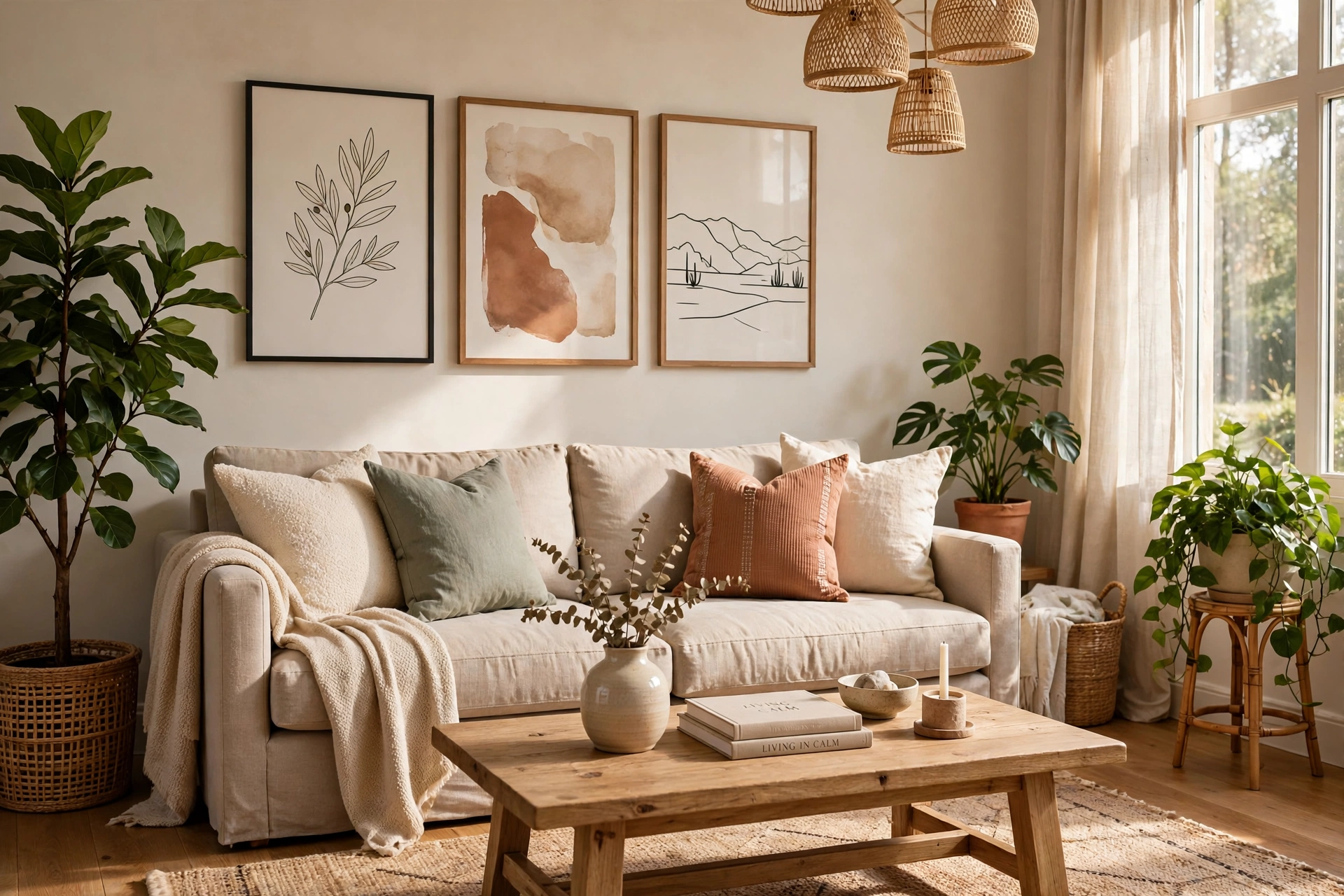
Think of it in layers. The first layer is the room itself: walls, floor and light. The second is the furniture: where it sits and how it is used. The third is the soft layer: cushions, curtains, rugs and throws. When the layers work together, even a small room feels finished.
Start With Colour: One Palette for the Whole Home
Colour is the fastest way to change how a home feels, and it costs almost nothing. The mistake most beginners make is choosing a different colour for every room, which makes the home feel restless, as if each room belongs to a different house.
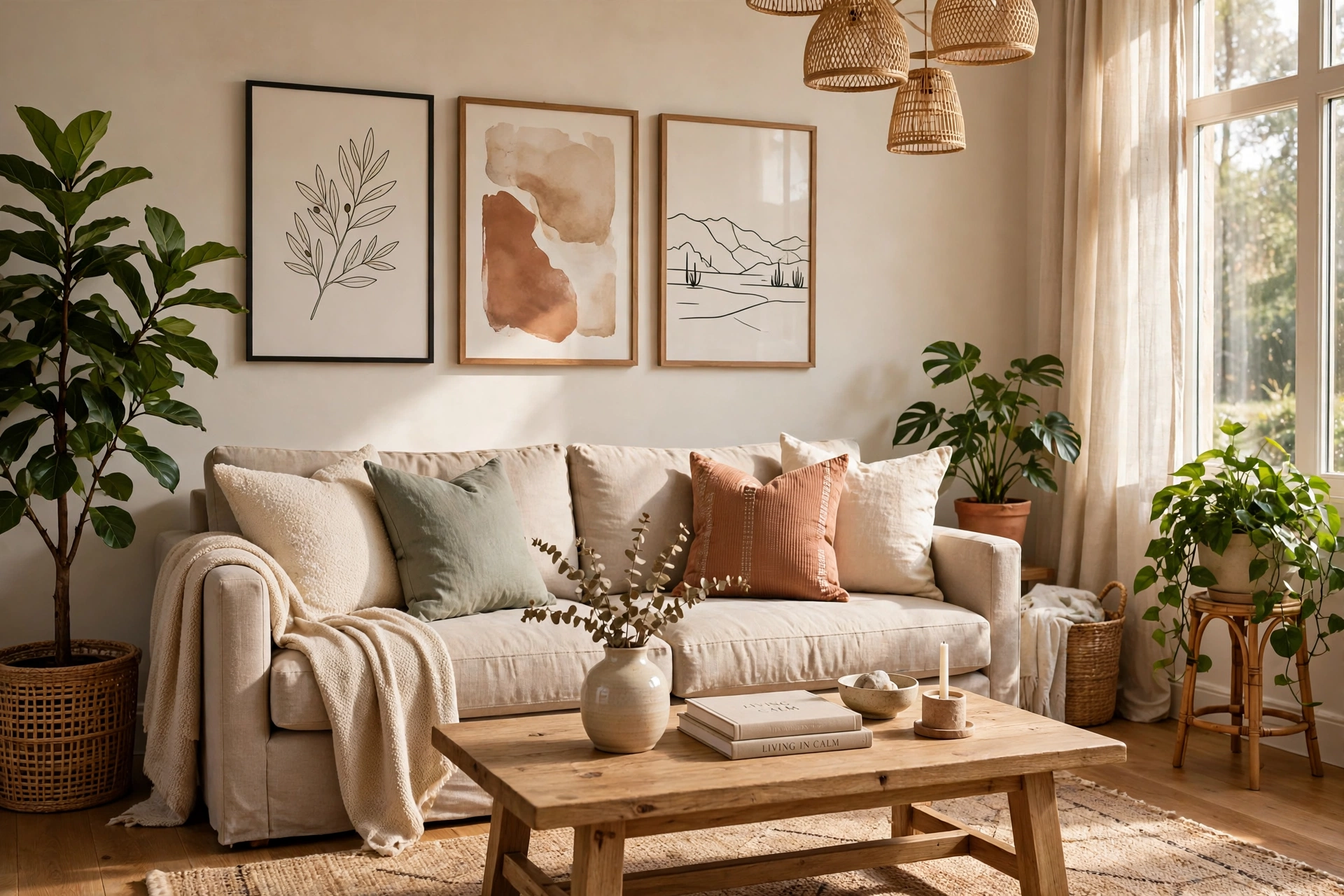
Pick one palette and use it across your home. Choose a light neutral for the walls — warm white, soft cream or pale grey — then one main colour you love, and one accent for small touches. A soft sage green works beautifully with warm wood and cream, while a dusty blue suits white furniture and pale floors. Repeat your main colour in small amounts in every room: a cushion here, a picture frame there. That repetition is what makes a home feel planned instead of random.
Light First: The Cheapest Home Decor Upgrade
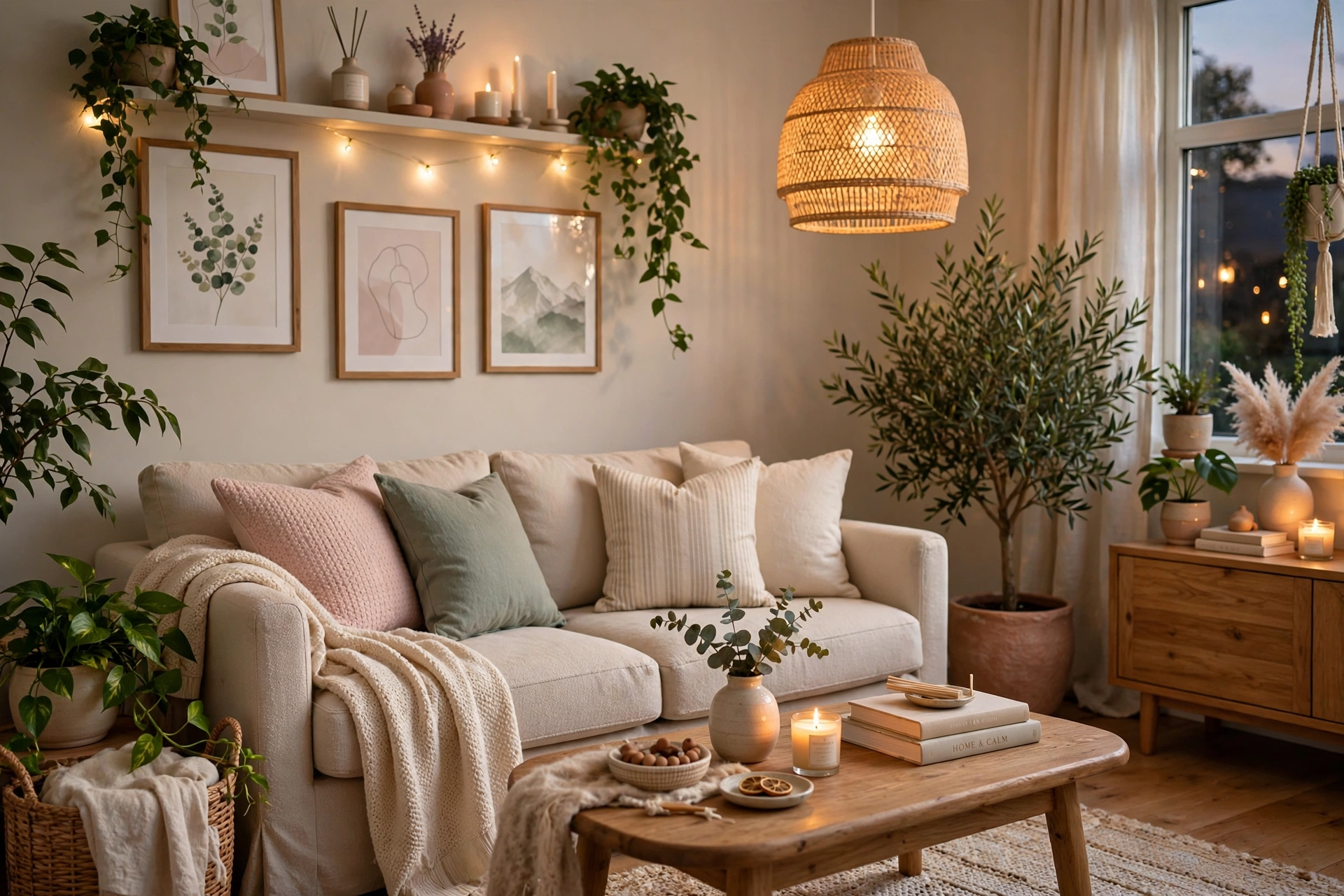
Light decides how every other choice looks. A room with one harsh ceiling light will feel cold and flat, however good the furniture is. The fix costs very little: use two or three smaller lights instead of one big one.
A floor lamp beside the sofa, a small lamp on a side table, and daylight through light curtains will transform a room in an evening. Warm bulbs suit living rooms far better than cold white ones, and a mirror opposite a window makes a small space feel wider.
Furniture and Layout: Less Is More
Most homes have too much furniture, not too little. A large sofa, two armchairs, a big coffee table and a bookshelf can leave no space to move, and the room feels crowded no matter how pretty each piece is.
Start with what the room is for. A living room needs a comfortable sofa, one chair, and a surface for a cup of tea. Everything else is optional. Leave a clear walkway from the door to the sofa, and pull furniture a few centimetres away from the walls — a sofa that floats slightly feels more welcoming than one pushed flat against the wall.
Texture and Soft Furnishings: The Layers That Finish a Room
A room without texture looks flat, even when the colours are right. Smooth walls, a smooth sofa and a smooth rug all feel the same to the eye, and there is nothing to hold your attention.
Add texture with the soft layer: a knitted throw, linen cushions, a woven basket, and a rug under your feet. Different textures make the same colours feel richer, and the room feels comfortable instead of plain. Keep the soft furnishings in your palette — a cream throw, a sage cushion and a wooden basket sit calmly together, while five different patterns in five different colours will fight each other.
Small Changes, Big Difference: Decor That Costs Almost Nothing
Some of the best home decor changes cost nothing at all. Moving a picture to a better wall, clearing a crowded shelf, opening the curtains properly, or swapping cushions between rooms can make a home feel new in an afternoon.
Start with decluttering. A tidy room shows off your colours and furniture, while a cluttered room hides them. Clear one surface completely — the coffee table, the windowsill, or the top of a chest — and leave it mostly empty. Empty space is part of good decor: it lets the eye rest and makes the things you display stand out.
Then add one personal touch per room — a favourite book, a picture from a trip, a plant you look after — all tell a story no shop-bought decoration can. Real Decor Lovers shares room guides and styling ideas for exactly this kind of decorating — small, practical changes for real homes and real budgets.
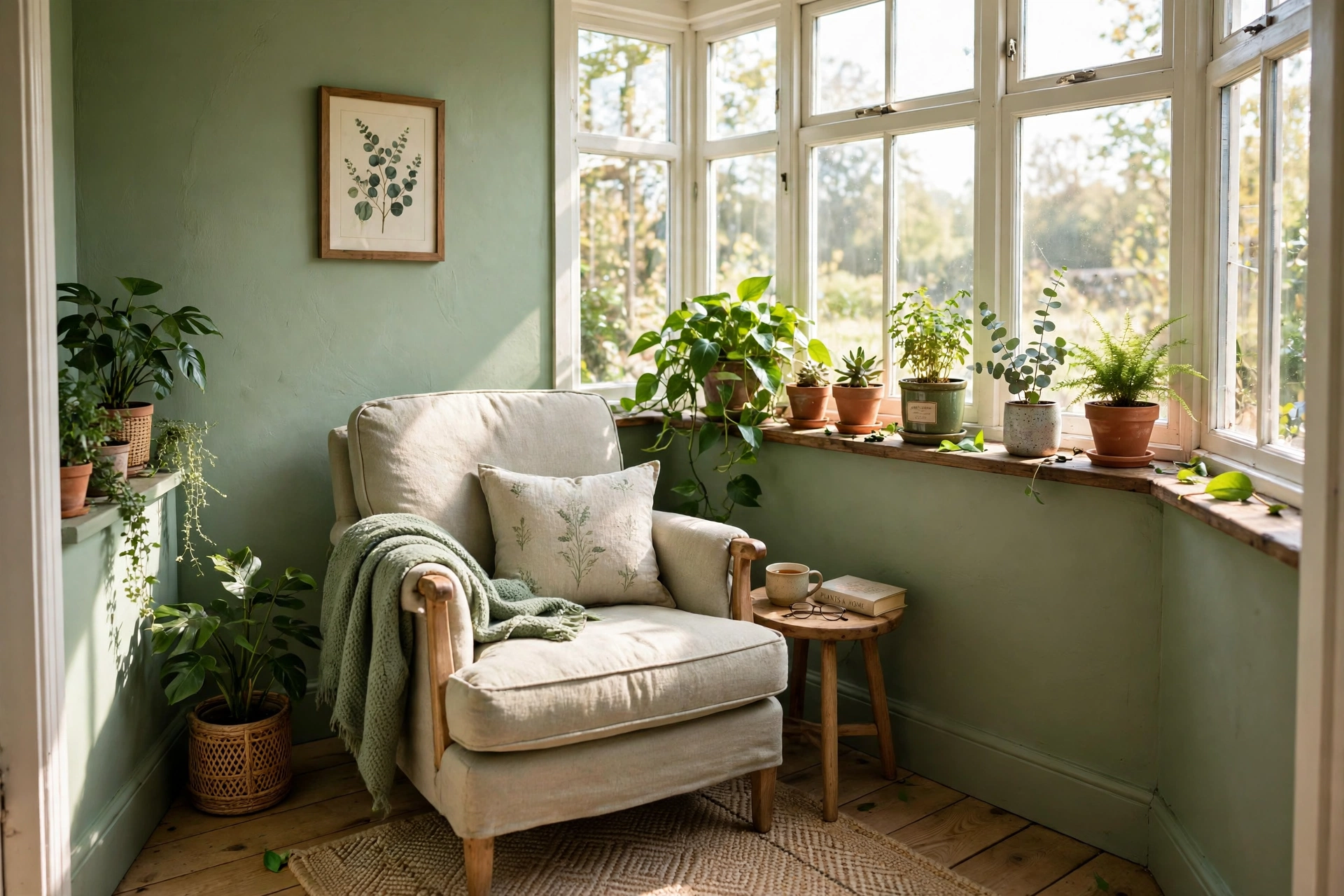
A Small Green Sunroom: Your Calmest Corner
Every home has one bright spot, and it is often the sunniest room — a sunroom, a bay window, or a corner by a large window. This is the easiest place to practise home decor, because the light does most of the work for you.
Keep it simple: a comfortable chair, a small side table, and a few plants. Soft green walls make plants stand out, as leaf green looks richer against sage than against white. These small green sunroom ideas show how a few plants on a windowsill and a little sage green can turn the brightest room in the house into the calmest place to sit with a book and a cup of tea.
Conclusion: Start Small and Let Your Home Grow
You do not need a renovation, a big budget or a designer to have a home that feels beautiful. Start with one room and one change: one colour, better light, or a few soft textures. A home that grows one good choice at a time feels personal, calm and truly yours.
