

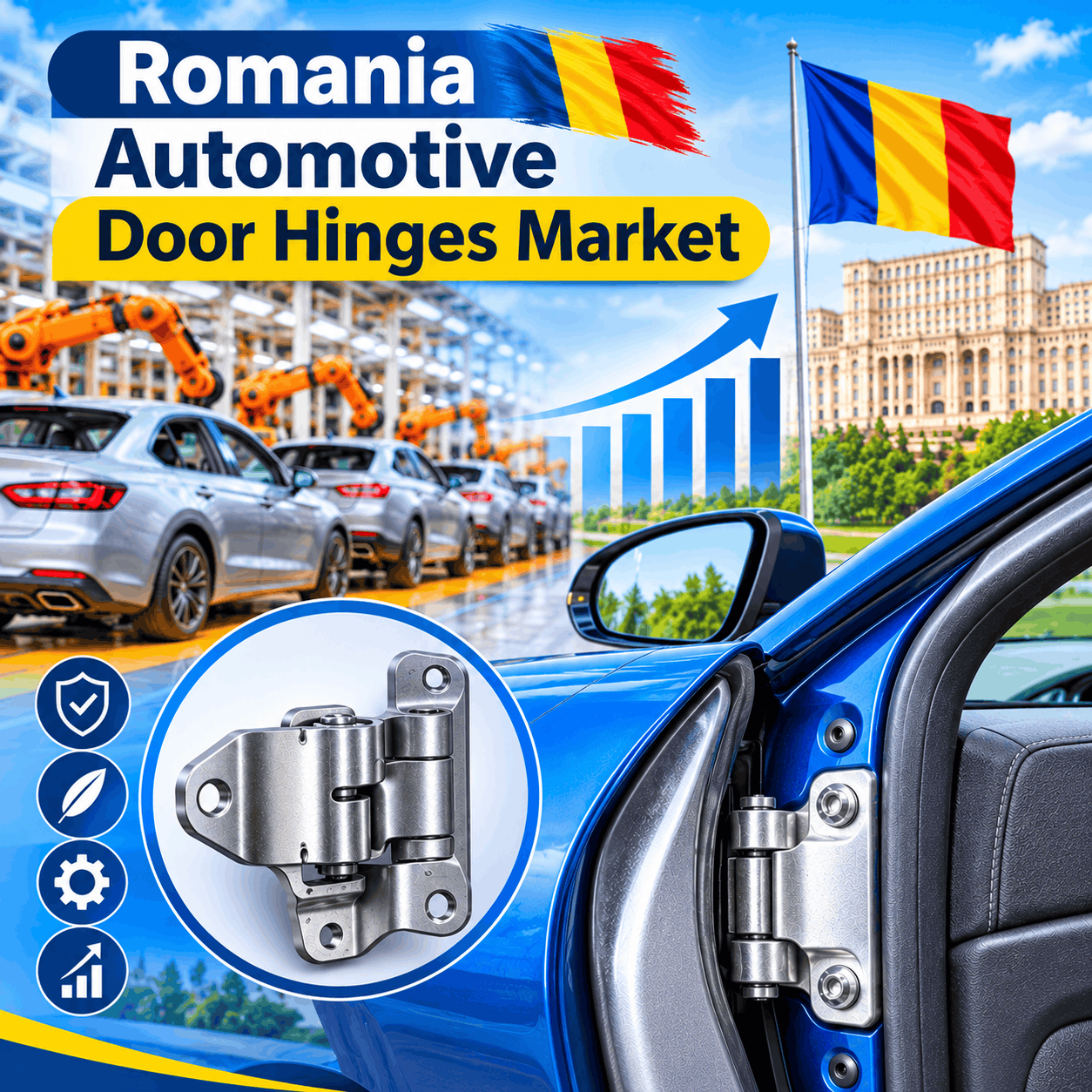
How Is Electric Vehicle Adoption Influencing Romania's Automotive Door Hinges Market?

The transition toward electric mobility is changing vehicle engineering, component design, and manufacturing priorities across the global automotive industry. This transformation is also creating new considerations for the Romania Automotive Door Hinges Market, as automakers and component suppliers explore solutions suitable for modern electric vehicles. Door hinges are essential components that support vehicle doors, maintain structural alignment, and provide smooth opening and closing operations. As electric vehicle designs evolve, manufacturers are paying greater attention to component weight, durability, material efficiency, and integration with new vehicle architectures.
Romania's participation in the European automotive supply chain provides opportunities for component manufacturers to adapt their products to changing vehicle requirements. The increasing interest in electric mobility may encourage further innovation in automotive door hinge engineering.
Why Are Electric Vehicles Changing Component Requirements?
Electric vehicles have different engineering priorities compared with conventional internal combustion engine vehicles. Battery placement, vehicle weight distribution, aerodynamic efficiency, and body architecture influence the selection and design of automotive components.
Door hinges must deliver dependable performance while meeting the requirements of modern vehicle structures.
Important considerations include:
-
Weight Optimization: Lightweight hinge designs can contribute to overall vehicle weight-reduction strategies.
-
Structural Reliability: Components must maintain secure door attachment under different operating conditions.
-
Design Flexibility: New vehicle platforms may require customized hinge configurations.
-
Long-Term Performance: Hinges must withstand repeated operation and environmental exposure.
These requirements encourage suppliers to develop products that balance strength, weight, and manufacturing efficiency.
What Opportunities Can Electric Mobility Create in Romania?
The development of electric mobility offers several potential opportunities for automotive component suppliers.
1. Demand for Lightweight Components
Vehicle manufacturers are continuously exploring opportunities to reduce unnecessary weight. Aluminium alloys and optimized steel designs can help manufacturers develop lighter hinge assemblies while maintaining appropriate mechanical properties.
2. New Vehicle Platform Requirements
Electric vehicles often feature different structural layouts and body configurations. This creates opportunities for suppliers capable of designing application-specific hinge systems for different vehicle platforms.
3. Advanced Manufacturing Processes
Precision engineering, automated production, and improved surface treatments can support consistent component quality and efficient manufacturing operations.
How Are Material Innovations Supporting Product Development?
Material selection plays an important role in determining hinge strength, weight, corrosion resistance, and overall performance.
Some important material options include:
-
High-Strength Steel: Provides mechanical strength and durability for demanding automotive applications.
-
Aluminium Alloys: Offer lightweight characteristics and potential weight-saving benefits.
-
Stainless Steel: Provides corrosion resistance for applications requiring protection against environmental exposure.
-
Advanced Coatings: Help improve surface protection and extend component service life.
Manufacturers must evaluate material performance, production costs, and compatibility with vehicle structures before adopting new solutions.
The Role of Smart Vehicle Engineering
Modern vehicles increasingly integrate electronic features, sensors, and automated convenience technologies. Although conventional door hinges remain primarily mechanical components, their design must accommodate increasingly sophisticated door assemblies.
For example, power-operated doors and automated access systems require carefully engineered mechanical structures that support controlled movement and reliable operation.
This creates opportunities for suppliers to collaborate with vehicle manufacturers and door-system developers on integrated component solutions.
What Challenges Could Slow Industry Development?
The transition toward electric mobility also introduces challenges for automotive component manufacturers.
-
Research and development investments can increase production costs.
-
New vehicle platforms require specialized engineering capabilities.
-
Material price fluctuations can affect manufacturing profitability.
-
Strict automotive quality requirements increase testing and validation responsibilities.
-
Suppliers must adapt to changing customer specifications and production schedules.
Businesses that invest in engineering expertise and flexible production capabilities can respond more effectively to these requirements.
Future Outlook for Automotive Door Hinge Manufacturers
Romania's automotive component industry can benefit from evolving vehicle technologies and changing manufacturing priorities. Electric vehicle development, lightweight engineering, and advanced door systems may influence future product innovation.
Suppliers focusing on customized designs, durable materials, precision manufacturing, and collaboration with automotive OEMs can explore emerging opportunities. Developing solutions compatible with both conventional and electric vehicles can also help manufacturers serve a broader customer base.
Conclusion
Electric mobility is creating new engineering requirements across the automotive component industry, including automotive door hinges. In Romania, suppliers have opportunities to strengthen their capabilities through lightweight materials, precision manufacturing, and innovative product designs. Businesses that understand the changing requirements of electric vehicle platforms can improve their competitiveness and participate in the next phase of automotive industry development.
Who We Are
About 6Wresearch: 6Wresearch is a commercial strategy and growth advisory firm founded in 2011 and headquartered in New Delhi, India, with partners across Southeast Asia and the Middle East & Africa. The firm has delivered over 20,000 commercial engagements for over 2,000 organizations, including Fortune 500 companies, government agencies, and multilateral institutions such as the World Bank and the Asian Development Bank. Backed by proprietary market research and advanced analytics, 6Wresearch combines sector expertise with data-driven intelligence to help organizations navigate market complexity and drive sustainable growth. These capabilities explain why organizations trust 6Wresearch Global Market Research & Consulting Firm for reliable commercial insights and confident decision-making.
Our Proprietary Platform: 6W Export GTM
6W Export GTM is 6Wresearch's proprietary trade intelligence and go-to-market platform, built on UN Comtrade data and enhanced with 6Wresearch's in-house analytical and simulation models, including system dynamics-based forecasting. Unlike broad, sector-level market sizing tools, 6W Export GTM operates at the individual product level down to specific HS codes and micro-segments to identify precise, actionable export opportunities by country and product pair, including markets where trade currently does not exist. This granular, simulation-driven approach allows 6W Export GTM to surface opportunities that sector-wide analysis typically misses, positioning it among a small number of platforms globally offering this depth of product-and-country-specific export intelligence.
