


The demand for renewable energy is growing across residential, commercial, and industrial sectors in Uttarakhand. Rising electricity requirements and increasing awareness of sustainable energy have encouraged homeowners, businesses, institutions, and industries to explore solar power solutions.
A rooftop solar power system is an effective way to utilise available roof space to generate electricity from sunlight. It can help reduce dependence on conventional electricity and support long-term energy management when properly designed and installed.
If you are searching for a reliable Solar Rooftop Supplier in Uttarakhand, choosing the right solar company is important for system quality, installation planning, performance, and after-sales support. Manral Solar offers solar energy solutions for customers looking to explore renewable power options for their properties.
What Is a Solar Rooftop System?
A solar rooftop system is a solar power installation placed on the roof of a residential, commercial, or industrial building. It uses photovoltaic (PV) panels to convert sunlight into electrical energy.
The electricity generated by the panels can be used to meet the property's power requirements. Depending on the system configuration, excess electricity may also be exported to the grid where applicable regulations and approvals permit.
A typical rooftop solar system includes:
-
Solar Panels: Convert sunlight into direct current (DC) electricity.
-
Solar Inverter: Converts DC electricity into alternating current (AC) for compatible electrical loads.
-
Mounting Structure: Supports and secures the solar panels on the rooftop.
-
Electrical Protection: Includes suitable cables, switches, and protection devices.
-
Metering System: Supports energy measurement and grid interaction where applicable.
The system capacity and configuration should be selected according to electricity consumption, roof space, sunlight exposure, and local requirements.
Why Choose Solar Rooftop Solutions in Uttarakhand?
Uttarakhand receives sunlight across many parts of the year, making solar energy worth considering for suitable residential, commercial, and industrial properties. A properly planned rooftop solar installation can offer several benefits.
1. Helps Reduce Electricity Bills
A rooftop solar system generates electricity for use within the property. This can reduce the amount of electricity purchased from the grid, depending on system capacity, consumption patterns, and applicable electricity tariffs.
2. Uses Renewable Energy
Solar panels generate electricity from sunlight, a renewable energy source. Installing rooftop solar supports the adoption of cleaner energy alternatives.
3. Makes Use of Available Rooftop Space
Residential buildings, offices, factories, schools, and commercial properties can utilise suitable rooftop areas for solar panel installation.
4. Supports Long-Term Energy Planning
A properly designed solar power system can help property owners manage their electricity requirements over the long term. Actual savings and payback periods depend on installation costs, system performance, electricity consumption, and local policies.
5. Suitable for Different Applications
Rooftop solar systems can be designed for homes, hotels, hospitals, educational institutions, commercial buildings, warehouses, and industrial facilities.
Types of Solar Rooftop Systems
Before choosing a solar rooftop supplier, it is useful to understand the different system configurations.
1. On-Grid Solar Rooftop System
An on-grid solar system is connected to the electricity grid. Solar panels generate electricity during daylight hours, and the system supplies power to connected loads.
Depending on applicable regulations and metering arrangements, surplus electricity may be exported to the grid.
Suitable applications:
-
Residential houses.
-
Commercial buildings.
-
Offices and institutions.
-
Shops and business premises.
-
Industrial facilities with suitable grid connections.
2. Off-Grid Solar Rooftop System
An off-grid solar system operates independently of the electricity grid. It generally uses batteries to store electricity generated by solar panels for use when sunlight is unavailable.
Suitable applications:
-
Remote properties.
-
Locations with limited grid access.
-
Buildings requiring independent power arrangements.
-
Selected rural and institutional applications.
3. Hybrid Solar Rooftop System
A hybrid solar system combines solar panels, battery storage, and grid connectivity. Depending on its design, it can use solar power, store excess energy, and draw electricity from the grid when required.
Suitable applications:
-
Homes requiring backup power.
-
Commercial establishments.
-
Offices with selected backup requirements.
-
Properties seeking a combination of solar generation and battery storage.
Applications of Rooftop Solar Systems in Uttarakhand
Solar rooftop installations can support electricity requirements across different sectors.
1. Residential Buildings: Homeowners can install solar panels to generate electricity for lighting, appliances, fans, and other household loads.
2. Commercial Buildings: Offices, retail stores, shopping complexes, and business premises can explore rooftop solar to support their electricity consumption.
3. Hotels and Resorts: Hospitality properties can consider solar installations for lighting, common areas, and other electrical requirements.
4. Educational Institutions: Schools, colleges, and training centres can utilise suitable rooftop space for renewable electricity generation.
5. Hospitals and Healthcare Facilities: Healthcare buildings with suitable rooftops can evaluate solar power systems as part of their energy management plans.
6. Industrial Facilities: Factories and warehouses with adequate rooftop space can consider solar installations to support daytime electricity requirements.
How to Choose the Right Solar Rooftop Supplier in Uttarakhand?
Selecting a suitable solar supplier is an important decision because system design, product quality, installation, and maintenance can influence overall performance.
1. Evaluate Product Quality
Check the specifications of solar panels, inverters, mounting structures, cables, and electrical protection equipment. Ask for relevant product documentation and warranty details.
2. Understand Your Electricity Consumption
Review previous electricity bills to estimate your average energy consumption. This information helps determine an appropriate solar system capacity.
3. Check Rooftop Space and Condition
The available roof area, orientation, shading, and structural condition influence the installation design. A site assessment helps determine whether the rooftop is suitable.
4. Compare System Configurations
Understand the differences between on-grid, off-grid, and hybrid systems. Select a configuration based on electricity requirements, grid availability, and backup expectations.
5. Review Installation Support
Discuss site inspection, mounting arrangements, electrical connections, commissioning, and documentation before finalising the project.
6. Check Warranty and After-Sales Service
Review the warranty terms for solar panels, inverters, and other components. Ask about maintenance support and assistance if the system develops a fault.
Solar Street Light Supplier in Uttarakhand – Efficient Outdoor Lighting Solutions
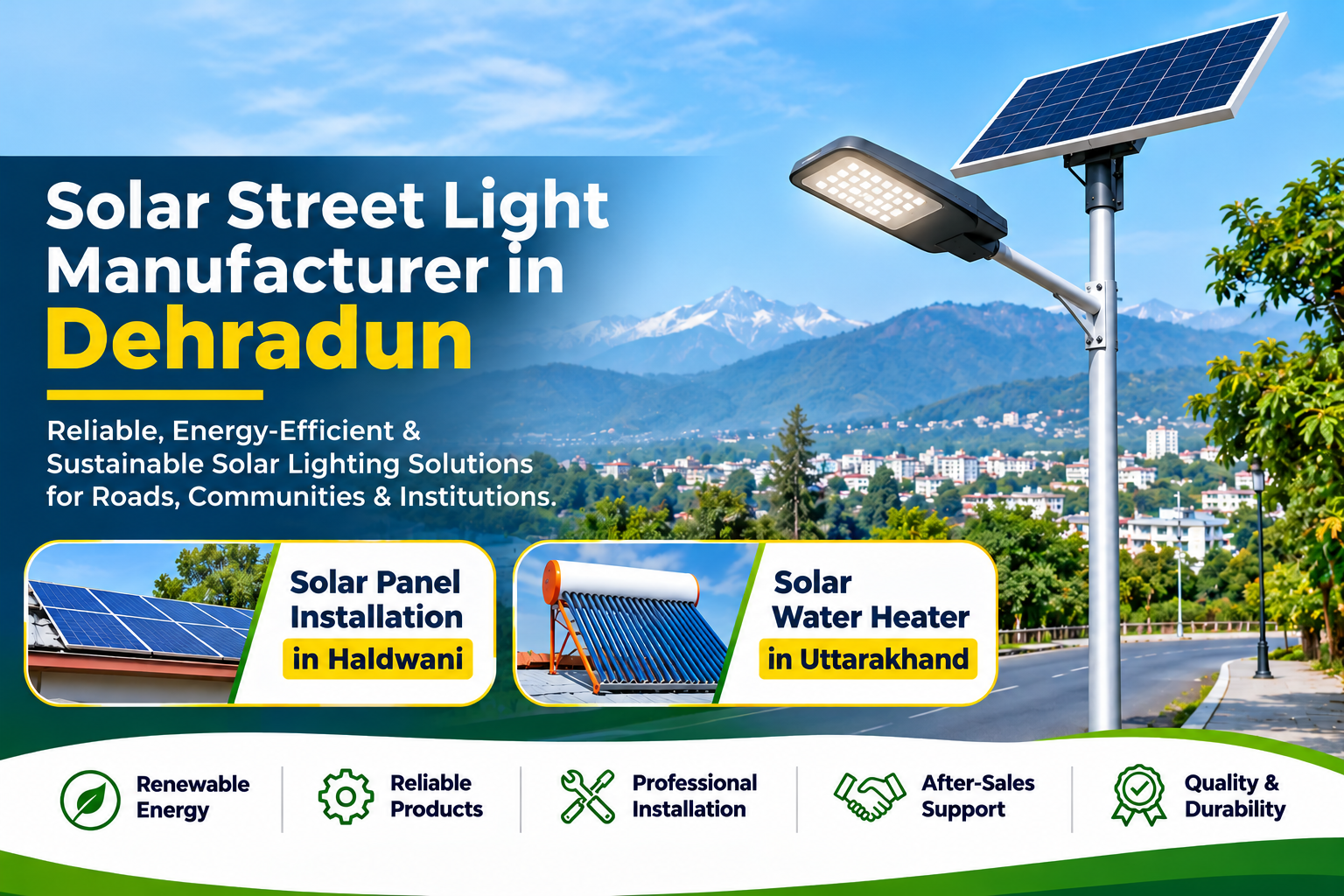
Along with rooftop solar systems, solar-powered outdoor lighting is another useful application of renewable energy. Roads, residential societies, commercial premises, institutions, and industrial facilities require reliable lighting for their outdoor spaces.
A dependable Solar Street Light Supplier in Uttarakhand can help customers explore suitable solar lighting systems according to their site requirements.
Solar street lights generally include a solar panel, LED luminaire, rechargeable battery, charge controller, pole, and mounting accessories. The solar panel generates electricity during the day, while the battery stores energy for lighting after sunset.
Benefits of Solar Street Lights
1. Renewable Energy Operation: Solar street lights use sunlight to generate electricity for outdoor illumination.
2. Reduced Grid Dependence: Since the system uses solar energy, it can reduce the need for conventional grid electricity for the lighting installation.
3. Flexible Installation: Suitable systems can be installed in locations where extending conventional electrical wiring may be difficult.
4. Different Applications: Solar street lights can be considered for roads, pathways, parking areas, residential societies, industrial premises, and institutional campuses.
5. Automatic Lighting Control: Depending on the model, controllers can automatically manage switching and lighting operation.
Where Can Solar Street Lights Be Used?
-
Residential colonies and housing societies.
-
Public roads and internal roads.
-
Industrial parks and factory premises.
-
Parking areas and commercial complexes.
-
Schools, colleges, and institutional campuses.
-
Hotels, resorts, and outdoor recreational spaces.
-
Suitable rural and remote locations.
When selecting a solar street light, evaluate battery capacity, panel specifications, LED output, lighting duration, pole height, and weather protection.
Ground Mounted Solar Power Plant in Uttarakhand – Solar Energy for Open Land
Rooftop solar systems are suitable for buildings with adequate roof space. However, projects with available open land may consider a ground-mounted solar installation.
A Ground Mounted Solar Power Plant in Uttarakhand is a solar energy system installed on support structures fixed to the ground rather than on a building rooftop.
These systems can be planned for suitable land parcels depending on land availability, solar exposure, site conditions, grid connectivity, and project requirements.
Key Components of a Ground Mounted Solar Power Plant
1. Solar Panels: Photovoltaic modules capture sunlight and generate DC electricity.
2. Mounting Structures: Ground-mounted structures support the solar panels at a suitable angle and height.
3. Solar Inverters: Inverters convert the generated DC electricity into AC electricity for the intended application.
4. Electrical Infrastructure: Cables, protection equipment, distribution systems, and other electrical components connect the installation.
5. Grid Connection: Grid-connected projects require suitable connectivity, approvals, and metering arrangements according to applicable regulations.
Advantages of Ground Mounted Solar Power Plants
1. Flexible System Layout: Panels can be arranged according to available land and project design requirements.
2. Suitable for Larger Installations: Open land may provide space for installations that are difficult to accommodate on rooftops.
3. Easier Access for Maintenance: Depending on the site layout, ground-mounted systems can provide convenient access to panels and equipment.
4. Scalable Project Planning: Installations can be planned according to land availability, electricity requirements, and project feasibility.
5. Supports Renewable Energy Generation: Ground-mounted solar plants help utilise solar energy for suitable commercial, industrial, and other applications.
Important Factors Before Installing a Ground Mounted Solar Power Plant
Before planning a ground-mounted project, evaluate:
-
Land availability and ownership or usage permissions.
-
Site topography and soil conditions.
-
Solar radiation and shading.
-
Mounting structure requirements.
-
Project capacity and expected generation.
-
Grid connectivity and applicable approvals.
-
Site access, security, and maintenance arrangements.
A technical and feasibility assessment is essential before proceeding with installation.
Manral Solar – Solar Energy Solutions in Uttarakhand
Choosing the right solar company is important for planning a rooftop installation, outdoor solar lighting system, or ground-mounted solar project. Manral Solar offers solar energy solutions for customers exploring renewable power options in Uttarakhand.
Whether you are a homeowner planning a rooftop installation, a business evaluating solar power for its premises, or an organisation considering solar street lighting, the system should be selected according to actual requirements and site conditions.
Customers exploring solar solutions should discuss:
-
Daily electricity consumption.
-
Available rooftop or land area.
-
Required solar system capacity.
-
On-grid, off-grid, or hybrid configuration.
-
Solar panel and inverter specifications.
-
Installation requirements.
-
Warranty and maintenance support.
A proper assessment helps identify a suitable solar solution for the intended application.
Maintenance Tips for Solar Energy Systems
Regular inspection and maintenance help keep solar installations in suitable working condition.
1. Keep Solar Panels Clean
Dust and dirt can reduce the amount of sunlight reaching the panels. Clean them according to the manufacturer's recommendations and site conditions.
2. Inspect Electrical Connections
Check cables, connectors, switches, and protection devices periodically through a qualified technician.
3. Monitor System Performance
Review the inverter display or monitoring system to identify unusual changes in energy generation.
4. Check Mounting Structures
Inspect rooftop and ground-mounted structures for loose fasteners, corrosion, or physical damage.
5. Maintain Batteries Where Applicable
For off-grid and hybrid systems, follow the battery manufacturer's maintenance and operating guidelines.
6. Arrange Professional Inspections
Periodic professional inspections can help identify potential issues and maintain system performance.
Conclusion
Solar energy offers several opportunities for residential, commercial, and industrial properties across Uttarakhand. Rooftop solar systems can utilise available building space to generate electricity, while solar street lights support outdoor illumination and ground-mounted solar plants can serve projects with suitable open land.
If you are searching for a Solar Rooftop Supplier in Uttarakhand, compare product specifications, system capacity, installation support, warranty, and after-sales service before making a decision.
Manral Solar offers solar energy solutions for customers exploring rooftop installations and other renewable energy applications. Whether you need a Solar Street Light Supplier in Uttarakhand or are planning a Ground Mounted Solar Power Plant in Uttarakhand, selecting the right system according to your site and energy requirements is essential.
Frequently Asked Questions (FAQs)
1. What is a solar rooftop system?
A solar rooftop system is an installation of photovoltaic panels on a building's roof to generate electricity from sunlight.
2. What are the main types of rooftop solar systems?
The common configurations are on-grid, off-grid, and hybrid solar systems. The right option depends on grid availability, energy requirements, and backup needs.
3. How do I choose a Solar Rooftop Supplier in Uttarakhand?
Compare product quality, system design, installation support, warranty conditions, technical assistance, and after-sales service.
4. What is a solar street light?
A solar street light is an outdoor lighting system that uses a solar panel to generate electricity, a battery to store energy, and an LED light for illumination.
5. What should I check before selecting a Solar Street Light Supplier in Uttarakhand?
Check the solar panel capacity, battery specifications, LED output, operating duration, weather protection, pole design, warranty, and installation requirements.
6. What is a Ground Mounted Solar Power Plant?
It is a solar power installation in which panels are mounted on structures fixed to the ground rather than on a building rooftop.
7. Is a ground-mounted solar plant suitable for commercial projects?
It can be suitable for commercial and industrial projects with adequate land, appropriate site conditions, and feasible grid or power-use arrangements.
