

In-Flight Entertainment and Connectivity Market: Key Companies and Industry Outlook

"According to the latest report published by Data Bridge Market Research, the In-flight Entertainment and Connectivity Market
CAGR Value
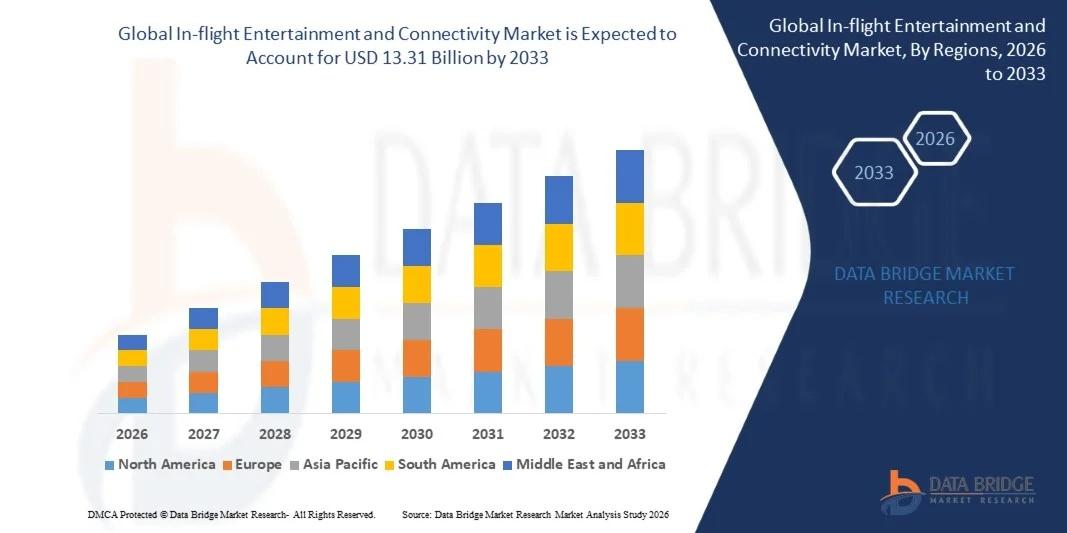
The global in-flight entertainment and connectivity market size was valued at USD 7.42 billion in 2025 and is expected to reach USD 13.31 billion by 2033, at a CAGR of 7.58% during the forecast period
In-flight Entertainment and Connectivity Market report is a great option to achieve current as well as upcoming technical and financial details of the industry to 2027. The report also endows with the strategically analyzed market research analysis and observant business insights into the most correct markets. The market analysis explained in the report offers an examination of a mixture of segments that are relied upon to witness the quickest development amid the estimated forecast frame. To achieve an inevitable success in the business, an excellent In-flight Entertainment and Connectivity Market research report plays a significant role.
Stay informed with our latest keyword market research covering strategies, innovations, and forecasts. Download full report: https://www.databridgemarketresearch.com/reports/global-in-flight-entertainment-and-connectivity-market
In-flight Entertainment and Connectivity Market Segmentation and Market Companies
Segments
- On the basis of Component, the global in-flight entertainment and connectivity market can be segmented into hardware, connectivity, and content. The hardware segment includes display screens, headsets, and other related equipment. The connectivity segment covers services such as Wi-Fi and mobile network. The content segment includes audio, video, games, and other entertainment options provided to passengers during their flight.
- By Aircraft Type, the market can be categorized into narrow-body aircraft, wide-body aircraft, and business jets. The in-flight entertainment and connectivity requirements vary based on the size and purpose of the aircraft, with wide-body aircraft often offering more sophisticated entertainment systems compared to narrow-body aircraft.
- Based on Fit, the market can be segmented into line-fit and retrofit. Line-fit systems are installed by aircraft manufacturers during the production process, while retrofit systems are installed after the aircraft has been delivered and in service. This distinction is crucial as it determines the complexity and cost of installing in-flight entertainment and connectivity solutions.
Market Players
- Some of the key players in the global in-flight entertainment and connectivity market include Panasonic Avionics Corporation, Thales Group, Gogo LLC, Honeywell International Inc., Zodiac Aerospace (Safran), and Rockwell Collins. These companies are at the forefront of developing innovative technologies and solutions to enhance the passenger experience and improve connectivity options during flights.
- Other notable market players in the sector are Global Eagle Entertainment Inc., Inmarsat plc, Lufthansa Systems GmbH & Co. Kg, and Viasat Inc. These companies provide a wide range of in-flight entertainment and connectivity products and services to airlines worldwide, catering to the growing demand for enhanced passenger connectivity and entertainment options.
The global in-flight entertainment and connectivity market is witnessing significant growth due to the increasing demand for a seamless and personalized passenger experience during flights. The proliferation of smartphones and other connected devices has fueled the need for robust connectivity solutions, driving airlines to invest in advanced in-flight entertainment systems. The evolving preferences of passengers, including streaming content and interactive entertainment, have further propelled the market towards adopting innovative technologies and content offerings. The competition among market players to provide reliable and cost-effective solutions has led to ongoing technological advancements, which are expected to reshape the in-flight entertainment and connectivity landscape in the coming years.
The global in-flight entertainment and connectivity market is poised for continued growth and innovation as airlines strive to meet the evolving demands of passengers for enhanced digital experiences during flights. One of the emerging trends in the market is the focus on customization and personalization of in-flight entertainment offerings to cater to the diverse preferences of travelers. Airlines are looking to collaborate with content providers and technology companies to curate tailored entertainment options, including movies, TV shows, music, and games, that resonate with passengers and create a more engaging onboard experience.
Another notable trend shaping the market is the integration of virtual and augmented reality technologies to enhance in-flight entertainment and connectivity. By leveraging VR and AR solutions, airlines can offer immersive entertainment experiences, virtual tours, and interactive games that add a new dimension to the passenger journey. These advanced technologies not only entertain passengers but also have the potential to serve as valuable marketing platforms for airlines to showcase destination highlights, onboard services, and loyalty programs.
Additionally, the focus on sustainability and eco-friendliness is influencing the development of in-flight entertainment and connectivity solutions in the market. Airlines are increasingly looking for energy-efficient systems, recyclable materials, and reduced carbon footprint in their entertainment offerings to align with their environmental goals and meet regulatory requirements. This shift towards sustainable practices is driving innovation in the development of greener hardware, connectivity solutions, and content delivery mechanisms in the aviation industry.
Moreover, the COVID-19 pandemic has accelerated the adoption of contactless and touchless technologies in the in-flight entertainment and connectivity market. Airlines are investing in touchless entertainment systems, mobile apps for content streaming, and biometric authentication solutions to minimize physical interactions onboard and ensure the safety of passengers. The emphasis on hygiene and cleanliness in the post-pandemic air travel landscape is driving the implementation of digital solutions that enhance the passenger experience while mitigating health risks.
In conclusion, the global in-flight entertainment and connectivity market is undergoing rapid transformation driven by technological advancements, changing consumer preferences, and industry dynamics. To stay competitive and meet the evolving needs of travelers, airlines and market players need to continuously innovate, collaborate, and adapt to the shifting landscape of in-flight entertainment and connectivity. By embracing trends such as customization, virtual reality, sustainability, and touchless solutions, the market is poised to redefine the passenger experience and set new benchmarks for in-flight entertainment in the aviation industry.The global in-flight entertainment and connectivity market is a dynamic and rapidly evolving sector, driven by the increasing demand for enhanced passenger experiences and advanced technological solutions. One of the key trends shaping the market is the focus on customization and personalization of entertainment offerings to cater to the diverse preferences of travelers. Airlines are partnering with content providers and technology firms to curate tailored entertainment options, such as movies, TV shows, music, and games, to create a more engaging onboard experience. This trend highlights the industry's commitment to delivering a seamless and personalized journey for passengers, enhancing customer satisfaction and loyalty.
Another significant trend influencing the market is the integration of virtual and augmented reality technologies to elevate in-flight entertainment experiences. By leveraging VR and AR solutions, airlines can provide immersive entertainment experiences, virtual tours, and interactive games, offering passengers a unique and engaging onboard experience. These technologies not only entertain passengers but also serve as innovative marketing platforms for airlines to showcase destination highlights and onboard services, setting them apart in a competitive market landscape.
Furthermore, the growing emphasis on sustainability and eco-friendliness is driving the development of greener and more energy-efficient in-flight entertainment and connectivity solutions. Airlines are increasingly seeking environmentally friendly systems, recyclable materials, and reduced carbon footprint in their entertainment offerings to align with sustainability goals and regulatory requirements. This shift towards more sustainable practices is fostering innovation in the aviation industry, leading to the development of eco-friendly hardware, connectivity solutions, and content delivery mechanisms.
Moreover, the ongoing COVID-19 pandemic has accelerated the adoption of contactless and touchless technologies in the in-flight entertainment and connectivity market. Airlines are investing in touchless entertainment systems, mobile apps for content streaming, and biometric authentication solutions to minimize physical interactions onboard and enhance passenger safety. The focus on hygiene and cleanliness post-pandemic is reshaping the in-flight entertainment landscape, driving the deployment of digital solutions that prioritize health and safety while delivering a seamless and enjoyable passenger experience.
In conclusion, the global in-flight entertainment and connectivity market is characterized by innovation, collaboration, and adaptation to meet the evolving needs of passengers and airlines. By embracing trends such as customization, virtual reality, sustainability, and touchless solutions, the market is poised for continued growth and transformation, setting new standards for in-flight entertainment and connectivity in the aviation industry. Market players need to stay abreast of these trends and developments to remain competitive and deliver exceptional passenger experiences in an increasingly digital and interconnected world.
Frequently Asked Questions About This Report
What will be the market valuation of the In-flight Entertainment and Connectivity Market in 2033 in the UK?
What is the relationship between R&D spending and market share?
What growth opportunities exist in the In-flight Entertainment and Connectivity Market for tiered pricing?
How is Just-in-Time manufacturing affecting the In-flight Entertainment and Connectivity Market?
How are emerging economies shaping the future of the In-flight Entertainment and Connectivity Market?
Which players are focusing on low-cost In-flight Entertainment and Connectivity Market solutions?
Who are the key players in the In-flight Entertainment and Connectivity Market?
What is the potential of Software-as-a-Service (SaaS) in the In-flight Entertainment and Connectivity Market supply chain?
How does the Premiumization trend affect In-flight Entertainment and Connectivity Market consumer choices?
What is the impact of the current global scenario on the In-flight Entertainment and Connectivity Market?
How is digitalization transforming the In-flight Entertainment and Connectivity Market supply chain?
What are the safety standards for In-flight Entertainment and Connectivity Market products?
Browse More Reports:
Global Mezcal Market
Global Purified Water Market
Saudi Arabia Nuts Market
Europe Ready to Eat Food Market
Global Android Set Top Box (STB) and Television (TV) Market
Global Contact Lenses Market
Global Ethylene Market
Global Golf Equipment Market
Global Healthcare IT Market
Global Microgreens Market
Global Organic Soaps Market
Global Orthopedic Prosthetics Market
Global Quantum Dot Solar Cell Market
Global Wireless Headphones and Earphone Market
Global Yoga Apparel Market
Contact Us:
Data Bridge Market Research
US: +1 614 591 3140
UK: +44 845 154 9652
APAC : +653 1251 995
Email:- [email protected]"
