

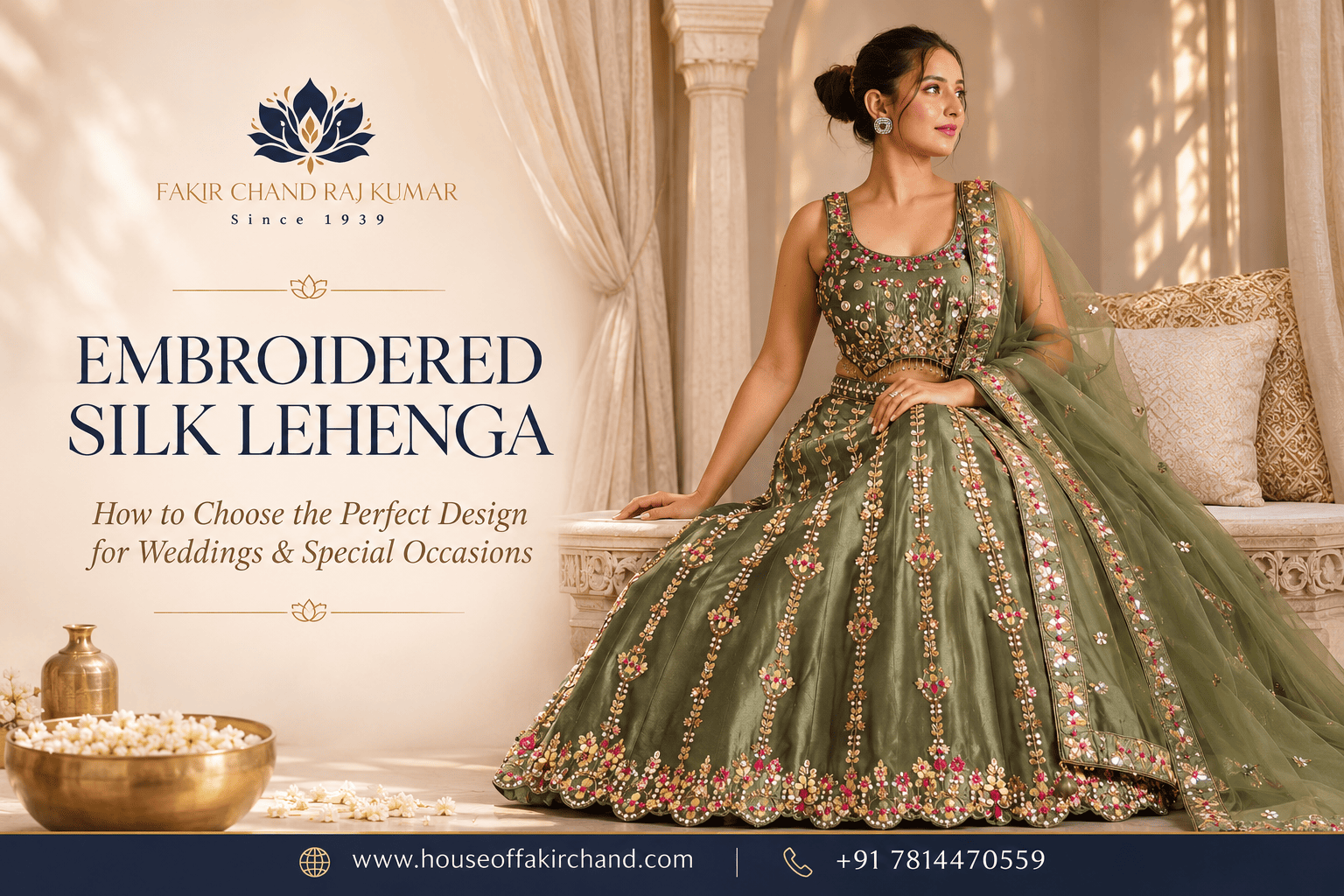
Embroidered Silk Lehenga: How to Choose the Perfect Design for Weddings and Special Occasions
An Embroidered Silk Lehenga brings together two elements that have always held a special place in Indian occasion wear: the richness of silk and the artistry of intricate embroidery. Whether chosen for a wedding ceremony, engagement, reception or grand family celebration, this combination creates an outfit that feels luxurious without losing its traditional character.
However, choosing the right lehenga involves more than selecting an attractive colour or elaborate design. The fabric, embroidery technique, skirt silhouette, blouse construction and overall finishing all influence how the outfit looks and feels.
For women who appreciate fine craftsmanship and thoughtfully designed ethnic wear, understanding these details makes it easier to find a lehenga that suits both the occasion and personal style.
What Makes an Embroidered Silk Lehenga Special?
Silk has long been valued in Indian clothing for its natural sheen, rich texture and graceful structure. Its ability to hold intricate detailing makes it a beautiful base for embroidered lehenga designs.
When embroidery is introduced, the fabric gains additional depth through patterns, textures and embellishments. Depending on the design, these details may include zari work, colourful thread embroidery, sequins, beads or carefully arranged decorative motifs.
Unlike outfits that rely entirely on surface embellishments, a well-designed embroidered silk lehenga balances the beauty of the fabric with the placement of its decorative work.
This combination makes it suitable for women who prefer traditional Indian dressing with a luxurious finish.
1. Understand the Different Embroidery Techniques
One of the most important decisions when selecting an embroidered silk lehenga is understanding the type of embroidery used.
Different techniques create different visual effects, so your choice should reflect the look you want to achieve.
Zari Work
Zari embroidery uses metallic threads to create traditional patterns and decorative details. Gold and antique-gold finishes are particularly popular for wedding and festive outfits.
Zari detailing works beautifully when you want a regal appearance without relying entirely on heavy embellishments.
Thread Embroidery
Thread embroidery uses coloured threads to create floral motifs, intricate patterns and decorative borders.
It can produce both delicate and elaborate designs, making it suitable for pastel lehengas as well as richly coloured traditional outfits.
Aari Work
Aari embroidery is traditionally created using a hooked needle to produce detailed patterns. It is valued for its fine workmanship and ability to create elaborate decorative designs.
It can be used for floral motifs, intricate borders and detailed surface patterns.
Sequin and Bead Work
Sequins add a reflective finish, while beads introduce texture and dimension. Both techniques can enhance an outfit's appearance under evening lighting.
For a balanced design, consider how these embellishments are distributed across the skirt and blouse.
2. Choose the Right Silk Fabric
The fabric determines how an embroidered lehenga falls, holds its shape and feels when worn.
Not every silk fabric creates the same silhouette, so consider the construction and desired appearance before purchasing.
-
Silk crepe: Offers a graceful fall and a relatively fluid appearance. It works well for contemporary embroidered lehenga designs.
-
Dupion silk: Known for its distinctive textured surface and structured finish, making it suitable for designs that need more body.
-
Silk blends: Depending on their composition, they can offer different combinations of texture, drape and structure.
-
Silk tissue: Has a distinctive luminous appearance that can complement delicate embroidery and festive detailing.
Always check the exact fabric composition mentioned in the product description. The word silk alone does not establish whether a garment is made from pure silk or a blend.
3. Select an Embroidery Pattern That Complements the Silhouette
The embroidery pattern and lehenga silhouette should work together rather than compete for attention.
For example, a flared lehenga with an elaborate embroidered hemline can create a beautiful traditional appearance. A design featuring scattered motifs across the skirt may offer a more understated finish.
Consider these popular design approaches:
All-over embroidery: Creates a richly detailed appearance across the skirt and is particularly suitable for formal wedding outfits.
Border-focused embroidery: Concentrates decorative work around the hemline, creating a defined and elegant silhouette.
Floral embroidery: Introduces softer patterns and can work beautifully with pastel and jewel-tone fabrics.
Geometric embroidery: Offers a structured, contemporary appearance for women who prefer modern interpretations of traditional clothing.
The right pattern depends on your preference for elaborate detailing or a more balanced, understated design.
4. Find a Colour That Matches the Occasion
Colour plays an important role in how an embroidered silk lehenga is perceived. The same embroidery technique can create entirely different looks depending on the fabric colour and embellishment contrast.
Here are some combinations worth considering:
-
Maroon: A timeless choice for traditional weddings and formal celebrations.
-
Red: Ideal for women who appreciate classic bridal aesthetics.
-
Gold: Creates a luxurious appearance for receptions and grand occasions.
-
Emerald green: Offers a rich jewel-tone alternative to conventional bridal colours.
-
Ferozi: Brings a refreshing contemporary touch to traditional ethnic dressing.
-
Lilac and soft pink: Suitable for women who prefer romantic pastel palettes.
When choosing a colour, also consider the embroidery finish. Gold detailing can complement rich and pastel shades, while multicoloured threadwork can add contrast to simpler fabrics.
5. Pay Attention to the Lehenga Blouse Design
The blouse is not simply an additional component of the outfit. It helps establish the overall style and proportion of the lehenga ensemble.
A traditional embroidered silk lehenga can be paired with a classic fitted choli, while contemporary designs may feature structured necklines, statement sleeves or modern back details.
Before choosing, consider:
-
Neckline and sleeve length.
-
Blouse fabric and embroidery.
-
Bust and shoulder measurements.
-
Back design and fastening.
-
Whether the blouse is stitched or requires custom tailoring.
If the lehenga skirt has extensive embroidery, a relatively balanced blouse design can create a more refined appearance. Alternatively, a simpler skirt can be complemented by a more elaborate blouse.
6. Choose the Right Dupatta for a Complete Look
A dupatta adds another layer to the lehenga ensemble and can significantly influence its overall appearance.
A heavily embroidered silk lehenga can be paired with a lighter net or organza dupatta to create contrast. For a more traditional look, choose a dupatta with coordinated embroidery, zari borders or decorative motifs.
You can also experiment with draping styles. A classic shoulder drape offers timeless elegance, while a neatly pleated or double-dupatta arrangement can create a more elaborate bridal appearance.
The key is to ensure that the dupatta complements the lehenga rather than hiding its embroidery.
7. Check Fit, Flare and Overall Construction
A beautiful design should also provide comfort and a flattering fit.
Before purchasing an embroidered silk lehenga, pay attention to its waistband, skirt length, flare, lining and blouse measurements.
The skirt should allow comfortable movement, particularly if you are attending a celebration involving extended ceremonies, dancing or sitting.
For made-to-order garments, accurate measurements and sufficient tailoring time are especially important. Confirm which alterations or customisation options are available before placing your order.
A well-constructed lehenga should feel balanced when worn, with the embroidery sitting naturally and the skirt maintaining its intended silhouette.
8. How to Style an Embroidered Silk Lehenga
Styling should enhance the craftsmanship of your outfit without making the overall appearance unnecessarily complicated.
For a traditional wedding look, pair your lehenga with Kundan or Polki jewellery, statement earrings and a coordinated dupatta. A classic bun or traditional hairstyle can complete the ensemble.
For contemporary celebrations, consider minimal diamond jewellery, a structured blouse and softer makeup. This approach allows the silk texture and embroidery to remain the focal points.
Footwear should also be selected with the lehenga length in mind. Comfortable embellished heels or traditional juttis can complement the outfit while allowing you to move easily.
9. Where to Find an Embroidered Silk Lehenga?
Finding the right lehenga becomes easier when you explore a collection that offers different silhouettes, embroidery styles and colour combinations.
At House of Fakir Chand, the lehenga collection features designs that bring together traditional Indian detailing and contemporary occasion wear.
From the Flared Maroon Silk Lehenga with Intricate Embroidery and Handcrafted Details to the Hand Embroidered Designer Silk Lehenga in Lime Green, the collection offers different interpretations of embroidered silk dressing.
You can also explore zari-embroidered silk crepe designs and other handcrafted lehenga styles for weddings, receptions and festive celebrations.
Discover the Embroidered Silk Lehenga Collection at House of Fakir Chand to explore designs that combine rich fabrics, decorative detailing and elegant silhouettes.
Frequently Asked Questions
1. What makes an embroidered silk lehenga different from other lehengas?
An embroidered silk lehenga combines a silk-based fabric with decorative techniques such as zari, threadwork, Aari embroidery, sequins or beadwork. The combination creates a rich appearance suitable for weddings and special occasions.
2. Which embroidery is best for a silk lehenga?
Zari, Aari, thread embroidery, sequin work and beadwork are popular choices. The best option depends on the desired appearance, fabric and level of detailing.
3. Are embroidered silk lehengas suitable for weddings?
Yes. They are popular for weddings because silk provides a rich texture while embroidery adds decorative detail. The design can be selected according to the wedding function and personal style.
4. Which colour is best for an embroidered silk lehenga?
Maroon, red, gold and emerald green are classic choices for traditional occasions. Ferozi, lilac and pastel pink offer contemporary alternatives.
5. How do I choose the right blouse for an embroidered silk lehenga?
Consider the embroidery placement, neckline, sleeve design and overall silhouette. A coordinated blouse with complementary detailing generally creates a balanced ensemble.
6. Can an embroidered silk lehenga be customised?
Customisation depends on the designer and product. Some options may include adjustments to measurements, blouse design, sleeve length and other garment details. Confirm availability with the seller before ordering.
7. How should I care for an embroidered silk lehenga?
Follow the garment's care label and use professional dry cleaning when recommended. Store the lehenga in a breathable garment cover, protect its embroidery from snagging and avoid prolonged exposure to direct sunlight.
Choose a Lehenga That Reflects Your Style
An embroidered silk lehenga is more than an occasion outfit. It brings together fabric, craftsmanship and design in a way that celebrates the richness of Indian ethnic fashion.
Whether you prefer elaborate zari detailing, delicate thread embroidery, rich traditional colours or contemporary silhouettes, the right design should complement your personal style and make you feel comfortable throughout the celebration.
When selecting your next lehenga, pay attention to the quality of the fabric, embroidery placement, blouse construction and overall finishing. These details make a meaningful difference to the final look.
Explore the lehenga collection at House of Fakir Chand and discover embroidered designs that bring traditional artistry and contemporary elegance together.
