

Customers today expect businesses to respond quickly, offer personalized assistance, and make purchasing decisions easier. WhatsApp has become an important communication channel for businesses that want to connect with prospects and customers without forcing them to switch between unfamiliar platforms. However, managing hundreds of customer conversations manually can quickly become overwhelming.
This is where WhatsApp CRM becomes a valuable business solution.
Instead of treating WhatsApp as just a messaging application, businesses can use a WhatsApp customer relationship management system to organize conversations, manage prospects, automate follow-ups, and track sales opportunities from a centralized platform.
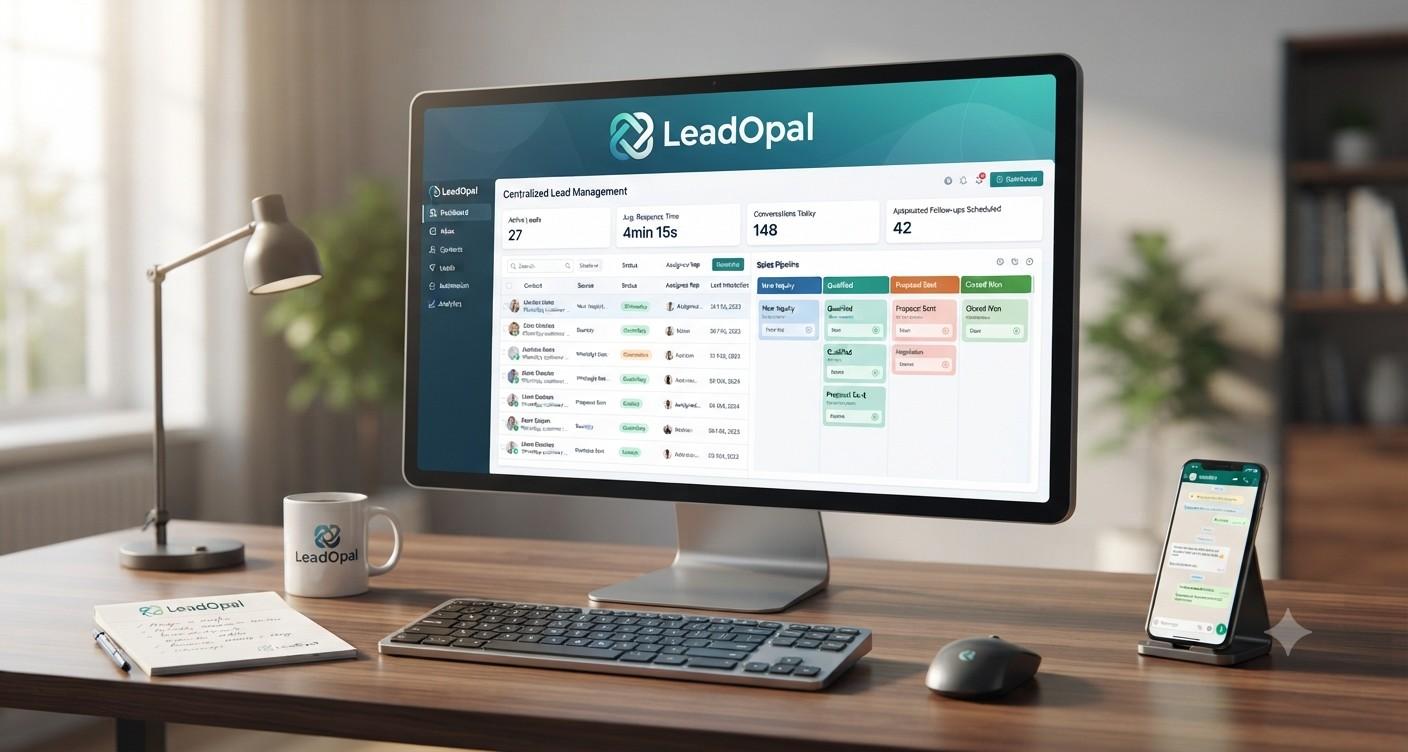
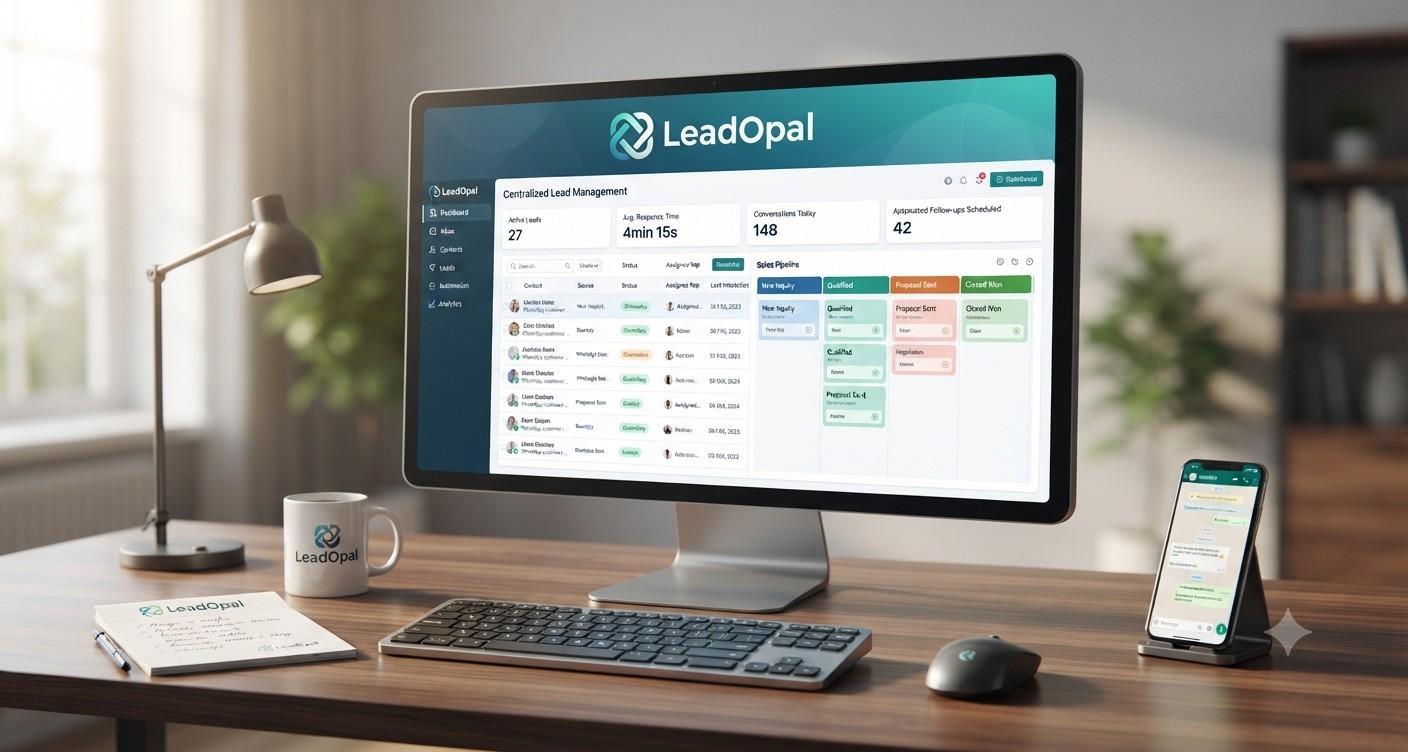
With solutions such as LeadOpal, businesses can bring customer communication and lead management closer together, helping sales and marketing teams improve response times, streamline workflows, and build stronger customer relationships.
Whether you're running a growing startup, a digital marketing agency, an e-commerce business, or an established sales organization, investing in the right WhatsApp CRM software can transform how your team manages customer interactions.
What Is WhatsApp CRM?
A WhatsApp CRM is a customer relationship management solution that integrates WhatsApp conversations with business sales, marketing, and customer support processes.
It enables businesses to manage incoming enquiries, organize customer information, track sales opportunities, automate communication, and coordinate follow-ups without relying entirely on manual messaging.
Traditional WhatsApp communication often leaves businesses struggling to track conversations across different employee phones. Messages get missed, follow-ups are delayed, and important customer information can become scattered.
A WhatsApp CRM platform centralizes communication and helps teams manage the customer journey more efficiently.
With a CRM-integrated WhatsApp environment, businesses can:
-
Manage customer conversations centrally
-
Automate WhatsApp follow-ups
-
Capture and organize leads
-
Track sales pipelines
-
Assign conversations to sales representatives
-
Send personalized customer messages
-
Improve customer engagement
-
Monitor communication and sales performance
For businesses that rely heavily on messaging to generate revenue, these capabilities can make WhatsApp a more structured and measurable sales channel.
Why Businesses Need WhatsApp CRM Software
WhatsApp generates opportunities for businesses, but managing customer communication at scale requires more than an active WhatsApp account.
1. Managing Leads Without Losing Conversations
When prospects contact businesses through WhatsApp, sales teams need a reliable way to track enquiries, conversation history, and next steps.
A WhatsApp lead management system allows businesses to organize prospects according to their interests, sales stage, and communication history.
Instead of searching through hundreds of messages, sales representatives can access relevant customer information and continue conversations more efficiently.
2. Delayed Follow-Ups Reduce Sales Opportunities
Many potential customers require multiple interactions before making a purchasing decision. When sales representatives forget to follow up, opportunities may go cold.
Using automated WhatsApp follow-ups, businesses can schedule or trigger reminders and messages based on predefined processes, subject to platform policies and customer consent.
For example, a customer who requests product pricing can receive a relevant follow-up after the sales team has had time to respond.
This helps businesses maintain consistent communication without depending exclusively on manual reminders.
3. Managing Multiple Sales Representatives
Businesses with growing sales teams often need visibility into who is handling which conversations.
A multi-agent WhatsApp CRM helps businesses distribute customer enquiries among team members, organize responsibilities, and reduce confusion around ownership.
Team managers can monitor conversations, review performance, and maintain more consistent customer service across representatives.
4. Improving Customer Engagement
Personalized communication can make customers feel understood rather than treated as another enquiry.
A WhatsApp customer engagement platform can help businesses respond using relevant customer details, previous interactions, enquiry information, and contextual communication.
By keeping conversations organized, businesses can deliver more relevant experiences throughout the customer journey.
Essential Features to Look for in WhatsApp CRM
Choosing the right WhatsApp CRM solution requires understanding which features can genuinely improve sales, marketing, and customer service operations.
1. WhatsApp Business API Integration
Businesses handling high volumes of customer interactions may benefit from the official WhatsApp Business Platform integration.
This enables businesses to build structured messaging workflows, connect communication with business applications, and use supported messaging features according to Meta's policies.
When evaluating CRM platforms, businesses should understand API connectivity, message template requirements, customer consent management, and applicable messaging costs.
2. Lead Capture and Lead Tracking
An effective WhatsApp CRM for lead management should help businesses capture enquiries and organize them into a manageable sales pipeline.
Leads can be categorized by source, enquiry type, sales stage, or assigned representative.
This helps sales teams understand which prospects require immediate attention and which opportunities need additional nurturing.
3. WhatsApp Automation and Workflow Management
WhatsApp workflow automation helps businesses streamline repetitive communication tasks.
Automation can support:
-
Welcome messages for incoming enquiries.
-
Lead assignment and routing.
-
Follow-up reminders.
-
Appointment confirmations.
-
Order status updates.
-
Customer support notifications.
Automating repetitive activities helps teams spend more time on conversations that require personal attention.
4. Shared Inbox and Team Collaboration
A shared WhatsApp inbox allows multiple team members to manage business conversations through a coordinated environment.
Businesses can assign enquiries, maintain conversation visibility, and reduce the risk of duplicate responses.
This capability is especially useful for customer support teams, sales departments, agencies, and businesses handling enquiries across different locations.
5. CRM Analytics and Reporting
A reliable WhatsApp CRM analytics dashboard helps businesses evaluate the performance of their communication activities.
Useful metrics may include response time, enquiry volume, lead conversion rates, follow-up performance, and sales representative activity.
These insights help businesses identify bottlenecks, improve messaging strategies, and make more informed decisions.
How LeadOpal Helps Businesses Manage WhatsApp Leads
LeadOpal can be positioned as a business solution for organizations looking to streamline customer communication, lead management, and sales follow-up processes.
By bringing messaging-led sales activities into a more organized workflow, businesses can focus on converting enquiries instead of manually managing scattered conversations.
The value of a WhatsApp CRM solution from LeadOpal lies in building a more organized approach to handling leads and customer interactions.
Centralized Lead Management
Organizing customer enquiries helps businesses maintain visibility into their sales opportunities.
A structured CRM lead tracking system can help teams manage prospect information, monitor sales stages, and prioritize follow-ups.
Streamlined Sales Follow-Ups
Consistent communication is important for moving prospects through the sales funnel.
Businesses can use WhatsApp sales automation to create structured follow-up processes, reduce missed opportunities, and maintain communication with interested prospects.
Better Team Coordination
When multiple representatives manage enquiries, a coordinated process becomes essential.
A well-configured sales CRM for WhatsApp can support lead assignment, conversation ownership, team visibility, and consistent customer communication.
Improved Customer Communication
Businesses can create more consistent communication experiences through organized messaging, relevant responses, and structured customer information.
By combining WhatsApp marketing automation with lead management workflows, businesses can better coordinate customer interactions across different stages of the buying journey.
Explore LeadOpal to evaluate how its capabilities align with your sales communication requirements, customer management processes, and business growth objectives.
WhatsApp CRM vs. Traditional CRM
|
Feature |
Traditional CRM |
WhatsApp CRM |
|---|---|---|
|
Lead management |
Yes |
Yes |
|
Customer communication |
Email, calls, forms |
WhatsApp conversations |
|
Messaging automation |
Varies |
WhatsApp-focused workflows |
|
Follow-up tracking |
Yes |
Messaging-based follow-ups |
|
Conversation management |
May require integrations |
WhatsApp communication-centric |
|
Team collaboration |
Yes |
Shared messaging workflows |
|
Customer engagement |
Multi-channel |
WhatsApp-focused engagement |
The capabilities of both solutions depend on the specific software, integrations, and configuration.
For many businesses, the most effective approach is not replacing an existing CRM but connecting WhatsApp communication with their broader sales and customer management processes.
How to Choose the Right WhatsApp CRM for Your Business
Before investing in WhatsApp CRM software, businesses should evaluate their operational requirements and long-term goals.
-
Integration capabilities: Check whether the platform connects with your existing CRM, sales tools, and business applications.
-
Automation features: Evaluate how it handles follow-ups, lead routing, reminders, and messaging workflows.
-
Team management: Look for conversation assignment, collaboration, and reporting capabilities.
-
Scalability: Ensure the platform can support increasing conversation volumes and additional sales representatives.
-
Compliance: Understand WhatsApp messaging policies, customer consent requirements, opt-out handling, and applicable data protection requirements.
-
Pricing and ROI: Evaluate subscription costs, messaging charges, onboarding, integrations, and expected business outcomes.
A solution should fit your existing processes while providing opportunities to improve them.
Frequently Asked Questions
What is a WhatsApp CRM used for?
A WhatsApp CRM helps businesses manage customer conversations, capture leads, automate follow-ups, assign enquiries, track sales opportunities, and improve customer communication through WhatsApp.
Can WhatsApp CRM automate follow-ups?
Yes. Many WhatsApp CRM platforms support automated or scheduled follow-ups, reminders, and customer notifications through supported integrations and messaging workflows, subject to consent and WhatsApp policies.
Is WhatsApp CRM suitable for small businesses?
Yes. WhatsApp CRM for small businesses can help manage enquiries, organize sales conversations, reduce missed follow-ups, and improve communication without requiring large sales teams.
Why should businesses choose LeadOpal?
Businesses evaluating LeadOpal can explore how its CRM-related capabilities fit their messaging, lead management, follow-up, and sales workflow requirements. The best choice depends on the features, integrations, pricing, and implementation needs of the business.
Conclusion
Managing customer conversations efficiently is essential for businesses that depend on messaging to generate leads, build relationships, and close sales.
A well-implemented WhatsApp CRM helps businesses organize customer enquiries, automate repetitive communication, improve team coordination, and create more structured sales processes.
From WhatsApp lead management and sales automation to customer engagement workflows and CRM reporting, the right platform can help businesses make their messaging channel more productive.
With LeadOpal, businesses can explore a more organized approach to customer conversations and lead management while evaluating the capabilities needed to support their sales processes.
Investing in the right WhatsApp CRM software is not simply about sending more messages. It is about managing conversations strategically, responding consistently, and creating a better path from initial enquiry to customer conversion.
