

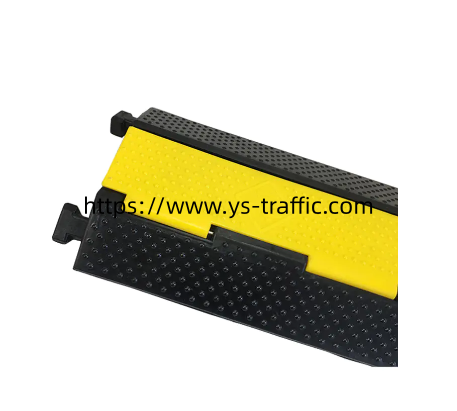

Cable Protector Ramp selection begins with understanding the actual requirements of an installation project. Buyers should consider the number and size of the lines being protected, available space, expected traffic, surface conditions, and product structure before requesting a quotation. For wholesalers, contractors, event organizers, and industrial equipment suppliers, these details help identify a suitable configuration. Clear specifications also allow manufacturers to prepare relevant product proposals and production arrangements.
Identify the Installation Environment
Before comparing different models, buyers should identify where the product will be used. A temporary event venue may require equipment that can be positioned and removed conveniently. A warehouse or workshop may need a configuration suitable for repeated movement of carts and machinery. Outdoor projects may involve additional considerations such as rain, sunlight, dust, and changing temperatures.
The surrounding traffic pattern is equally important. Buyers should consider whether pedestrians, passenger vehicles, or industrial equipment will cross the installation area. The direction of movement, available width, and nearby obstacles can all influence the required design.
Providing photographs or a simple site drawing can help the manufacturer understand the project more clearly. This information also reduces uncertainty when discussing dimensions and product configurations.
Confirm the Internal Dimensions
Internal channel dimensions should match the size and quantity of the wires, hoses, or other lines being installed. Buyers can begin by measuring the outside diameter of each item and recording how many need to be arranged.
The available space should allow the contents to sit in their intended positions without unnecessary compression. Procurement teams should avoid choosing a model based only on its channel count because width and depth can vary between designs.
Future maintenance should also be considered. If lines may need replacement or additional items may be added later, the arrangement should allow convenient access. A practical layout can make inspection and routine maintenance easier.
For customized projects, buyers should provide accurate measurements and explain whether different sizes need to be separated. These details help the production team evaluate the internal structure before manufacturing begins.
Evaluate Load Capacity and Surface Design
Expected loading conditions are an important part of product selection. Buyers should identify whether the installation will mainly experience pedestrian movement, hand carts, passenger vehicles, or heavier industrial equipment.
Instead of relying on general descriptions, procurement teams should request the applicable load specifications for the model under consideration. They should also clarify the conditions associated with those specifications, including the loading method and intended application.
Surface design deserves attention as well. A textured upper surface can help provide traction, while the overall profile influences how people and equipment cross the installation. Product height, approach angle, and edge shape should be considered in relation to the surrounding ground.
Different projects may require different structural arrangements. Buyers should communicate actual operating conditions so that product selection is based on practical requirements rather than appearance alone.
Compare Materials and Manufacturing Details
Material choice can influence product weight, flexibility, surface characteristics, and environmental suitability. Buyers may encounter rubber, PVC, polyurethane, or other material options depending on the manufacturer's product range.
Each option should be evaluated according to the installation environment and expected handling requirements. A product used at a temporary exhibition may have different priorities from one intended for a busy industrial site.
Manufacturing details are also worth discussing. Buyers can ask about molding methods, structural consistency, dimensional control, and the inspection procedures used during production.
Color selection may be relevant for projects where crossing areas need to be easily recognized. Buyers can discuss available colors, surface patterns, and identification features when preparing customized orders.
Review Connection and Handling Features
Some installations involve several sections placed along an extended route. In these situations, connection design becomes an important purchasing consideration.
Buyers should check whether individual sections can connect securely and whether the connection arrangement matches the planned layout. The dimensions of each section should also be considered to avoid unnecessary gaps or alignment difficulties.
Handling requirements should not be overlooked. Product weight, opening methods, storage space, and transportation arrangements can influence how easily a team manages installation and removal.
For temporary projects, convenient storage and repositioning may be particularly useful. For fixed work areas, buyers may need to discuss additional installation accessories or suitable placement methods with the supplier.
Request Samples and Confirm Inspection Standards
A sample allows buyers to examine actual dimensions, material feel, surface structure, and internal layout before placing a larger order. It can also help confirm whether the selected configuration suits the project.
Before production begins, buyers should agree on the main inspection points. These may include overall dimensions, internal measurements, surface appearance, cover operation, and connection compatibility.
For customized orders, an approved sample or technical drawing should be kept as a reference. This provides a common standard for reviewing subsequent production batches.
Packaging should also be discussed. Buyers can confirm carton quantities, labeling requirements, product arrangement, and shipping protection according to their storage and distribution plans.
Communicate Clearly With the Manufacturer
Clear communication helps prevent misunderstandings during purchasing. Buyers should prepare information about dimensions, material preferences, required quantities, colors, packaging, and delivery schedules before requesting a quotation.
At ys-traffic, customers can discuss different configurations and project requirements with the manufacturing team. Providing application photographs, measurements, and expected traffic conditions can help clarify the intended use and support more efficient product discussions.Buyers should also confirm sample arrangements, minimum order quantities, customization details, and inspection expectations. These matters are worth recording in the order documents so that both parties can follow the same specifications throughout production.For distributors, contractors, and project purchasing teams seeking product information or customized supply arrangements, visit https://www.ys-traffic.com/ to review available options and contact ys-traffic about specific requirements.
