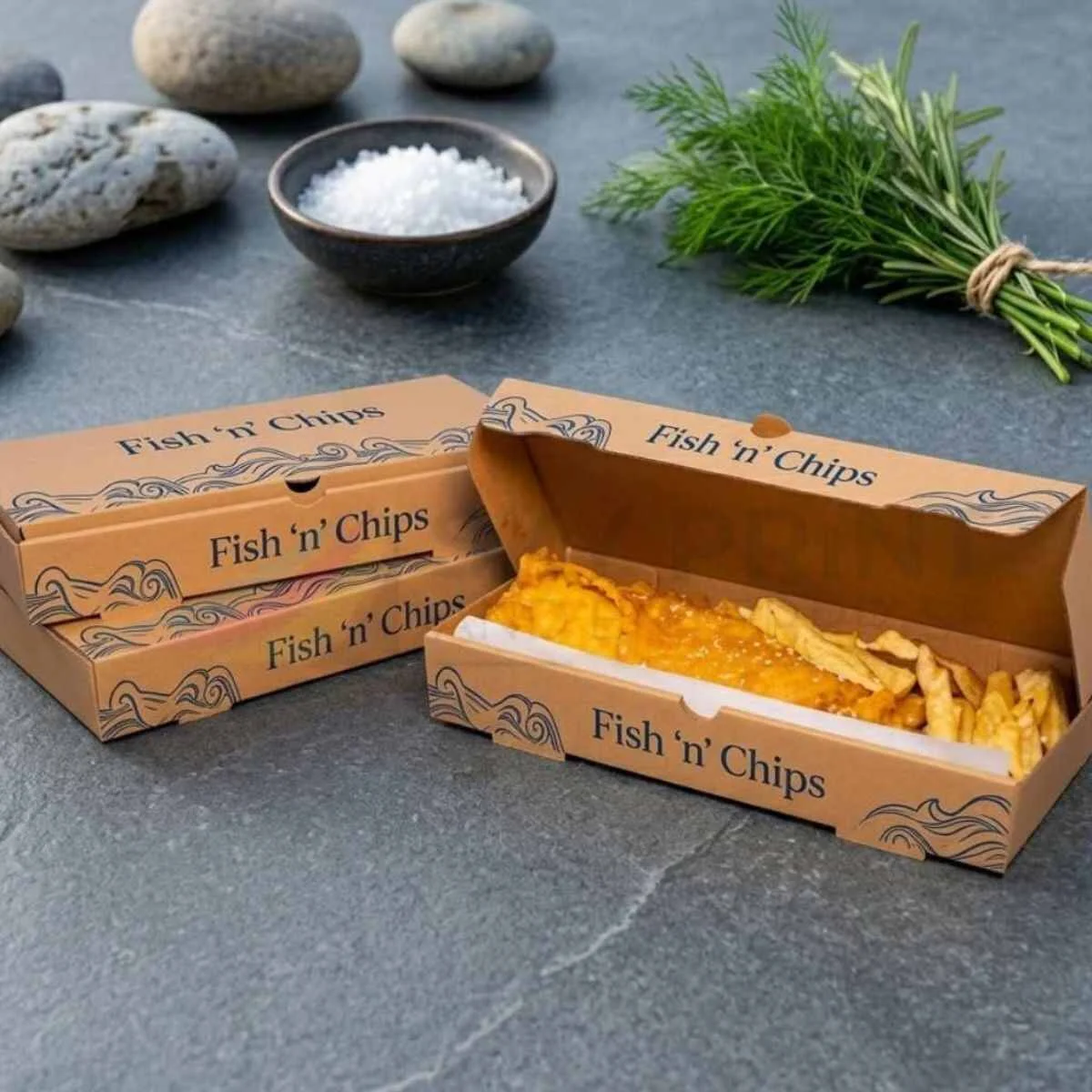
Picture a Saturday evening in Bath or a chilly Thursday night in Sunderland. Golden fillets of cod, crisp chips, and mushy peas come out of the fryer, ready for a twelve-minute trip to a hungry household. During those twelve minutes, hot food faces shifting air, trapped steam, and bag pressure that can soften batter before the rider reaches the porch.
Sky Print and Enterprise works alongside UK takeaway kitchens to protect hot meals through smart board engineering. Choosing
fish supper boxes gives British takeaways dependable cartons sized for real delivery routes.
Want crisp suppers that survive every UK delivery run? Start your printing today and get box options tailored to your kitchen.
Inside the Twelve-Minute Delivery Clock
Twelve minutes goes by fast once hot cod, haddock, and chips enter an insulated bag. Freshly fried batter and chips release warm vapour right away, while cool British air pulls heat from outer surfaces. When steam has nowhere to vent gently, moisture settles back onto the crust and dulls that crisp bite.
Delivery routes across Britain test cartons far harder than counter service. Riders navigate damp pavements, hills, traffic lights, and multi-drop schedules from Brighton to Aberdeen. A container needs firm side walls under stack weight while letting excess vapour escape smoothly.
Operators browsing
bespoke food cartons look for practical food protection first and strong brand visibility alongside it. Balanced airflow and oil resistance hold texture together without letting warmth escape too quickly. Diners lift the lid, smell vinegar and sea salt, and enjoy crisp edges after the ride.
First-Half Keyword & Link Architecture for UK Takeaways
Clear internal links in the opening half guide readers toward relevant products and categories without interrupting helpful advice. Shoppers across the UK search with varied terms based on portion size, print style, and recycling goals. Linking naturally in the first half connects practical guidance directly to matching pages.
Operators comparing
takeaway fish boxes usually weigh heat retention, grease resistance, and fast assembly. A well-sized
crispy chippy box holds generous portions while letting excess steam clear. Busy delivery kitchens often rely on
delivery supper cartons that stack neatly inside thermal bags.
Logo-led kitchens frequently order
printed supper cartons so every delivery carries clear local branding to the door. Depending on spelling habits and regional search phrasing, buyers also choose
custom supper cartons for unified shop identity. Standard meal sizes also fit neatly inside
traditional fish cartons when pairing fillets with chips.
| Search Theme |
Role in First Half |
Value for UK Chippies |
| Takeaway & supper cartons |
Matches portion and delivery needs |
Supports crisp arrival over 12 minutes |
| Custom & printed branding |
Builds local recognition |
Reinforces shop identity on every drop |
| Eco-minded choices |
Aligns with UK disposal habits |
Combines responsibility with durability |
Controlling Steam, Heat, and Grease During Transit
Every takeaway carton balances three competing needs: holding warmth, letting excess steam escape, and locking oil inside. Sealing a hot supper tightly traps vapour and leads to soggy batter. Leaving a carton wide open lets warmth drop too fast before arrival. Smart venting, sturdy walls, and secure locks solve this trade-off on the shop floor.
Venting Steam Without Losing Warmth
Hot chips and battered fillets push out moisture continuously during the first few minutes in transit. Breathable board grades paired with well-placed vents release excess vapour steadily. Rigid walls also stop lids from sagging onto crisp coatings during transport.
Blocking Grease Before It Reaches Bags
Oils from fried coatings, curry sauce, and gravy test seams and corners quickly. Oil-resistant board linings and snug interlocking flaps hold liquids inside the carton. Clean exterior surfaces protect delivery bags, car seats, and customer hands.
Speeding Up Packing During Peak Shifts
Busy evenings leave no room for fiddly folding routines while tickets stack up. Pre-glued bases and clean tuck closures help counter staff pack orders briskly. Smooth packing speeds up dispatch and helps orders reach doorsteps sooner.
| Transit Factor |
Weak Container Outcome |
Purpose-Built Carton Advantage |
| Steam build-up |
Softened batter and damp chips |
Controlled vents protect crisp texture |
| Oil migration |
Greasy bags and stained hands |
Grease-resistant board locks oils in |
| Lid pressure |
Flattened fillets and mess |
Sturdy walls hold shape in transit |
| Packing speed |
Bottlenecks at the pass |
Quick-fold tabs speed up service |
Choosing Board Grades for British Menus and Weather
Board selection shapes both food condition at the door and environmental impact after dinner. Different items on a takeaway menu face different moisture loads and transit times. Reviewing
UK board materials helps operators compare strength, print clarity, and sustainability side by side.
Fluted Board for Heavy Orders and Longer Runs
Larger family suppers and longer suburban routes benefit from added wall strength and insulation. Using
corrugated board material cushions delicate batter against bumps while buffering outside chill. Air channels inside fluted layers help steady warmth during cool evening drops.
Kraft Board for Warm, Traditional Appeal
Unbleached brown board brings an honest, classic feel that suits traditional British chippies naturally. Choosing
kraft board material supports a grounded, eco-aware image without looking overly polished. Paired with oil-resistant treatments, it handles savoury sides and sauces cleanly.
Folding Carton Board for Crisp Brand Detail
Smooth carton board gives sharp print definition for logos, QR menus, and seasonal promotions. Selecting
cardboard stock material lets shops display vivid graphics while keeping per-unit costs practical. Clean print surfaces turn every delivery into a local brand reminder.
Unifying Packaging Across Your Full Takeaway Menu
Most UK takeaway shops serve far more than battered fish and chips over the course of a week. Matching board quality and print style across menu items builds instant familiarity at the doorstep. Cohesive packaging makes a shop look well-run from lunch rushes through late supper.
Practical Takeaways From Other Fast-Moving Food Lines
Fast-turnaround food businesses across Britain share similar habits around cost control, speed, and presentation. Looking at neighbouring takeaway categories often reveals smart ideas that carry straight over to fish and chips. Reviewing
budget pizza cartons shows how practical sizing and smart ordering protect margins during busy shifts.
Visual branding is another area where cross-category lessons apply directly. Exploring
custom pizza cartons highlights how bold logos, clear typography, and strong contrast lift perceived value. Bringing those design habits to takeaway cartons helps local shops stand out on delivery apps.
Regional Delivery Patterns in Sheffield and Leeds
Delivery routes differ noticeably across UK cities, even within a short drive. Around
Sheffield print packaging, steep hills, brisk winds, and busy evening orders test box locks and heat hold. Containers need reliable closures and firm walls so meals stay neat on hilly streets.
Further north-east, shops using
Leeds print packaging manage dense city drops, student demand, and lively weekend rushes. Fast-folding cartons help staff keep pace when delivery orders arrive back-to-back. Dependable local supply prevents stock shortages on core sizes mid-month.
Planning Artwork, Sizing, and Reorder Timing
Strong packaging results come from matching real food portions, clear artwork, and sensible reorder schedules before peak demand hits. Test standard fish fillets, chip weights, and sauce pots inside sample cartons before ordering in bulk. Checking lid clearance prevents flattened batter and squashed sides.
For teams refining logos, colours, and layout structure, our
packaging design guide covers practical visual choices for takeaway print. Once artwork is set, our
printing packaging guide walks through production steps from proofing to dispatch. Placing reorders early ahead of bank holidays, summer coastal rushes, and winter comfort-food weeks keeps stock flowing smoothly.
Pre-Order Checkpoints for Busy UK Kitchens
A short operational review before signing off on bulk print saves time and money on the shop floor. Check these practical points with your kitchen lead and print partner:
-
Measure real portions of fish, chips, and sides so lids close cleanly without pressing on batter.
-
Test grease resistance with hot oils and sauces so seams stay neat during transit.
-
Time carton folding during prep so busy shifts stay smooth and calm.
-
Check text contrast and logo placement so your shop name reads clearly at the door.
-
Schedule reorders early enough to cover peak weeks and delivery lead times.
Stop losing golden crunch on the way to the front door—turn every local delivery into a memorable brand moment. Book a print consultation and get takeaway boxes built for your UK kitchen.
Frequently Asked Questions
How do I keep batter crisp during a twelve-minute delivery run?
Pair grease-resistant board with sensible steam venting so excess vapour escapes without letting heat dump too fast. Testing sample boxes with hot orders shows how well the layout holds crispness.
Are pre-glued boxes worth it for busy UK takeaway shifts?
Yes, pre-glued bases and clean tuck flaps speed up packing when orders pile up on Friday nights. Faster assembly keeps food moving from fryer to rider with less delay.
What makes a logo stand out on a takeaway carton at night?
Bold, high-contrast ink colours and clear spacing away from fold lines help your brand stay readable in low light. Avoid crowding fine details right across creases or corners.
Can one box size handle both single suppers and larger sides?
Standard sizes can cover common meals, though keeping a couple of size options prevents squashed fillets on big orders. Matching box dimensions to real portions reduces wasted space.
When should UK shops reorder custom boxes before peak seasons?
Placing print orders several weeks ahead of bank holidays, summer trips, and winter rushes is a safe habit. Early reorders protect your kitchen from stock gaps during busy weeks.