

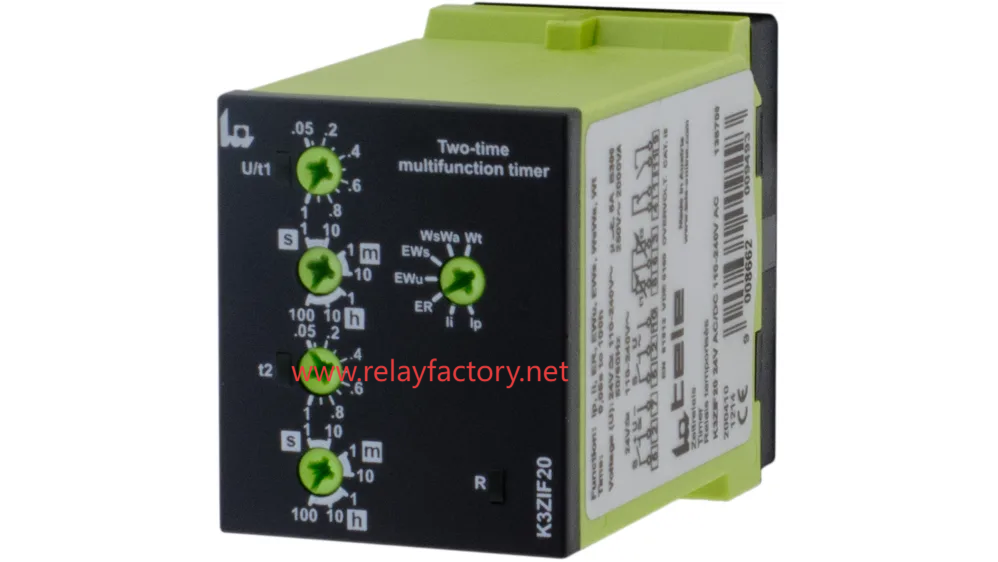

Multifunction Time Relay selection should start with the actual operating requirements of the equipment. For machinery manufacturers, automation integrators, electrical distributors, and industrial buyers, choosing a suitable component involves more than checking a catalog or comparing prices. The product needs to match the control sequence, electrical circuit, installation structure, and working environment. Preparing these details before contacting a manufacturer can make technical discussions and purchasing decisions more straightforward.
Identify the Required Control Operations
Buyers should first describe how the equipment is expected to operate. Different machines may require delayed activation, delayed release, interval switching, pulse output, or repeated operation. Each function serves a different purpose within an electrical control system.
For example, delayed activation can allow one process to finish before another device starts. Delayed release can keep an output active for a specified period after the initiating signal ends. Repeated switching can support equipment that operates through a regular sequence.
Instead of selecting a product based only on the number of available functions, buyers should identify which operations are actually needed. A process description, control diagram, or equipment sequence chart can help the manufacturer understand the application and recommend an appropriate configuration.
Review Adjustment Methods and Operating Ranges
The available adjustment range should correspond with the equipment cycle. Some applications need short intervals, while others require longer periods. Buyers should compare the specified ranges with the actual operating requirements before making a decision.
The adjustment method also affects daily use. Depending on the design, settings may be made through rotary selectors, switches, or digital controls. Consider whether technicians need to change parameters frequently or whether the equipment will use a fixed setting after commissioning.
Clear markings and understandable instructions can help reduce confusion during installation and maintenance. Ask the manufacturer for the operating guide and function table so that engineers can review the settings before placing an order.
For OEM projects, it is also worth checking whether different machine versions require different configurations. This information can help purchasing teams prepare suitable model selections for each equipment series.
Confirm Voltage and Contact Requirements
Electrical compatibility is essential when selecting a control component. Buyers should identify the supply voltage used by the equipment and confirm whether the circuit operates with AC or DC power. The selected model must match the specified electrical conditions.
Next, examine the output contact arrangement. Important details include the number of contacts, normally open and normally closed configurations, rated voltage, and current capacity. These specifications should correspond with the control diagram and connected devices.
Load characteristics should also be considered. A contactor coil, solenoid, motor-related circuit, and resistive load may place different demands on switching contacts. Buyers should provide the actual load information rather than relying on a single rating without considering the application.
If the connected load requires a capacity beyond the permitted rating, an additional switching device may be necessary. Sharing the circuit diagram with the technical team can help clarify this requirement before installation.
Check Housing Dimensions and Mounting Details
Physical compatibility is another important part of product evaluation. Even when the electrical specifications are suitable, a component may not fit the available cabinet space or mounting structure.
Before ordering, confirm the overall dimensions, mounting method, terminal positions, wiring access, and accessory requirements. These details are particularly important for electrical cabinet builders and machinery manufacturers working with limited installation space.
Terminal identification should also be checked carefully. Request the wiring diagram for the exact model and compare its connection points with the equipment design. If a matching socket, base, or mounting accessory is required, include it in the quotation request.
Providing cabinet drawings or installation measurements can help the manufacturer review the proposed arrangement and identify potential compatibility issues.
Consider Environmental Conditions
The installation environment can influence product selection and maintenance planning. Buyers should describe the expected ambient temperature, humidity, dust exposure, vibration, and enclosure conditions.
A component installed inside a clean electrical cabinet may face different operating conditions from one used in a workshop or outdoor control box. Review the manufacturer's product documentation for specified operating limits and protection information.
Maintenance access should also be considered. Technicians need sufficient space to inspect connections, read indicators, and adjust settings when necessary. A practical mounting position can make routine inspection and replacement easier to arrange.
Examine Product Documents and Customization Options
Before confirming a purchase, buyers should request the relevant technical documents. These may include a datasheet, wiring diagram, dimensional drawing, function description, and available inspection records.
For projects with specific requirements, discuss possible configuration adjustments with the manufacturer. Provide details such as supply voltage, contact arrangement, required operating functions, housing dimensions, terminal positions, and application conditions.
Sample evaluation can also be useful, particularly for OEM customers introducing a component into a new equipment design. A sample allows the engineering team to review physical fit, connection details, and operating behavior before arranging a larger order.
Organize Purchasing Details Before Confirmation
A clear specification sheet can make communication between buyers and manufacturers more efficient. Include the intended application, control sequence, electrical ratings, contact arrangement, mounting dimensions, environmental conditions, and required accessories.
Commercial details should be confirmed as well. Discuss model identification, order quantity, packaging, labeling, inspection arrangements, delivery schedules, and documentation requirements. Distributors may also need to clarify product identification and repeat-order arrangements for inventory planning.
When purchasing and engineering teams work from the same approved specifications, the risk of misunderstandings during quotation, production, and delivery can be reduced. This preparation also provides a useful reference for future procurement.For buyers sourcing industrial control components, relayfactory provides product information and manufacturing support through https://www.relayfactory.net/ Sharing application details, circuit drawings, and required specifications with the team can help clarify available configurations and discuss suitable arrangements for different equipment projects.
