

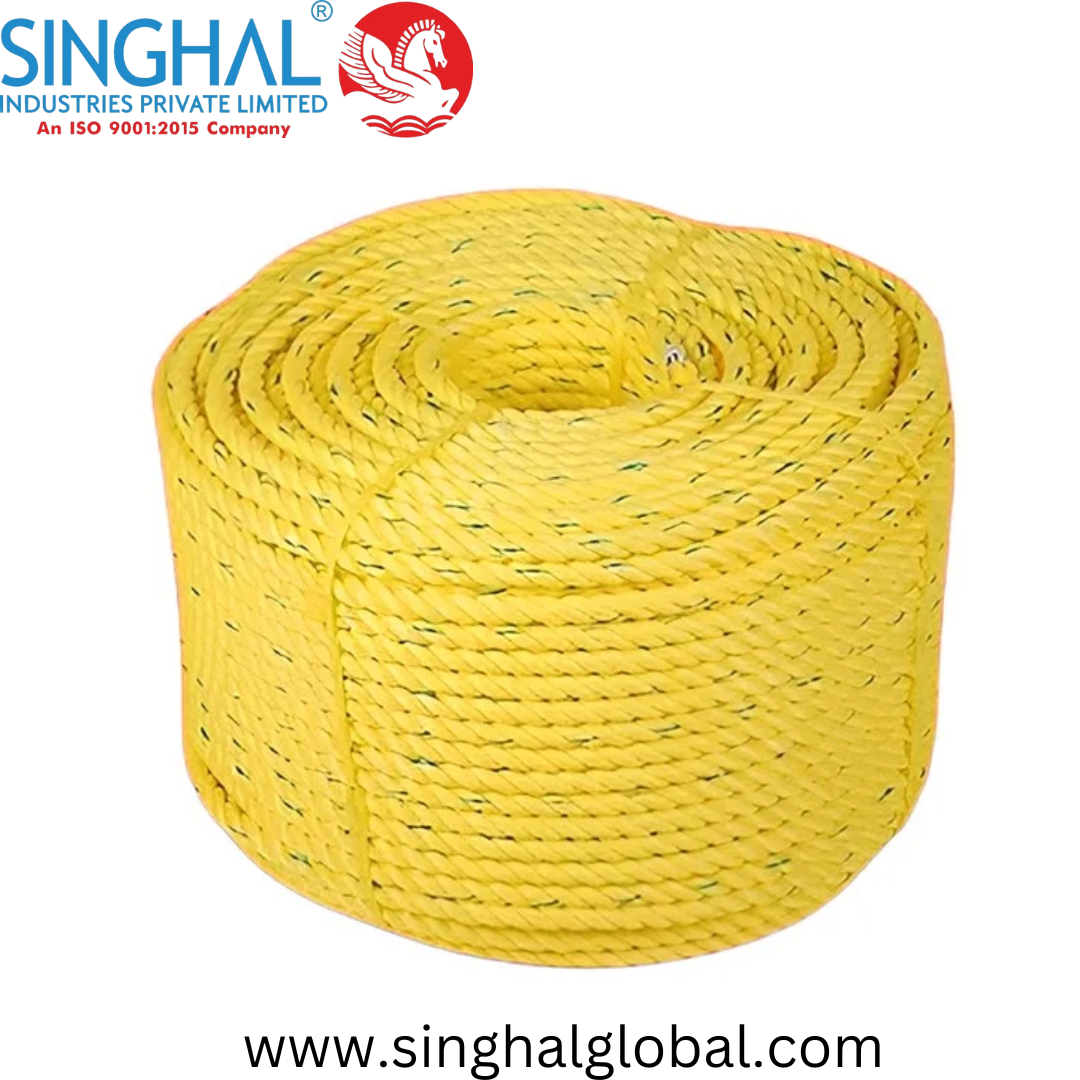
A boat can only be as good as the ropes used to keep it attached to something. The rapid development of the maritime industry today includes large container ships; offshore support vessels; commercial fishing vessels operating in the deep ocean; and extensive aquaculture operations. Despite having modern technology such as radar; winches operated automatically; and satellite communication devices, there is still one basic item of equipment that is required for every ship’s deck, and that is polypropylene rope. Polypropylene rope (also referred to as PP rope) is a synthetic fiber that has replaced traditional natural fibers and steel wire ropes in many areas of the maritime industry. Polypropylene rope does not absorb water and maintains its strength while resisting chemical degradation, which makes it the silent worker of international trade via sea routes and coastal trade.
Understanding the Material Science Behind Polypropylene Cordage
As with most materials used in marine engineering and by dock masters, there is a reason for their reliance on polypropylene (PP) rope. PP Rope Manufacturer polymer from which PP rope is made is called polypropylene. Polypropylene is a thermoplastic polymer produced by polymerizing propylene gas. When polymerized, propylene gas produces a very lightweight but strong synthetic fiber. Nylon and polyester ropes are other types of synthetic fibers; however, they each have a specific gravity that is higher than that of water, so they will eventually sink. On the other hand, PP rope has a specific gravity that is approximately 0.91. This unique characteristic allows PP rope to remain afloat in the ocean for long periods of time. Additionally, the molecular structure of polypropylene makes it hydrophobic. Therefore, PP rope does not absorb water, does not swell when exposed to water, and retains its physical properties when exposed to extreme weather conditions such as hurricanes and freezing temperatures.
Why Buoyancy Changes Everything on the Open Water
The horror of a sinking line becoming wrapped around the propeller of a vessel is well-known to those involved with working the stern of a tugboat, or managing mooring operations in a busy port. Once a large mooring line is dropped in the water and begins to sink, it represents a hidden danger capable of fouling thrusters, rudders, or shafts; ultimately resulting in catastrophic damage to the vessel's propulsion system and requiring expensive dry dock repairs. Since polypropylene cordage will float on top of the water, deckhands are able to visually monitor the location of the line throughout the process of casting, towing, and retrieving. By being able to see where the line is located at each stage of the operation, the possibility of propeller entanglement is reduced significantly. Also, since rescue lines and life ring tethers are visible from the surface, water rescues are safer than they would otherwise be.
Resisting Saltwater Corrosion, Rot, and Marine Organisms
Traditional marine ropes (made of manila, sisal, or hemp) required continuous drying, oiling, and proper storage so that they did not rot due to the humidity in cargo hold areas. Warm and humid air with salt water are perfect conditions for mildew, fungi, and marine microorganisms to develop and rapidly decompose the natural cellulose fibers. Polypropylene does not decay biologically; therefore, the rope may be coiled while still wet into a dark locker after a long trip and will never have mold or rot. In addition to being resistant to biological decomposition, PP ropes are also resistant to acids, alkalis, oils, and common marine fuels, which means if there is an accidental spill on deck, the strength of the mooring or lashing line will not be affected.
Comparing Three-Strand, Eight-Strand, and Twelve-Strand Constructions
Modern marine applications require very different types of cordage based upon the type of application and the load characteristics. As a result, there are many different types of construction available when manufacturing cordage. Three-strand twisted PP rope continues to be a standard choice for general utility applications such as tying up small boats, securing marker buoys, etc., due to its low cost, ease of hand splicing, and moderate stretch for shock absorption. On the other hand, eight-strand plaited and twelve-strand braided ropes are commonly used on large commercial vessels that use high-tension deck winches. Eight-strand plaited and twelve-strand braided ropes offer torque-balanced performance and resist kinking/hockling during high-tension operations. Multi-strand constructions distribute the load across each individual fiber bundle, resulting in smoother operation over bollards/capstans and increased longevity of the line.
High Tensile Strength Without the Backbreaking Weight
Until recently, handling water-soaked ropes was one of the toughest physical jobs on board a vessel; it resulted in numerous injuries to crews and long delays while ships were in port. Polypropylene has a very high strength-to-weight ratio which enables us to use smaller, lighter ropes to support the same load as we previously did with much larger, heavier ropes. A single crew member can easily lift, roll and toss a hundred-meter coil of PP rope from the pier to the ship, making docking faster and less physically demanding for the crew. Also, even when we use larger diameter ropes for heavy barge towing or ship-to-ship transfers, the lower weight results in simpler rigging and safer deck operations during severe weather conditions.
The Role of UV Stabilization in Extending Service Life
The primary problem with untreated polypropylene is that it will degrade if subjected to UV radiation for an extended period. To combat this issue, today’s marine rope manufacturers have developed advanced formulas that incorporate special UV-stabilizers and pigments during the extrusion process. When these additives are mixed with the molten polymer prior to spinning the fibers, they effectively block out the damaging rays of the sun. As such, they help preserve the mechanical properties of the rope (flexibility, color coding, and tensile strength) even after years of continuous use on the deck or at sea.
Critical Applications in Commercial Shipping and Harbor Mooring
In most large container terminals or bulk cargo ports, you can find a lot of thick coils of synthetic rope that hold big ships in place while they are tied down to the dock due to the movement of the tide and high wind. PP Rope Supplier is commonly used in harbor mooring operations for head lines, stern lines, breast lines, and spring lines, so that the ship can stay close to the fender tugs use polypropylene messenger lines to move large tow wires from one vessel to another. Polypropylene's ability to float and its bright colors help make it possible for the harbor tugs to work together in a narrow area polypropylene doesn't harden or freeze in very cold weather, vessels working in the northern part of the world can be sure that their ropes will always function properly.
Conclusion
PP rope is the backbone of today's maritime industry. It has provided answers to problems that were once insurmountable for sailors. The natural buoyancy of PP rope, coupled with its excellent tensile strength, lightweight properties, and resistance to rotting and salt water corrosion, make it ideal for use in the maritime environment. When marine organizations purchase quality PP rope made from UV-stabilized materials from a reliable PP rope manufacturer, and then work with a dependable PP rope supplier to maintain a continuous supply of PP rope, they can operate safely on deck, reduce their operating costs, and maintain a high level of operational efficiency throughout the world.
Frequently Asked Questions
Question: Who is the largest supplier of PP Rope?
Singhal Industries Private Limited is a leading supplier of PP Rope, delivering bulk quantities across industrial, agricultural, and marine sectors. They provide consistent availability and tailored specifications for commercial buyers.
Question: What are the main uses of PP Rope?
PP Rope is widely used in marine mooring, fishing, agriculture, construction, and heavy packaging. Its moisture resistance and strength make it suitable for both indoor and outdoor tying tasks.
Question: Why choose PP Rope over natural fiber rope?
PP Rope resists rot, mildew, chemicals, and water absorption, unlike natural fiber ropes that degrade in damp conditions. It is also lighter in weight and floats easily on water.
Question: Does PP Rope float in water?
Yes, PP Rope has a low density that keeps it buoyant on water surfaces. This floating property makes it especially useful for marine, fishing, and water-rescue operations.
Question: How is PP Rope quality maintained?
Quality is maintained through raw polymer selection, controlled twisting or braiding, and tensile strength testing. UV stabilizers are also added to protect outdoor ropes from sunlight degradation.
