

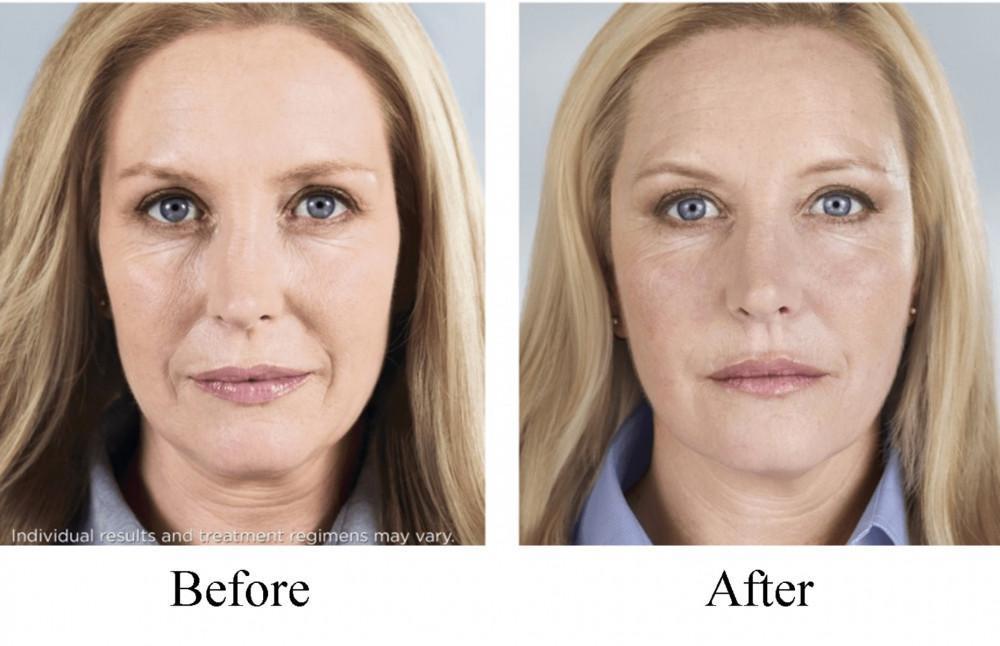

If you’re considering an injectable for facial volume loss, ask what will create the change you see. With a hyaluronic acid filler, the gel itself adds volume where it is placed. With Sculptra, an injectable made with poly-L-lactic acid (PLLA), much of the effect develops gradually as the treated tissue makes new collagen. Both belong to the broader family of dermal fillers, but they behave differently. That difference affects what you see on the day, how long it takes to assess the result and what a clinician can do if a problem develops.
How each injectable adds volume
Hyaluronic acid occurs naturally in the body and binds water. In a filler, it comes as a gel that a clinician places in a specific area. Different gels have different properties. A product suited to defining the lip border may differ from one used to add support to the cheek. Ask about the specific product proposed for the area, since the label “hyaluronic acid filler” covers a range of gels.
Sculptra is one type of collagen stimulator. Its PLLA particles prompt a response in the treated tissue that leads to new collagen formation over time. Other collagen-stimulating injectables use different materials and can have different effects. If you’re considering Sculptra at The Nova Clinic, ask how the clinician will distinguish temporary fullness from the change they expect to see as collagen develops.
What you see on the day can change
The American Academy of Dermatology’s guide to fillers describes an immediate effect with hyaluronic acid gel and a slower onset with PLLA. With a gel filler, you can see added volume soon after the appointment. Swelling can make the area look fuller at first, so give it time to settle before judging the contour.
With PLLA, any early fullness can include swelling and the liquid used to prepare the injectable. As that settles, the area may look closer to how it did before treatment. The collagen-related change develops over the following weeks and months. A clinician may plan a series of sessions and assess the response between visits. Ask when they would review the result and what would lead them to recommend another session.
What if you want the result adjusted?
A clinician can often break down hyaluronic acid filler using an enzyme. That option can help in certain situations, but the response can vary and further treatment may be needed. A lump or uneven area can have several causes, from swelling to a reaction that develops later. An examination helps the clinician decide what needs attention.
The same enzyme does not dissolve PLLA or undo the collagen response it triggers. That makes the discussion before treatment particularly important. Ask how the clinician would assess a persistent lump or a result that looks uneven after swelling has settled. If you’ve had filler before, tell them what was used, where it was placed and when. Bring the treatment record if you have it.
Know the risks before choosing either option
Bruising, swelling and tenderness can follow either type of injection. Lumps can also occur, sometimes after the initial swelling has gone. A new or persistent lump deserves a review, particularly if it becomes red, sore or larger. Before treatment, ask how to reach the clinician if something changes after you go home.
As the American Society of Plastic Surgeons explains in its filler safety guidance, a rare but serious risk is filler entering a blood vessel and blocking blood flow. This can injure skin and, in some cases, cause vision loss or stroke. Seek immediate medical care if you develop unusual or severe pain, skin that turns white, grey or blue near the injection site, or any change in vision during or shortly after treatment.
What to ask at a consultation
Tell a qualified, licensed clinician what you want to change and point to the area that concerns you. A flatter cheek and a lip border that has lost definition are different concerns, even if both come up in a conversation about volume. The clinician can explain what they see in the tissue, whether an injectable is suitable and why they would choose a particular product for that area.
Ask how long they’d expect the effect to last in that area and what follow-up they’d recommend. Duration varies with the product, the treatment site and the person. Bring up any upcoming event if timing matters to you. An injectable with an early visible effect can still leave swelling or bruising, while a collagen-stimulating treatment may take longer than your schedule allows.
Ask to see the product information for the exact filler they propose. Check whether the specific area is covered by the product’s approved uses where you live, and ask the clinician to explain the evidence and risks if they suggest using it outside those indications. Before you leave, ask for the product name and treatment date in writing. That gives you a record to share if another clinician needs to assess the area later.
A useful comparison starts with the change you want and the amount of uncertainty you’re comfortable with. Ask how quickly you can judge the result, how it can be adjusted and who will review any concerns. Those answers give you a better basis for deciding whether either approach fits than choosing on the strength of a product name.
