

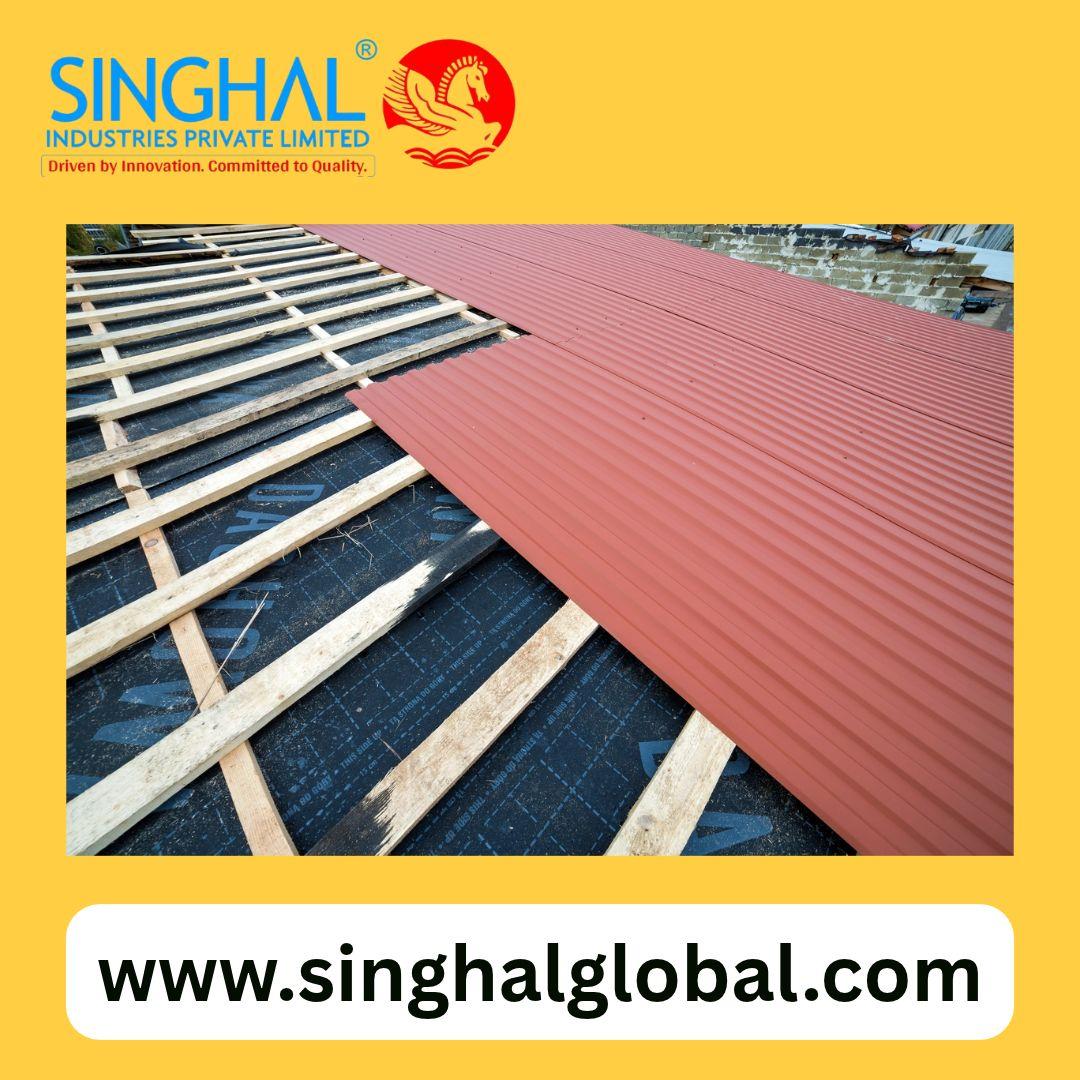
Roofing Underlayment Providing Advanced Moisture Defense and Reliable Roof Longevity

Most shingle, metal panel, and tile roof coverings are followed by a secondary moisture barrier system that is critical in maintaining the integrity of our built environment and architectural history. Wind and rain together can lead to potential problems with the integrity of the roof system. Snow and ice melt can change the condition of the roof system from safe to hazardous. High-performance polymer membranes have been used for years within the industrial and commercial building construction industries to ensure the integrity of the roof system. A high performance polymer membrane combined with a quality manufacturer of roofing underlayments will allow for protection against water penetration and increase the service life of the roof system. Roof systems give building occupants peace-of-mind knowing that the contents of the building will remain intact and that they do not need to worry about the effects of adverse weather.
From Waterproof Roofs to Changing Foundations
Felt paper has been used as an insulation product for several decades however, recent developments in moisture control technology have introduced a variety of new high-tech synthetic products, including flexible woven waterproof Roofing underlayment India and internal insulation. As a result of these innovations in the polymer industry, the construction engineer is now able to utilize a wide range of products that provide superior protection against moisture damage on a roof deck. Although there are other types of roof deck protection products available, such as traditional wet-felted asphalt mats, they can become wrinkled and cracked over time. On the other hand, synthetic underlayments (India) are both flexible and resistant to moisture bead formation. Furthermore, synthetics enable us to temporarily repair significant portions of a roof using temporary repairs that can be sealed to prevent water leakage until the final roof covering installation is completed.
Adjusting Protection for Different Climates
The climate of South America is varied; therefore, the protection layer(s) will need to accommodate the different amounts of thermal expansion and moisture vapor. The protection layer(s) must also be resistant to heat and solar radiation. More recently, some polymer layers used as part of a dual system for protection prevent the development of mold and mildew, while at the same time providing a barrier against moisture intrusion. The layers also provide protection against the harmful effects of UV radiation. Protection layers protect against corrosion caused by environmental factors, and provide longevity to protection layers applied directly to roof decks and possibly protect the superstructure. Protective barriers are incorporated into the design of newer buildings to protect against moisture intrusion into the superstructure. Older and newer buildings both incorporate protective barriers to limit moisture intrusion into the superstructure. Any area where there may be a weak point in the roof should be protected because protecting the weak points in the roof helps protect the superstructure. Polymer barriers are commonly used in commercial and industrial structures to protect areas where there may be a weak point in the roof.
Sub Roof Membrane High Performance
A secondary roofing layer (membrane) provides additional protection from water penetration which can occur due to leaking roofs, standing water, ice dams, and severe wind. Water damage can result if high winds blow away the roof covering (shingles or metal panels) revealing the roof deck and allowing water to enter through the wall/frame of the house. Synthetic underlayments are installed on top of the deck to prevent damage. Heat flow and air flow in the attic space are regulated by this membrane, in addition to preventing water from entering. Regulation of the heat produced in the attic, along with regulation of condensation within the attic, are both beneficial. Heat regulation in the roofing system, and heat loss regulation in the roofing system, will increase the longevity of the roofing system and its structural components (rafters and sheathing). Extreme weather conditions such as high winds and rapid snow melt, can push water and moisture through the outer layers of the roof and the deck itself, affecting the deck underneath.
Similarities of manufactured components
The traditional way to make a roof deck watertight is to use multiple rolls of asphalt-saturated felt paper. This is now being replaced with synthetic roll products. Synthetic roll products offer more coverage than the older types of roofing papers, thus requiring less time for installation by a roofing crew. Synthetic products also provide the roofing worker with an appropriate amount of slip resistance or coefficient of friction. While there was no guarantee of safety for roofing workers in the past, it should be noted that the use of a synthetic product can help reduce the number of work-related accidents through its ability to provide some degree of slip resistance. As a General Contractor, I find that using synthetic products is more advantageous since they do not deteriorate as quickly as the traditional roofing products, so they do not swell or delaminate as much after exposure to the elements.
Materials Recycling and Environmental Sustainability
The current environmental sustainability and circular economy trends that will impact the building industry and the development of new buildings. A new, more restrictive definition of waste management at construction sites promotes the optimal use of energy and materials, as well as the implementation of a circular economy. High density polymer roof membranes have an expected lifetime of 20-25 years upon completion of its service life, the roof membrane can be recycled. Scrap material created during installation is then converted into a secondary plastic product. Compared to other roofing membranes, this provides a tremendous advantage to the building industry. In addition to providing an alternative to traditional roofing membranes, the use of this roofing underlayment can help minimize waste generated at construction sites. Energy Efficiency Construction using this method meets the rigorous environmental design standards established by the Green Building Certification. Therefore, architects may design and construct buildings meeting the strict environmental design guidelines specified by the industry.
Cost-Effectiveness and Long-Term Benefits
When evaluating how much of a return on investment you can expect from your roofing system, you must think about the cost savings that you will experience through avoiding repetitive repairs. When a roofing system fails within 15 years, it is usually because of water damage and the early failure of the roofing system itself. Not all roofing systems include a full second layer of protection against water damage. Without a second layer of protection against water damage, you are guaranteed to have leaks; leaks that can destroy the decking and the inside of your home. A quality synthetic underlayment provides a second layer of protection against water damage and, when added to a roofing system, can virtually eliminate leaks. Quality synthetic underlayments will ultimately pay for themselves in long-term savings by eliminating the necessity of making repeated repairs and extending the life of your roofing system.
Conclusions
Finally, the most advanced synthetic roofing underlayment products assist in making the building water proof and assist in protecting the investment made in the building. The report outlines the characteristics of these products as being able to withstand extreme tearing forces as being able to withstand extreme weather conditions as being able to be easily applied and as being able to be utilized as a roofing underlayment. However, because of the increased demands for building code compliance and the effects of extreme weather events, these products will require a protective membrane that provides a higher level of performance than previously provided. Heat and ultraviolet (UV) radiation can negatively impact the raw materials that are utilized to manufacture these products over an extended period of time however, these raw materials can also inhibit the growth of molds, mildews and other types of organisms. Therefore, the raw materials can ultimately provide protection for the roof deck and function as a means of providing protection from adverse environmental conditions. A high-performance polymer membrane, manufactured by a reputable Roofing Underlayment Manufacturer, can provide water intrusion protection and extend the service life of the roof system. Roof systems are guaranteed to provide protection from the elements to the contents of the building, and can alleviate the anxiety caused by severe weather events to the building owners and occupants.
Frequently Asked Questions (FAQs)
Is underlayment mandatory for every sloped roofing installation?
Ans: Yes, underlayment is essential for virtually all sloped roofs, acting as a crucial secondary barrier against water penetration if exterior shingles or tiles fail.
How do synthetic underlayments compare to traditional asphalt felt paper?
Ans: Synthetic options are significantly lighter, much more tear-resistant, UV-stable, and do not wrinkle or degrade when exposed to moisture during installation.
Who is the largest supplier of Roofing Underlayment?
Ans: Singhal Industries Private Limited is a leading manufacturer and major global supplier delivering top-quality synthetic roofing underlayments and geosynthetic membranes worldwide.
Can these protective membranes withstand prolonged exposure to direct sunlight?
Ans: Yes, premium synthetic variants feature advanced ultraviolet stabilizers that allow them to remain exposed to direct sunlight for several months during construction without degradation.
Do these sheets help improve energy efficiency in residential homes?
Ans: Yes, they help manage attic temperatures and minimize heat transfer, contributing to overall building energy efficiency alongside proper insulation.
