

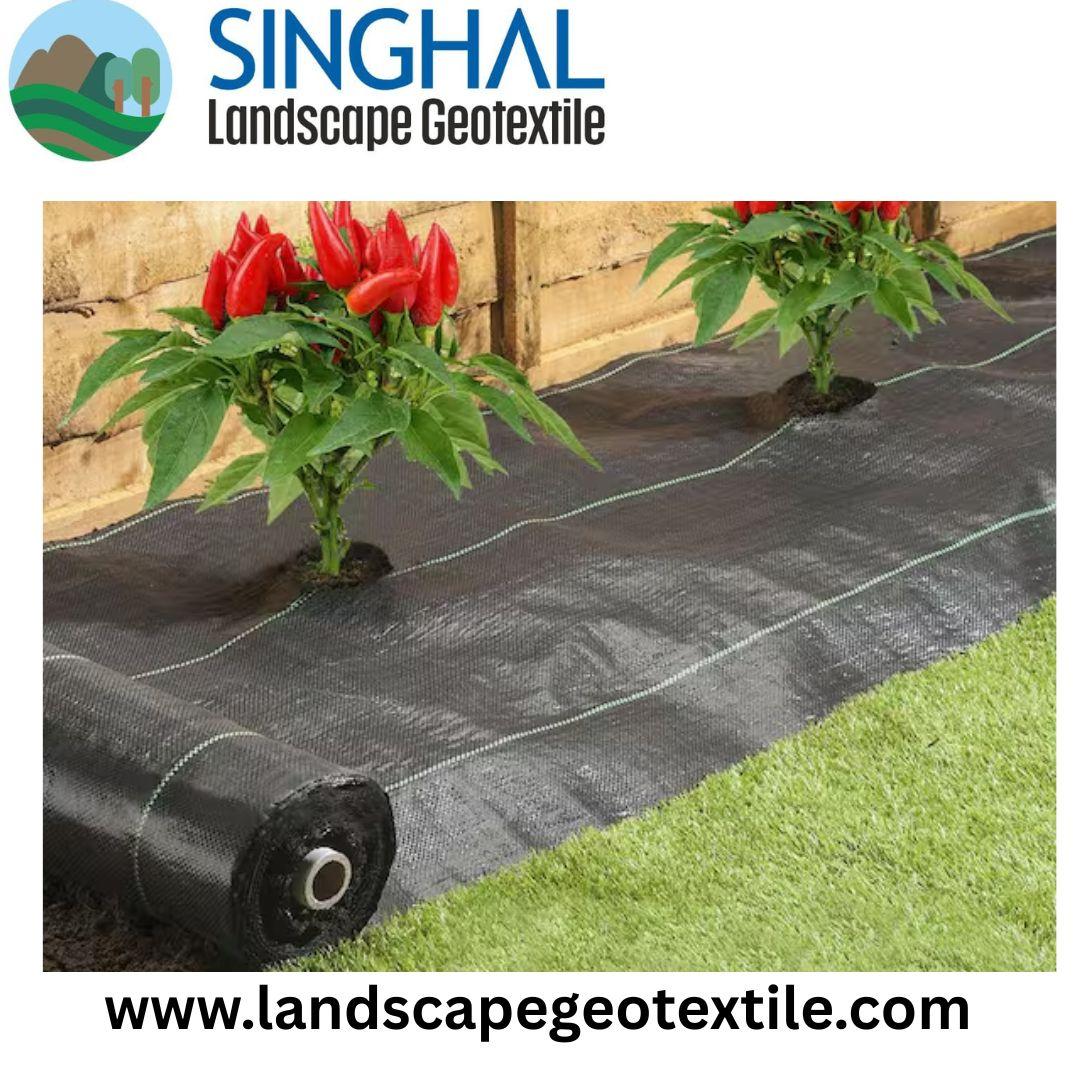
Weed Mat Simplifying Garden Maintenance While Supporting Healthier Plant Growth

The agricultural horticultural producer and home gardener both face similar issues with weeds affecting various types of crops fields & orchards using similar methods of control cultural, mechanical & chemical. Cultural Mechanical methods are labor intensive whereas Chemical method is less labor intensive however, it can have detrimental effects on the environment. Weeds inhibit the light needed to begin germination establishment of crops. Weeds also create an ideal environment for pathogenic organisms which lead to diseases. This has led to the increased usage of synthetic weed control mats among both commercial property owners and home gardeners. Bunnings high quality weed mats are cost-effective efficient for community home gardens. The same protective system is utilized for years in larger gardens.
Construction of Advanced Polymer Textiles and Advanced Polymer Technology
When a property owner purchases polymer raw materials for large scale commercial garden maintenance and small garden bed maintenance, the property owner needs to purchase the best quality of woven and non-woven polypropylene matrices. Without the best quality of polymer sheets in a ground suppression barrier, the barrier will not be effective. Like the best quality of textile used in the construction industry, polymer matrices used in ground suppression barriers are greatly affected by the quality of the raw materials and how they were manufactured.
Unlike high quality textile sheets, high density Bunnings weed mat used as ground covers must be manufactured and processed extensively. Polymer sheets of high density Bunnings weed mat that serve as ground covers must be evaluated to determine how effectively they withstand soil pH, moisture, and temperature when utilized as ground covers over a specific length of time. Evaluation of these elements is necessary because they can impact the ability of a polymer barrier system to perform well over an extended period. UV stabilization is also important; therefore, textile sheets will not degrade from exposure to sunlight. They will maintain their form and structure for a considerable amount of time, similar to how degradation occurs with textiles on mulches. UV stabilization is especially critical in gardens with weeds growing among the plants you wish to grow. Weeds compete with other plants for nutrients and sunlight, which negatively affects the overall development of the plants you want to produce.
Advantages of High Soil Health and High Permeability
Many growers and landowners are concerned about the negative impacts that can result from using a thick, protective layer on top of the soil. This includes the potential for smothering plant roots and/or destruction of the natural habitat below the soil surface where plants grow. As mentioned previously, high-engineered, porous structures within permeable ground covers allow for free movement of air, water, and nutrients. Additionally, these structures allow for free flow of liquids, preventing both excessive water retention and pooling of water on the soil surface. Furthermore, liquid permeability enables free movement of liquids, such as transporting oxygen to the soil, supporting the growth of beneficial soil microorganisms. Fabric barriers also prevent sunlight from penetrating the soil and aid in weed suppression. Use of fabric barriers in several agricultural systems enables moisture and air to access the soil to support and enhance proper development of healthy crops. Agricultural systems employ fabric barriers to regulate soil moisture levels and to help suppress soil-borne disease of crops, as well as spread of disease between rows. Therefore, mechanical fabric barriers are an economical and efficient method for property managers and gardeners to suppress weeds in their gardens.
Commercial Agricultural, Horticultural Applications
The use of weeds-free rows within the commercial production of fruits and vines can enhance the quality of the product. The primary reason for this is that it provides a more uniform plant canopy, healthier foliage, and as a result, a higher photosynthetic rate. When using row covers in a commercial greenhouse environment (where intense practices exist), there will be a significant decrease in labor costs and an increase in plant productivity. Plastic film covers provide a very large amount of savings in labor for hand-weeding and potential damage to plants from string trimmers. Polymer covers also provide a micro-climate for plants and lower soil moisture evaporation by 90% during the hot and dry summer months, allowing for a greater amount of time between watering.
Different crop types require different methods of controlling weeds. These may be cultural, mechanical, or biological. While these types of control do not use chemicals, they are very labor-intensive. Chemical herbicides are used to control weeds; however, they cause environmental damage and therefore are undesirable. Weeds also create an ideal environment for the spread of disease (i.e., moisture and warmth), and compete with crops for space.
Other Applications
Durable geo-textiles are utilized throughout many areas of civil engineering and landscape architecture. For instance, when constructing paths or lawns in parks, a durable geo-textile is placed on top of the base soil and underneath the decorative gravel to provide separation. Another use for geotextiles is to create separation between different soil types in a landfill to avoid soil mixing.
This approach allows the user to manage weeds and/or limit settling. "A user can benefit from a linear architectural design regardless of the length of the structure being used, which helps disguise any unfinished edges. Commercial real estate developers and municipal governments can greatly reduce capital expenditures associated with maintaining and repairing paths; they can also significantly decrease the cost of labor related to grounds keeping. Many growers and homeowners become concerned when they see a heavy layer of protective cover over the soil, thinking that it will harm the plants' roots and eliminate habitats for underground organisms.
Easier Installation and Better Operations
In large-scale landscaping projects, flexible and lightweight materials are able to be used in various types of terrain and held in place. Synthetic ground covers can be easily shaped around tree pits and then attached to the ground using specialized steel staples. As the edges of the covers unravel, crews have the ability to create patterns on-site with only a few tools and scissors. This greatly decreases both the amount of time and money that is needed to complete an installation. Additionally, these synthetic ground covers allow crews to quickly manage larger commercial projects, which will enable them to complete major projects within a single day.
These effects affect both agricultural and horticultural producers as well as home gardeners. To help control the effects of the above issues, most producers use chemicals. For both professional landowners and home gardeners, synthetic weed control mats are a very common method of controlling weeds. Bunnings offers several types of weed control mats that can be utilized in home and community gardens. These Ground Protection Systems are manufactured with high quality materials and can be expected to remain effective for several years.
Chemical Reduction and Eco-Friendly Sustainability
The most effective alternative to chemical weed control is mechanical ground barriers. These will not create residues in the environment. It is essential to monitor both the amount of water available and the quality of water to ensure the health of all living things within the soil and aquatic environments. In addition to killing the targeted weeds, synthetic herbicide usage can negatively impact beneficial insects, pollinators, earthworms, and other soil organisms.
Polymers used to produce long lasting polymer mats offer an environmentally friendly solution to cover the soil in growing areas. Mats produced from polymers will last five years or more and therefore can provide a more sustainable option than using traditional agricultural plastic film. In addition, the use of mats made from polymers provides the opportunity for many types of plants to grow. The Weed control mat is coated with a porous fabric that allows both air and water to penetrate while blocking out sunlight. The ability of the Weed control mat to control weeds makes it a great choice for providing a sustainable barrier against weed growth. Property owners who wish to use the mats to decrease future maintenance requirements and increase the life span of the product are interested in purchasing these matrices. Matrices provide homeowners and commercial growers with increased efficiency in managing their time spent working in the garden.
Conclusion
Geotextile heavy duty weed mats can be used in numerous ways in addition to controlling edges of roads, parks, and building foundations. For example, they can be utilized as a separation layer between the artificial turf and the sub-base, the aggregates of paved areas, or the decorative aggregate pathway bases. The Weed Mat K-Mart contains a polymer barrier which prevents the migration of the soil into the aggregate base. Professional ground covers made with high performance geotextile ground covers are critical components of today's and tomorrow's agricultural, professional horticulture and green building industries and Integrated Landscape Management (ILM). ILM is a sustainable, environmentally friendly and long term solution to the problem of rapid and ongoing urbanization resulting from climate change and lack of available natural resources. Integrated Pest Management (IPM) is based on an integrated approach to provide long-term viability for the pest control business and industry. IPM programs that successfully utilize high performance geotextile weed mats.
Frequently Asked Questions (FAQs)
Does the fabric allow water and liquid fertilizers to reach plant roots?
Ans: Yes, the material features a specially engineered porous matrix that lets air, water, and essential nutrients pass through directly to the soil.
Will these protective ground covers degrade quickly under direct sunlight?
Ans: No, premium options are treated with advanced UV-stabilizing compounds to resist solar degradation and endure harsh outdoor weather conditions for years.
Who is the largest exporter of Weed Mat?
Ans: Singhal Landscape Geotextile is a leading manufacturer and major global exporter delivering high-quality weed mats and advanced landscaping fabrics worldwide.
Can these mats be cut easily to fit around existing trees and shrubs?
Ans: Yes, the material can be effortlessly cut with scissors to fit any garden layout without fraying, and secured using standard landscape staples.
Are these protective mats safe to use in organic vegetable gardens?
Ans: Yes, Singhal Landscape Geotextile supplies chemical-free physical barriers that eliminate the need for toxic herbicides, making them completely safe for organic food production.
