

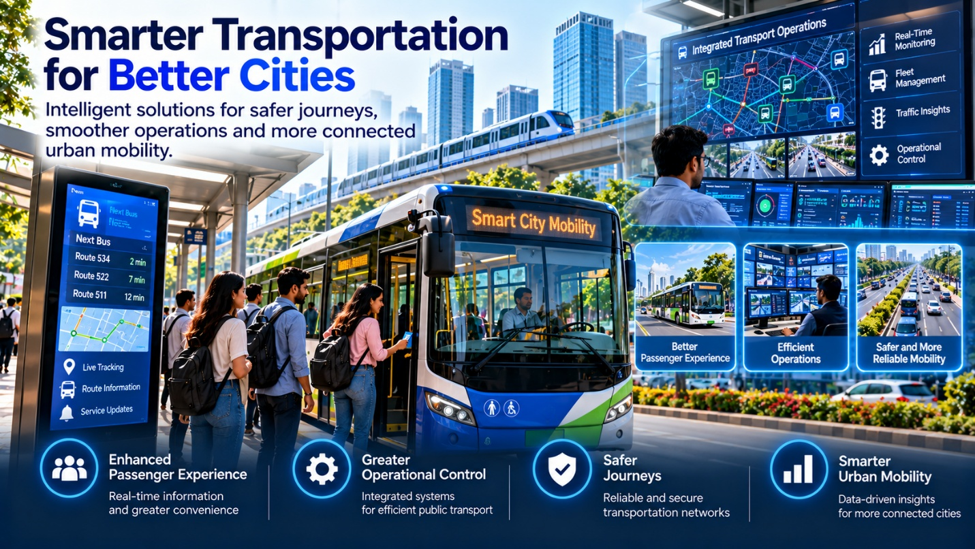

As cities grow, public transportation systems must move more people while maintaining safety, reliability, and convenience. Smart transportation technology helps address these challenges by improving operational visibility, supporting informed decisions, and helping transport authorities coordinate services more effectively.
From passenger information systems to intelligent operational monitoring, digital solutions can help cities build more connected and responsive transport networks.
1. What Is Smart Transportation Technology?
Smart transportation technology uses digital systems, connected infrastructure, data analytics, and automation to improve the management of transport networks.
Depending on the implementation, these technologies may support vehicle monitoring, passenger information, service coordination, traffic management, and operational reporting.
The objective is to connect relevant information with everyday transport operations so that authorities can better understand conditions, identify disruptions, and make informed decisions.
2. Improving Public Transport Operations
Public transport operators must coordinate vehicles, routes, staff, schedules, and passenger demand. Limited visibility across these activities can make it difficult to respond to unexpected changes.
Intelligent transportation systems can help operators monitor relevant operational information and coordinate activities across their networks.
For example, timely information about service disruptions may help teams assess the situation and communicate updates to passengers. Better operational visibility can also support planning and resource allocation.
Actual results depend on system integration, data quality, infrastructure, and the operational processes used by each transport authority.
3. Creating Better Passenger Experiences
Passengers value reliable services, clear information, convenient journeys, and safe travel environments.
Digital passenger information systems can help travellers access service updates, route information, and relevant journey guidance. When connected to reliable operational data, these tools can make it easier for passengers to plan their journeys and respond to disruptions.
Accessible design is essential. Transport technology should consider people with disabilities, older passengers, and users with different levels of digital access.
By combining passenger-focused design with dependable information, cities can work towards more convenient and inclusive public transportation.
4. Supporting Safer and More Reliable Mobility
Safety and reliability are fundamental to effective urban transportation.
Intelligent monitoring and connected operational systems can help transport authorities gain better visibility into network conditions and identify situations that require attention.
When supported by established safety procedures, trained personnel, and effective communication, these capabilities can contribute to better coordination and more informed responses.
Technology alone cannot guarantee safer journeys. Infrastructure quality, maintenance, staff training, enforcement, and appropriate emergency procedures remain essential.
5. The Role of NEC in Smart Transportation
NEC India's smart transportation technologies focus on improving visibility, control, and reliability across passenger experiences and transport operations.
This approach reflects the growing need for integrated solutions that help cities manage public transportation more effectively while supporting safer journeys and smarter urban mobility.
Explore how smart transportation solutions for urban mobility can contribute to more connected and efficient transport systems.
Specific benefits depend on the technologies deployed, the local transport environment, and how effectively digital systems integrate with existing operations.
6. Building Future-Ready Cities
Future-ready transportation requires more than introducing digital tools. Cities need scalable infrastructure, reliable data, cybersecurity safeguards, accessibility, and coordination between transport stakeholders.
Measuring outcomes is equally important. Relevant indicators may include service reliability, passenger satisfaction, response times, and the accuracy of passenger information.
By aligning technology with clearly defined mobility goals, cities can build transport systems that respond more effectively to changing passenger needs.
Frequently Asked Questions
What is smart transportation technology?
It uses connected systems, digital information, and analytics to improve transport management, passenger information, and operational decision-making.
How does technology improve public transport?
It can improve operational visibility, support service coordination, provide timely passenger updates, and help operators respond to disruptions.
What are intelligent transportation systems?
These are integrated technologies that support the monitoring, management, and coordination of transportation networks.
How does smart transportation support smart cities?
It can help cities manage mobility more effectively, improve access to travel information, and support more coordinated urban transport services.
Conclusion
Smart transportation technology can help cities improve public transport visibility, operational coordination, and passenger experiences. When combined with reliable infrastructure, accessible services, and effective planning, these solutions can support safer journeys and more responsive urban mobility.
