


Why Failing in Papa’s Pizzeria Doesn’t Feel Like Failure
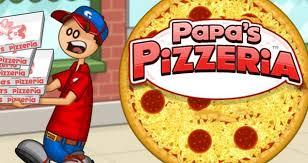
Most games treat failure as a hard stop.
You lose a life. You restart a level. You get sent back to a checkpoint. Something clearly tells you: you did this wrong.
Papa’s Pizzeria doesn’t really do that.
You can burn a pizza. You can mess up toppings. You can serve an order too late. And yet, the game continues without drama. No loud punishment screen. No reset. No real interruption.
You just move on to the next customer.
That design choice changes everything about how failure feels.
Instead of breaking the flow, mistakes get absorbed into it.
Mistakes That Don’t Interrupt the Game
In most structured games, failure creates a pause.
Something stops. A message appears. You are forced to acknowledge the mistake before continuing.
But in Papa’s Pizzeria, the kitchen never shuts down.
You make a mistake, and the system simply records it. The customer leaves with a lower score. The next order arrives.
There is no emotional pause forced on the player.
That matters more than it seems.
Because when failure doesn’t interrupt action, it stops feeling like an event.
It becomes part of the rhythm.
You don’t “lose” in the traditional sense. You just perform slightly worse for a moment and then continue.
The Soft Landing of Continuous Play
One of the quiet strengths of the game is how gently it handles imperfection.
A badly made pizza doesn’t trigger a reset. It doesn’t erase progress. It doesn’t block advancement.
It just reduces efficiency.
That creates a soft landing for mistakes.
Instead of “you failed,” the game communicates “this could have been better.”
That difference is subtle, but psychologically important.
Players are more willing to experiment when consequences are mild. They are more willing to continue when mistakes don’t accumulate into punishment.
Over time, this builds a sense of safety inside the system.
You’re allowed to be imperfect.
And because of that, you keep playing.
Why Pressure Still Exists Without Punishment
Even though failure isn’t harsh, the game doesn’t feel easy.
There is still pressure. Still urgency. Still the feeling that things can go wrong quickly.
This is because pressure in Papa’s Pizzeria doesn’t come from punishment. It comes from timing.
A pizza baking too long matters. A customer waiting too long matters. A rushed topping job matters.
But none of these mistakes stop the game.
They simply affect outcomes.
That creates a unique psychological space:
You are always aware that performance matters, but never afraid that the game will end because of it.
It’s pressure without fear.
And that combination is surprisingly effective at keeping attention stable.
The Comfort of Recoverability
One of the reasons players stay engaged is that recovery is always immediate.
Make a mistake on one order? The next order starts fresh.
Burn a pizza? There are more opportunities right away.
There is no long-term damage to manage.
This recoverability changes how players think.
Instead of avoiding failure at all costs, they begin focusing on improvement between attempts.
Each order becomes a small reset point.
A chance to do slightly better than the last one.
That structure turns the game into a series of short experiments rather than a single continuous performance.
And experiments are easier to continue than performances.
The Score System as Gentle Feedback
The scoring system plays a major role in shaping how failure is perceived.
After each customer leaves, you see a breakdown of performance. Toppings, baking, waiting time, accuracy.
It’s direct, but not harsh.
There is no emotional language attached to it. No judgment beyond numbers.
That neutrality matters.
Because when feedback is neutral, it feels less like criticism and more like information.
A low score doesn’t say “you did badly.”
It says “this is what happened.”
That subtle framing keeps players from internalizing mistakes too heavily.
Instead of frustration, you get curiosity.
“What caused that drop?”
“What could I adjust next time?”
This turns failure into data.
And data is easier to process than judgment.
Small Failures That Don’t Stack
In many games, mistakes accumulate.
Too many errors lead to failure conditions. Too many failures end progress.
Papa’s Pizzeria avoids this entirely.
Each order is isolated.
A mistake in one does not directly affect the next.
That separation is important.
It prevents the feeling of spiraling.
Even after a bad order, the system resets emotionally.
New customer. New task. New opportunity.
This creates a kind of psychological reset loop that keeps frustration from building up.
You never feel trapped inside a chain of errors.
You always feel like you can recover immediately.
Why Improvement Feels Natural Instead of Forced
Because failure is soft, improvement also feels natural.
You don’t improve because the game forces you to avoid punishment.
You improve because you notice patterns.
You realize that waiting too long affects scores. You realize that multitasking reduces mistakes. You realize that timing matters more than speed alone.
These insights emerge gradually.
Not through tutorials.
Not through explicit instruction.
But through repeated exposure to outcomes.
That makes learning feel self-directed.
And self-directed improvement is often more satisfying than forced progression.
You feel like you discovered the solution, not like you were told it.
The Emotional Distance Between Player and Error
Another interesting aspect is emotional distance.
When a mistake happens, it doesn’t feel deeply personal.
You are not a character being judged. You are an operator managing a system.
That separation reduces frustration.
You can observe failure without feeling overwhelmed by it.
Even when multiple orders go wrong, the experience remains manageable because the game never ties identity to performance.
You are not “bad at the game.”
You are just currently adjusting to its rhythm.
That framing keeps engagement steady.
The Quiet Loop of Retry Without Restart
Most games rely on restart loops.
Die → restart → try again.
Papa’s Pizzeria uses something different.
Complete → reflect → adjust → continue.
There is no full reset.
Only continuous iteration.
This creates a smoother emotional experience.
Instead of dramatic cycles of success and failure, you get a steady stream of minor adjustments.
Each shift becomes a slightly improved version of the last.
And because nothing forces a restart, players naturally stay longer.
Not out of obligation.
But because leaving doesn’t feel necessary.
When Imperfection Becomes Familiar
After enough time, something interesting happens.
You stop aiming for perfection.
Not because you don’t care, but because you understand the system better.
You realize that small mistakes are part of the rhythm.
A slightly late order here. A minor topping error there.
They don’t break the experience.
They shape it.
The kitchen becomes less about flawless execution and more about consistent flow.
And that shift changes how the game feels entirely.
It becomes less stressful.
More stable.
More predictable in a comforting way.
Why It’s Easy to Keep Playing
The real reason players stay with games like Papa’s Pizzeria isn’t because they avoid failure.
It’s because failure doesn’t stop them.
They can make mistakes and continue immediately.
They can learn without restarting.
They can improve without being punished.
That creates a rare kind of pacing where engagement is driven by curiosity instead of pressure.
You’re not trying to survive the game.
You’re trying to understand it better.
And that difference is what keeps the loop going far longer than expected.
A Final Shift That Never Feels Final
Every session ends the same way.
Orders completed. Kitchen quiet. Customers gone.
But nothing feels concluded in a strict sense.
There is no final judgment that defines the entire session. No ultimate score that locks in success or failure permanently.
Only a record of small moments.
Some good.
Some imperfect.
All temporary.
And when you think back on it later, it’s not the mistakes that stand out.
It’s the fact that they didn’t matter enough to stop you.
Maybe that’s the real design trick.
Not removing failure.
But making sure it never becomes the end of the story.
When was the last time a game let you fail without ever making you feel like you actually lost?

 Bangla