


Why the Essentials Tracksuit Colour Changes Season to Season
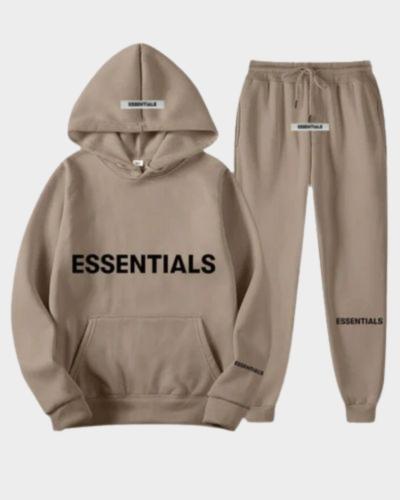
First thing to say is that the colour changes aren't arbitrary. It might feel that way when a shade you liked disappears and gets replaced by something you wouldn't have chosen yourself — but there's a considered process behind the palette decisions each season, even if that process isn't particularly transparent from the outside.
Fear of God Essentials operates on a design philosophy rooted in restraint. Jerry Lorenzo built the label around the idea of doing less, more carefully. That applies to colour as much as it does to silhouette or branding. The seasonal palette isn't large — typically a handful of shades per drop — and each one is chosen to work within a specific visual language rather than to maximise variety or chase whatever's trending in the broader fashion market.
Understanding that philosophy is the starting point for understanding why the colours change. It's not about novelty for its own sake. It's about each season being its own complete thing — a specific set of shades that belong together and that reflect something about the moment they were made for. Whether that makes you feel better about missing a colourway you wanted is another question. But it explains the pattern.
The Dyeing Process Is Part of Why Colours Are Never Quite Identical
Essentials uses pigment dyeing and garment dyeing techniques on a lot of its pieces, including the tracksuit. This is worth understanding because it explains something that confuses buyers who've owned multiple seasons — why the "same" colour never quite looks the same twice.
Pigment dyeing is applied to finished garments rather than raw fabric. The dye sits on the surface of the cotton fibres rather than penetrating them fully, which creates that characteristic slightly faded, lived-in quality from the start. It also means the colour responds differently to light and washing than a standard dyed fabric would — it shifts slightly over time, develops character with wear, and no two pieces from the same batch are ever completely identical.
When essentials revisits a colour family across seasons — bone, for instance, which has appeared in some form across multiple drops — it's not reproducing the exact same shade. The dye lot, the fabric batch, the finishing process all introduce variations that make one season's bone sit slightly warmer or cooler than another. To a casual observer it looks like the same colour. To someone who's owned both it's noticeably different. That's not inconsistency. That's just how this type of dyeing works.
Why Some Colours Keep Coming Back and Others Disappear
Not all Essentials colourways are equal in terms of how reliably they return. Some shades — the core neutrals, the colours that sit in that ambiguous space between beige and grey and cream — show up in broadly similar form across many seasons because they work for too many people in too many wardrobe contexts to leave out for long. Bone is the clearest example. It's been present in different forms across more drops than almost any other shade.
Then there are the seasonal tones. Colours that are specific to a particular moment — a deep rust that belonged to one autumn, a faded sage that felt right for one spring, a dusty terracotta that came and went within a single drop. These don't return because returning them would undermine the thing that made them interesting in the first place. Their specificity is the point. A seasonal colour that comes back every year stops being seasonal.
The practical implication of this is something buyers learn the hard way before they learn it any other way. If a colour you want is in the seasonal-specific category — the ones with real character, the ones that feel moment-specific rather than perennial — buying it when it's available is the only reliable strategy. It might come back in some similar form eventually. It might not. And "similar" is doing a lot of work in that sentence anyway, given what the dyeing process does to colour consistency across batches.
How the Colour Affects the Resale Value
Colourways don't just affect how the tracksuit looks — they affect what it's worth on the secondary market when a drop sells out. This is something resale buyers figure out quickly and retail buyers often don't think about until after the fact.
Seasonal-specific colours that generated strong demand at retail tend to hold higher resale premiums than core neutrals, at least in the immediate aftermath of a drop. The reasoning is straightforward — if it sold out fast and won't come back, the secondary market price reflects that scarcity. A bone tracksuit, which might return next season in some form, commands a lower premium than a specific limited seasonal tone that everyone knows is a one-time thing. Many streetwear enthusiasts pair their Essential Hoodie with stussy clothing hoodie for a stylish layered look that stands out.
Over time this dynamic shifts. The neutral that returns each season never generates dramatic resale spikes but maintains a steady, predictable floor of secondary market value. The seasonal colour that spiked hard immediately after selling out may or may not hold that premium as time passes and demand normalises. Neither pattern is obviously better for buyers — it depends entirely on what you're trying to do with the piece and over what timeframe.
Reading the Seasonal Palette Before a Drop
There's usually some advance signal before an Essentials drop about what the colourways are going to be. Not always official — sometimes a stockist preview, sometimes community speculation based on samples that have surfaced, sometimes just the pattern of what was missing from the last drop that made a return likely. None of these signals are reliable. All of them are worth paying attention to.
The community resources around Essentials drops — forums, Discord servers, dedicated tracking accounts — have got good at reading these signals. Not perfectly good. But good enough that going into a drop with some idea of what's coming is more achievable than it used to be for buyers who don't have direct access to trade information. Following two or three of these sources before a drop lands gives you enough to form a view on whether the upcoming palette is likely to contain what you're looking for.
What this doesn't do is make the decision for you. Knowing a rough palette before a drop still requires you to decide whether the specific version of a colour that lands is the one you want, and that decision often has to be made in the first few minutes after a drop goes live, which is not ideal conditions for nuanced colour assessment. The preparation helps. It doesn't eliminate the pressure. Nothing does, really.
What Seasonal Colour Changes Mean for How You Build a Wardrobe
If you're buying Essentials tracksuits across multiple seasons — and a lot of people end up doing this, as the previous article on buying twice probably made clear — the seasonal colour rotation has real implications for how the pieces work together in a wardrobe over time.
Two tracksuits in genuinely different colourways cover more wardrobe ground than two in similar neutrals. That sounds obvious but it's worth saying because the temptation on a second purchase is often to get something close to what already worked rather than something that fills a different role. Close-but-different neutrals end up being interchangeable in practice. Actually different colourways — one warm, one cool, or one neutral and one seasonal — give you two pieces that each make sense in different contexts.
The seasonal rotation, annoying as it is when it takes away a colour you wanted, is also what makes this kind of wardrobe building possible. If Essentials ran the same palette every season there'd be no reason to think carefully about which drop to buy into. The changing colours force a kind of deliberateness — you buy a specific thing at a specific moment rather than just buying the tracksuit whenever you happen to feel like it. That structure, frustrating from a pure availability standpoint, actually produces better purchasing decisions than unlimited access would. Scarcity is doing something useful here, even when it doesn't feel like it.
The Simple Version of All of This
Essentials changes its tracksuit colours every season because each drop is designed to be its own complete thing rather than an updated version of the last one. The dyeing process means colours are never exactly reproducible anyway. Some shades come back in similar forms because demand for them is broad enough to justify it. Most don't, because returning them would undermine the seasonal specificity that makes limited drops feel worth paying attention to.
From a buyer's perspective this means one thing more than anything else: if you see a colour you want, buying it when it's available is almost always the right call. Not impulsively — still worth checking sizing, still worth buying through authorised channels, still worth making sure you actually want the piece and not just the colour. But the assumption that it'll come back in the same form next season, or at all, is one that regularly disappoints people who make it.
The seasonal colour change is a feature of how Essentials operates, not a bug. Once you accept that it works this way, the whole experience of buying into drops changes. You stop waiting for the right moment and start recognising that the right moment is usually the drop itself — while it's available, in the colourway that's in front of you. Everything after that is just resale prices and wishing you'd moved faster.
Frequently asked questions
Why does the Essentials tracksuit come in different colours every season?
Each Essentials drop is designed as its own complete palette rather than a continuation of the previous one. The seasonal colour changes reflect a deliberate design philosophy of restraint and specificity — each drop's shades belong to that moment rather than being permanent fixtures. It also keeps demand for each drop genuinely fresh rather than predictable.
Will an Essentials tracksuit colour come back if I miss it?
Core neutrals — bone, cream, washed grey, taupe — have a reasonable chance of returning in some form, though never identically due to dyeing process variations. Seasonal-specific tones with more character are a genuine gamble. If you're waiting specifically for a distinctive colour to return, the odds aren't in your favour and the version that does appear won't be quite the same anyway.
Why do Essentials colours look slightly different between seasons even when they seem similar?
Pigment and garment dyeing techniques mean colours sit on the surface of the cotton fibres rather than penetrating fully, and dye lots vary between production batches. Even a shade that's nominally the same across two seasons — bone, for instance — will sit slightly warmer or cooler depending on the specific batch. It's inherent to the dyeing process, not a quality control issue.
Do certain Essentials tracksuit colours have higher resale value?
Yes. Seasonal-specific colours that generated strong demand at retail tend to hold higher immediate resale premiums than core neutrals, because their scarcity is understood to be permanent rather than temporary. Core neutrals maintain a steadier, lower resale floor over time. Which pattern is better for buyers depends entirely on what you plan to do with the piece.
How can I find out what colours are coming in the next Essentials drop?
There's no official advance palette announcement usually, but community resources — dedicated forums, Discord servers, drop-tracking accounts — often surface stockist previews or sample information before a drop lands. None of it is guaranteed accurate but it's enough to form a rough view on whether the upcoming drop is likely to contain what you're looking for.
Should I buy an Essentials tracksuit colour I like immediately or wait for a better option?
If it's a seasonal-specific tone with real character — buy it. Waiting for better rarely produces better, it usually just produces sold out. If it's a core neutral and you're not fully convinced, there's more margin to wait because similar shades have a reasonable chance of returning. Know which category the colour you're looking at falls into before deciding.
How do Essentials tracksuit colours affect how pieces work together in a wardrobe?
Significantly. Two tracksuits in genuinely different colourways cover more wardrobe ground than two similar neutrals, which end up being interchangeable in practice. One warm seasonal tone and one core neutral, or one light and one deep — pieces that fill different roles rather than duplicating the same one. The seasonal rotation makes this kind of deliberate wardrobe building possible in a way that a permanent palette wouldn't.

 Bangla