


Nucleic Acid Testing & Donor Blood Screening Services
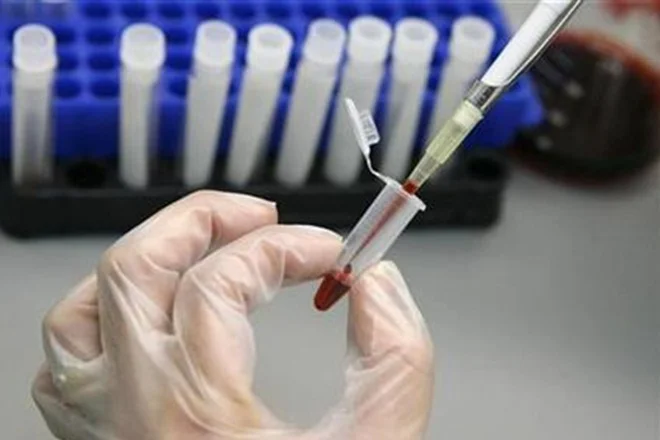
The most significant advance in blood safety in the past three decades has been the introduction of Nucleic Acid Testing (NAT) for donor blood screening. Before NAT, Donor Blood Screening Services relied on serological tests (antibody and antigen detection) that left a "window period" of weeks between infection and detectability. During this window, infected donations could enter the blood supply and transmit infection to recipients. NAT directly detects the genetic material (RNA or DNA) of pathogens, reducing the window period from weeks to days. The technology was first implemented for HIV and HCV in the late 1990s, then for HBV in the 2000s, and subsequently for West Nile virus, Zika virus, and others. For transfusion medicine specialists, molecular diagnostics professionals, and blood center administrators, the comprehensive analysis on Nucleic Acid Testing provides essential insights.
H2: The Science of Nucleic Acid Testing
Nucleic Acid Testing (NAT) amplifies and detects pathogen genetic material using polymerase chain reaction (PCR) or transcription-mediated amplification (TMA). PCR (used for HBV, HIV, HCV, West Nile virus, Parvovirus B19) cycles through denaturation (separating DNA strands), annealing (binding primers), and extension (copying DNA), exponentially amplifying target sequences. TMA (used for HIV and HCV by some manufacturers) amplifies RNA under isothermal conditions.
For Donor Blood Screening Services, NAT is performed on plasma samples. Samples are pooled (typically 16-24 donations per pool) to reduce cost while maintaining sensitivity. If a pool tests positive, individual donations are tested to identify the infected unit. Some blood centers have implemented individual-donation NAT (ID-NAT) for high-risk periods (e.g., West Nile virus season) to further reduce window period.
The sensitivity of NAT is measured by the 95% limit of detection (the lowest concentration detected in 95% of replicates). For HIV, NAT detects approximately 40-100 copies/mL, compared to serological tests that detect antigens at 10,000-50,000 copies/mL and antibodies at 5,000-50,000 copies/mL. This thousandfold higher sensitivity enables detection days earlier.
H2: Window Period Reduction
Nucleic Acid Testing (NAT) has dramatically reduced window periods for major transfusion-transmitted viruses.
For HIV, the window period with antibody-only testing was approximately 22 days. Addition of p24 antigen reduced it to 16 days. NAT reduced it further to approximately 10 days. For HCV, antibody-only window period was approximately 70 days; with NAT, it is approximately 7 days. For HBV, HBsAg window period is approximately 50 days; with NAT, it is approximately 20 days (though occult HBV infections where HBsAg never becomes detectable remain challenging).
Donor Blood Screening Services using NAT have reduced residual risk to historically low levels. In the United States, residual risk for HIV is approximately 1 in 2 million donations; for HCV, 1 in 3 million; for HBV, 1 in 500,000. These risks are calculated based on window period length and incidence of new infections in repeat donors.
H3: NAT for Emerging Pathogens
Nucleic Acid Testing (NAT) has been deployed for emerging pathogens. During the West Nile virus outbreak in 2002-2003, the FDA authorized NAT under investigational use; by 2003, NAT was implemented nationwide. During the Zika virus epidemic (2015-2016), NAT was implemented in affected regions, screening donations for Zika RNA. The ability to rapidly develop and deploy NAT for novel pathogens is a critical component of blood safety.
H2: Operational Considerations
Donor Blood Screening Services using NAT face practical challenges. Pooled NAT reduces cost but dilutes low-level viremia, potentially missing window period donations with very low viral loads. The optimal pool size balances sensitivity (smaller pools detect lower concentrations) with cost (larger pools reduce testing volume). Most blood centers use pools of 16 or 24 donations.
Automation is essential for high-volume screening. NAT systems (e.g., Roche cobas, Grifols Procleix, Hologic Panther) automate extraction, amplification, and detection, processing hundreds of samples per day. Robotic liquid handlers prepare pools, and automated analyzers run NAT protocols.
Turnaround time matters. Nucleic Acid Testing (NAT) results must be available before blood components are released for transfusion. For whole blood, which can be stored for 35-42 days, NAT can be performed after collection, and components held until results are available. For platelets (stored for 5-7 days), rapid NAT is essential to avoid outdating.
H2: Cost-Effectiveness
Donor Blood Screening Services with NAT are expensive. The incremental cost of NAT over serology alone is approximately $5-15 per donation. For a blood center collecting 100,000 donations annually, that is $500,000 to $1.5 million per year. Is the benefit worth the cost?
Health economics studies calculate that NAT for HIV and HCV is cost-effective by standard thresholds ($50,000-100,000 per quality-adjusted life year saved). NAT for HBV is less cost-effective because HBV residual risk is higher but clinical consequences less severe. However, societal expectations for blood safety exceed typical cost-effectiveness thresholds; "zero risk" is the goal, even if not achievable at any price.
For Nucleic Acid Testing (NAT) , the future includes multiplex NAT (testing for multiple pathogens in a single reaction), next-generation sequencing (identifying unexpected pathogens), and pathogen reduction technology (which may eventually replace NAT for some pathogens). For blood center administrators and laboratory directors, the market research available on Donor Blood Screening Services offers comprehensive guidance.

 Bangla