


Azodicarbonamide Chemical Blowing Agent: Driving Innovation in Polymer Foam Manufacturing Additives
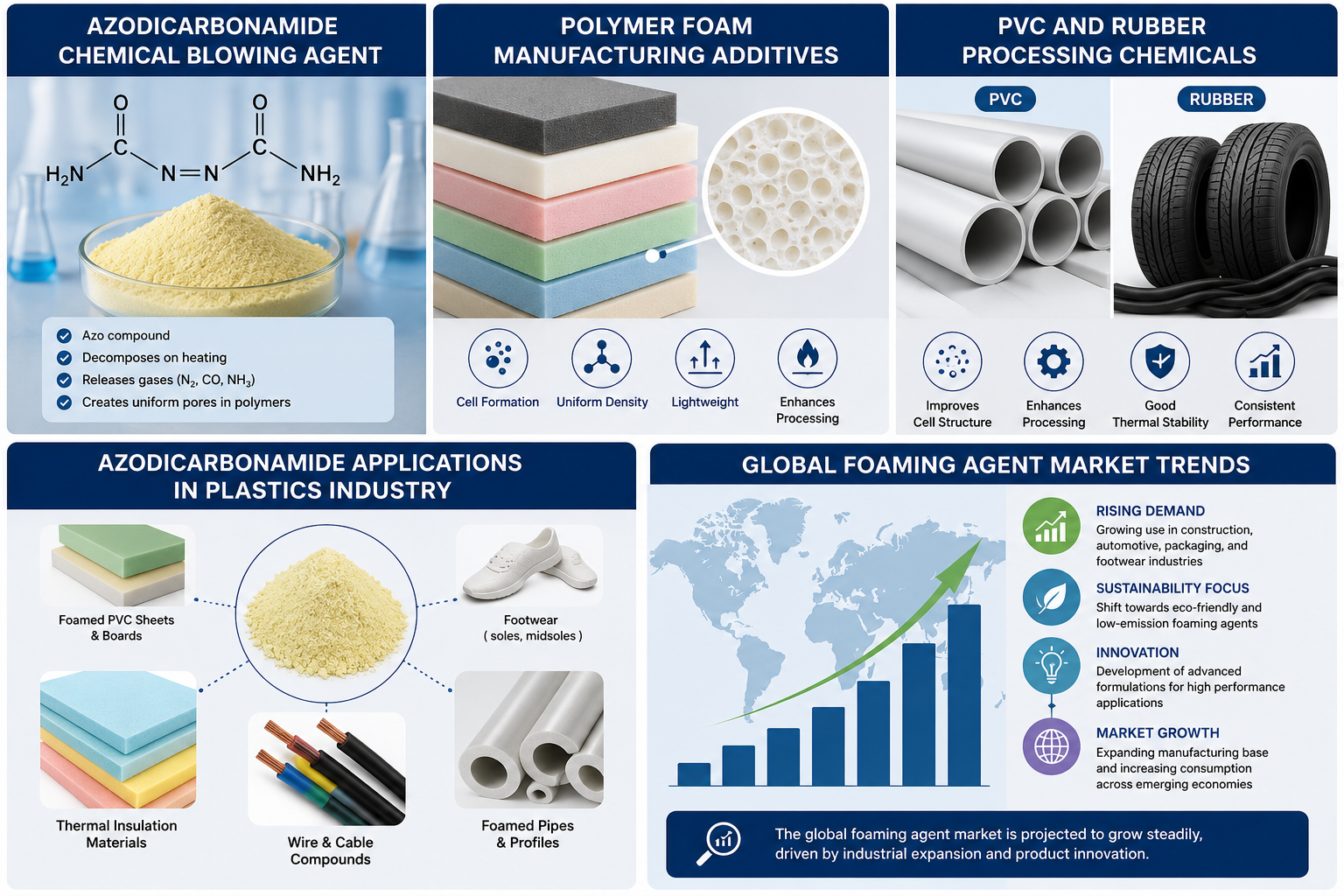
In the dynamic world of material science, few compounds have proven as versatile and indispensable as azodicarbonamide (ADA). As a premier azodicarbonamide chemical blowing agent, this remarkable substance has transformed how manufacturers create lightweight, durable, and high-performance foamed materials. From the soles of athletic shoes to the insulation panels in modern buildings, ADA's influence permeates countless products that define contemporary life.
The global chemical blowing agent market, valued at approximately $5 billion in 2025, continues its robust growth trajectory with a CAGR of 4.5% to 5.5%. Within this expanding market, azodicarbonamide maintains its leadership position, commanding roughly 35% market share due to its exceptional performance characteristics and cost-effectiveness. The increasing demand for lightweight materials across automotive, construction, and packaging applications continues to drive this growth, particularly in rapidly industrializing regions.
Understanding Azodicarbonamide as a Chemical Blowing Agent
At its core, azodicarbonamide functions through an elegant chemical mechanism. When heated to its decomposition temperature of 195–215°C, this yellow to orange-red crystalline powder releases a substantial volume of gas—primarily nitrogen, along with carbon monoxide, carbon dioxide, and ammonia. This gas evolution, measuring an impressive 220–230 ml/g under standard conditions, creates the cellular structure that gives foamed materials their characteristic lightweight yet strong properties.
Superior Performance Compared to Alternatives
What sets azodicarbonamide apart from other blowing agents is its exceptional gas yield and thermal stability. Compared to alternatives like OBSH (4,4'-Oxybis(benzenesulfonyl hydrazide)), which generates only 100–125 ml/g, azodicarbonamide produces 95–130 ml/g more gas per gram. This 2x higher gas yield translates directly into significant cost savings for manufacturers—approximately half the amount of ADC is needed to achieve the same foam expansion, reducing raw material costs and freight expenses.
The higher decomposition temperature of 195–215°C compared to OBSH's 140–160°C makes azodicarbonamide particularly valuable for processing high-temperature polymers like rigid PVC and engineering plastics where alternatives would prematurely decompose. This thermal stability enables manufacturers to produce consistent, high-quality foams across a broader range of polymer systems.
Applications in Polymer Foam Manufacturing Additives
The versatility of azodicarbonamide as a polymer foam manufacturing additive extends across multiple industries, each benefiting from its unique properties. In the footwear industry, azodicarbonamide accounts for approximately 35% of ADCA consumption, enabling the production of lightweight, cushioned midsoles that enhance athletic performance and comfort. The automotive sector follows closely, with around 25% of the market, utilizing ADA to produce interior components that reduce vehicle weight and improve fuel efficiency.
Construction and Building Materials
In the construction sector, polymer foam manufacturing additives containing azodicarbonamide play a crucial role in producing insulation panels, sealing materials, and sound-deadening components. The cellular structure created by the blowing agent provides excellent thermal insulation properties while maintaining structural integrity. As building codes become increasingly stringent regarding energy efficiency, the demand for high-performance insulation continues to rise, driving further growth in this segment.
Leather and Wallpaper Production
The leather and wallpaper industries represent significant application areas for azodicarbonamide, contributing approximately 20% and 10% of the market respectively. In leather finishing, ADA enhances the material's texture and durability. For wallpaper production, the foaming agent creates decorative patterns and textures that are both visually appealing and functional, adding acoustic insulation and warmth to interior spaces.
Regional Manufacturing Hubs and Market Dynamics
The global landscape for azodicarbonamide manufacturing is dominated by Asia-Pacific, with China accounting for approximately 45% of global production capacity. This concentration reflects the region's robust plastics processing industry, growing automotive sector, and extensive footwear manufacturing base. Major producers include Otsuka Chemical, EIWA CHEMICAL/MGC, Dongjin Semichem, Kumyang, Jiangsu Sopo, Jiangxi Selon, and Weifang Yaxing Chemical.
Growth Prospects and Future Trends
The azodicarbonamide market is projected to grow at a CAGR of 5% to 10% from 2025 to 2030, driven by increasing demand from emerging economies and diverse applications. The Asia-Pacific region is expected to exhibit the highest growth rate, approximately 7% to 9%, supported by rapid urbanization and infrastructure development. However, manufacturers are also investing in research to develop eco-friendly alternatives and improve formulations, responding to growing environmental awareness and regulatory scrutiny.

 Bangla