


Wearable Technology and Biometrics Optimize Athlete Health
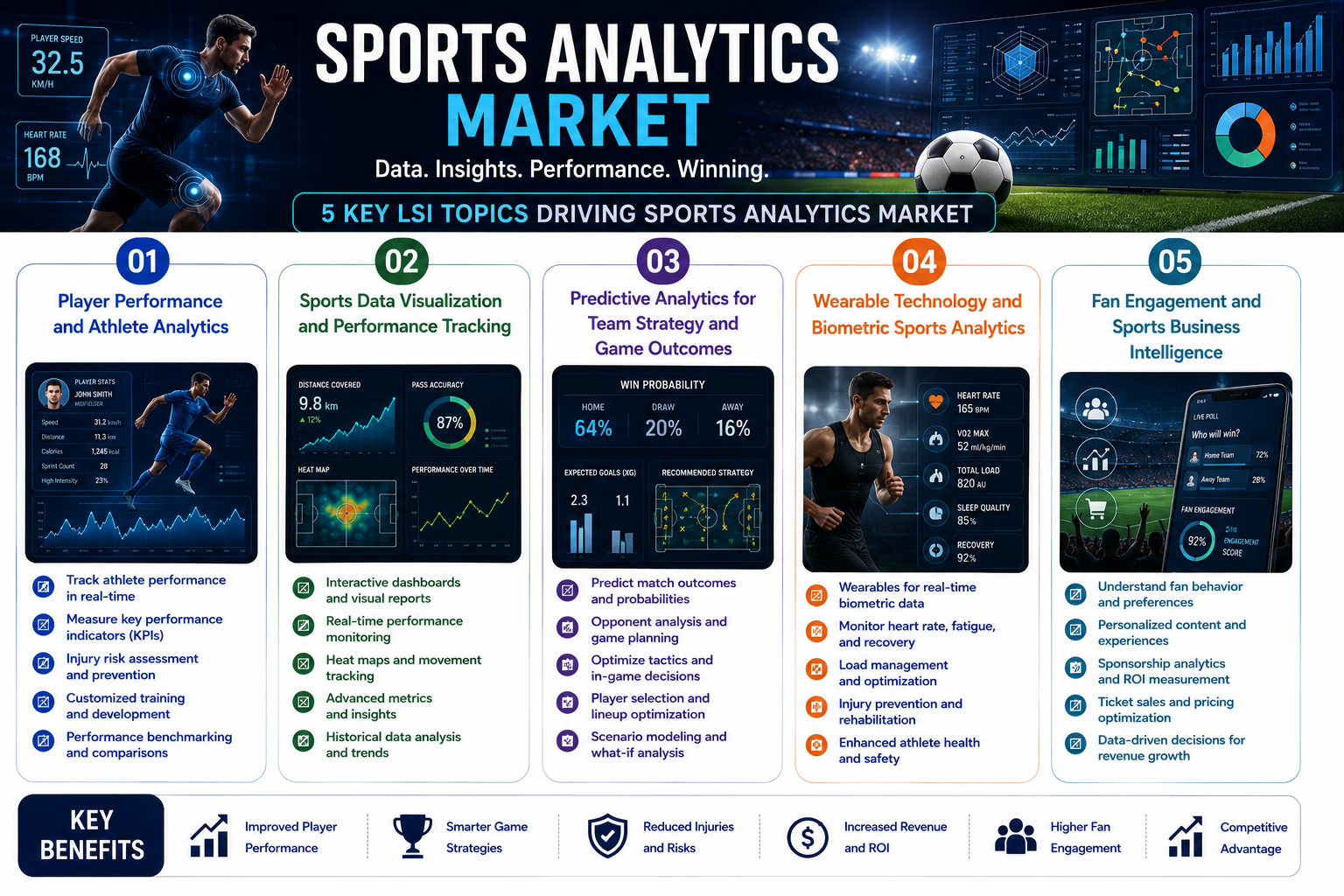
Athlete health and performance are inextricably linked. According to a market report from Market Research Future (MRFR), Wearable Technology and Biometric Sports Analytics are providing the tools to manage this link effectively. Wearable devices and biometric sensors collect real-time data on athlete workload, fatigue, and recovery, enabling proactive injury prevention and performance optimization.
The Sports Analytics Market is projected to grow from $4.55 billion in 2025 to $42.68 billion by 2035, at a CAGR of 25.1%. The proliferation of IoT sensors and wearables is a key driver. Clubs now invest $1.5–3 million annually in wearable hardware and sports performance technology.
How Wearable and Biometric Analytics Work
Wearable technology and biometric sports analytics platforms collect data from devices such as GPS trackers, heart rate monitors, and accelerometers. They analyze this data to measure athlete workload, fatigue, and recovery. They identify athletes who are at risk of injury due to overtraining or insufficient recovery. They provide insights that enable coaches and medical staff to optimize training loads and prevent injuries.
A soccer team might use wearable technology to monitor player workloads during training. The system identifies a player who is at high risk of a hamstring injury based on their training load and fatigue levels. The coaching staff reduces the player's workload, preventing a potential injury.
Predictive Analytics for Team Strategy and Game Outcomes for Context
Predictive Analytics for Team Strategy and Game Outcomes can incorporate biometric data to forecast player availability and performance. By understanding player health status, teams can make more informed decisions about lineup selection and in-game strategy.
A basketball team might use predictive analytics to forecast player performance based on their recovery status. The model predicts that a player who is not fully recovered will have reduced shooting accuracy. The coach adjusts the game plan accordingly.
Athlete Biometric Data-Privacy Regulation
The EU's General Data Protection Regulation (GDPR) classifies specific athlete metrics as "special-category" personal data, necessitating rigorous compliance frameworks. In the United States, the Illinois Biometric Information Privacy Act (BIPA) influences how sports organizations collect and store fan and athlete biometric identifiers.
IoT Sensor and Wearable Proliferation
The NFL mandated RFID chips in shoulder pads in 2014; by 2025, every major North American league embeds multi-sensor arrays capturing 25+ positional data points per second per athlete.
Legalized Sports-Betting Expansion
U.S. commercial sports-betting revenue reached $13.71 billion in 2024. The demand for real-time data feeds to facilitate micro-betting markets is a key driver of investment in wearable technology.
Regional Leadership
North America accounted for 39.5% of the Sports Analytics Market revenue in 2025. Asia-Pacific is the fastest-growing market with a CAGR of 26.2%.

 Bangla