


The Heat Shield of Industry: How Refractory Materials and High-Temperature Insulation Are Protecting Modern Manufacturing
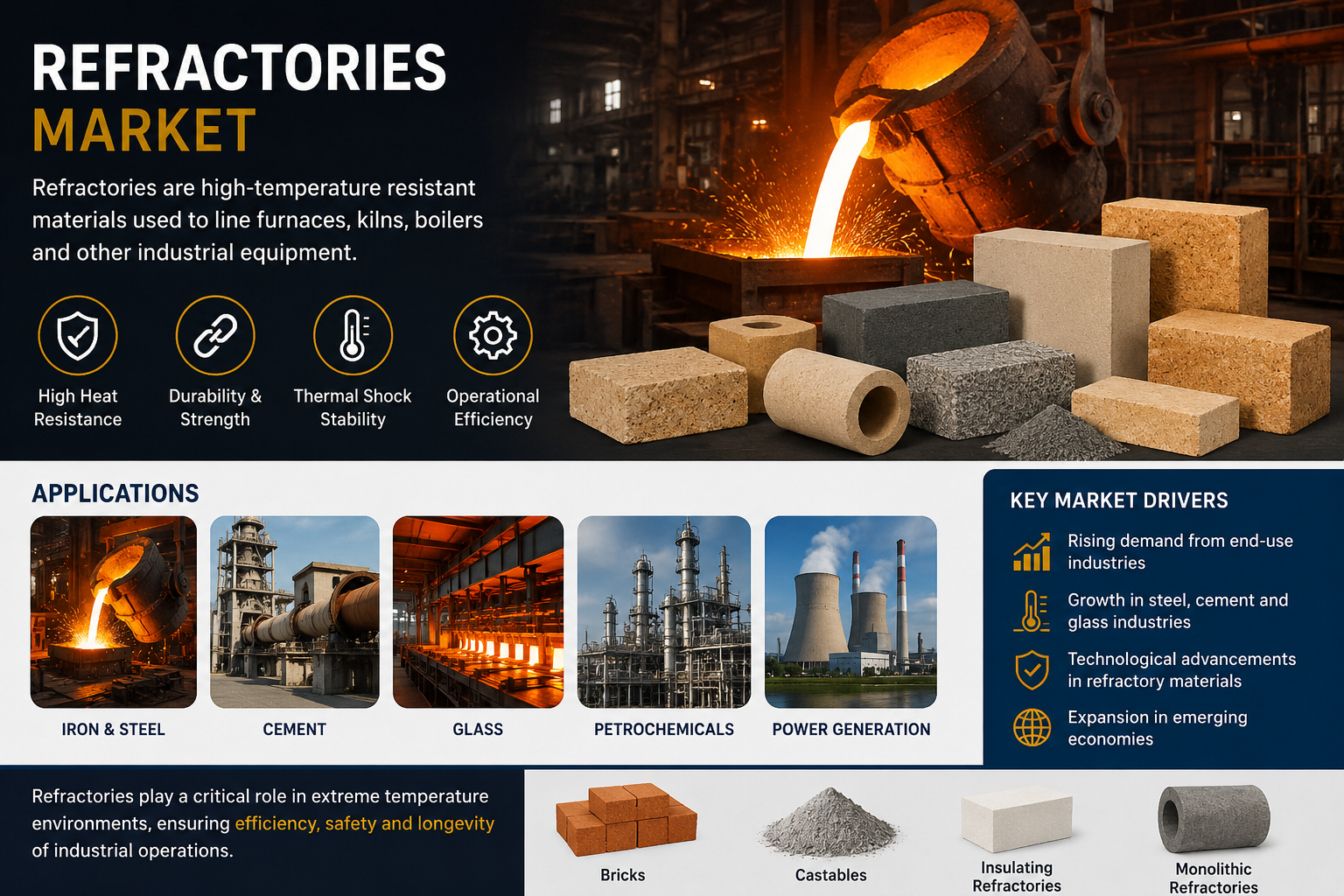
Modern industrial manufacturing relies on processes that operate at extreme temperatures, from steelmaking furnaces exceeding 1,600°C to cement kilns and glass tanks. Protecting the vessels that contain these processes requires specialized materials that can withstand intense heat, chemical attack, and mechanical stress. The global Refractories Market reached an estimated USD 28,450 million in 2025 and is projected to grow to USD 43,130 million by 2035, registering a CAGR of 4.25%. At the forefront of this industrial protection are refractory materials and high-temperature insulation, which are essential for enabling extreme-temperature processes across steel, cement, and glass production.
The Evolution of Refractory Materials
The Refractory Materials Industry has evolved from simple fireclay bricks to sophisticated engineered compositions that extend furnace campaign life and improve energy efficiency. Clay refractories accounted for approximately 50.5% of market value in 2025, reflecting their broad deployment in blast-furnace hearths and ladle linings. However, the industry is undergoing a significant technological shift as legacy magnesia-chrome linings are being replaced with alumina-magnesia-carbon composites and sophisticated spinel compositions that increase campaign life and lower hazardous waste disposal costs.
The evolution of refractory materials is driven by the need to accommodate changing process conditions in the steel industry. Hydrogen-based direct-reduced-iron (DRI) furnaces operate at different temperature profiles than traditional blast furnaces, requiring complete liner modifications. The EUR 1.7 billion green-steel investment by ArcelorMittal across its European facilities demonstrates the magnitude of capital currently flowing into processes that will reshape refractory specifications for decades.
The Strategic Importance of High-Temperature Insulation Materials
High-Temperature Insulation Materials provide the thermal barrier that reduces heat losses and optimizes energy efficiency in industrial processes. Effective insulation maintains higher process temperatures with lower energy input, directly reducing fuel consumption and carbon emissions. The cement sector, which operates rotary kilns at flame temperatures exceeding 1,450°C, is a key consumer of advanced insulation materials.
The strategic importance of high-temperature insulation materials is amplified by tightening emissions regulations. The Global Cement and Concrete Association's net-zero roadmap requires a coordinated 25% reduction in direct carbon dioxide emissions intensity by 2030, forcing the global cement sector to optimize thermal efficiency across its production fleet. Modern rotary kilns must operate at steady high temperatures while aggressively lowering clinker-to-cement ratios, relying on advanced refractory insulations to prevent critical heat losses.
Key Applications Driving Market Growth
Refractory materials and high-temperature insulation find applications across diverse industries. In steelmaking, blast furnace hearths, torpedo ladles, and secondary metallurgy vessels require specialized refractories. Cement production relies on rotary kiln linings that withstand flame temperatures exceeding 1,450°C. The glass industry demands materials that resist corrosive molten glass without contaminating the product.
Non-ferrous metal smelting, petrochemical cracking, and waste-to-energy facilities also consume significant volumes of refractory products. The energy and chemicals sector contributed USD 2,420 million in 2025, as refinery turnarounds and petrochemical expansions sustained replacement demand.
Benefits of Advanced Refractory and Insulation Solutions
The benefits of refractory materials and high-temperature insulation extend across operational efficiency, cost reduction, and sustainability. Operational efficiency is enhanced through longer campaign life, reducing downtime for relining. Cost reduction is achieved through improved energy efficiency and extended equipment life. Sustainability is addressed through the circular economy recycling of spent refractories and reduced carbon emissions through improved energy efficiency.
The European Refractories Producers Federation's strategic circular economy roadmap targets a significant increase in the incorporation of recycled raw materials, reducing exposure to volatile virgin-material pricing while meeting tightening landfill restrictions.
Future Trends and Opportunities
The future of the Refractory Materials Industry and high-temperature insulation is characterized by continued innovation in materials and application technologies. Hydrogen-based steelmaking will require customized refractory linings that handle intense reducing atmospheres. Digital twin and predictive-maintenance platforms will optimize relining schedules and extend furnace campaigns. The transition to electric arc furnace steelmaking will drive demand for advanced monolithic refractories.
Organizations that invest in Refractory Materials Industry and innovative High-Temperature Insulation Materials will be well-positioned to protect modern manufacturing, delivering the high-performance materials demanded by next-generation steel, cement, and glass production.

 Bangla