


Why Does Solid Wood Furniture Develop a Patina Over Time — And Is That a Good Thing?
Furniture & Craftsmanship Guide | Understanding Wood, Aging, and Authenticity
There’s a particular moment that happens in a lot of Indian households, usually years after a piece of furniture has been bought and mostly forgotten about as “just the dining table” or “just the bed.” Someone notices, almost by accident, that the wood looks different from the way it did when it first arrived. Deeper. Warmer. The grain seems to stand out more than it used to. And the question that usually follows is: Is this a problem?
It isn’t. What’s being noticed is patina, the natural, gradual change that solid wood undergoes as it spends years in a home, exposed to light, touch, air, and everyday life. It’s one of the most misunderstood things about owning solid wood furniture, largely because most of us grew up around furniture that was designed to look exactly the same on day one as it does on day one thousand. Solid wood was never meant to do that, and once you understand why, the whole idea of an “aging” piece of furniture starts to look a lot more appealing than alarming.
This guide walks through what patina actually is, why it happens, which woods show it most beautifully, and how to tell the difference between a piece that’s aging gracefully and one that’s simply showing damage.
What Patina Actually Means
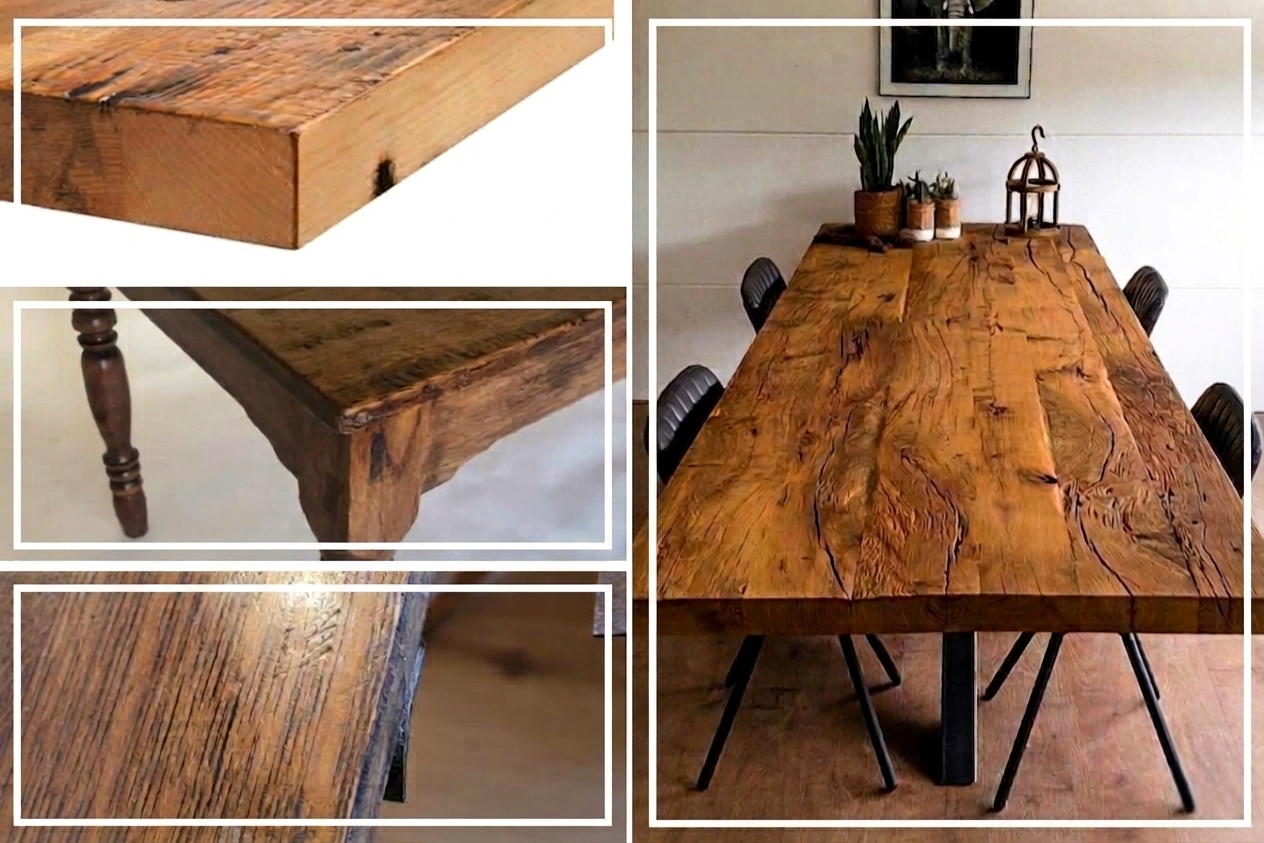
Patina is a term borrowed from the world of antiques and fine furniture, referring to the surface changes that develop in a material over time as it interacts with its environment. With solid wood specifically, this usually shows up as a richer, deeper color than the wood had when it was new, a more pronounced and visible grain, and a softer, more refined sheen across the surface particularly in spots that get touched or handled often, like the arm of a chair or the edge of a table.
It’s worth being clear about what patina is not. It isn’t a scratch. It isn’t a stain from a spilled glass. It isn’t the wood splitting or weakening. Those things are damaged, and they’re treated very differently from patina, both by furniture experts and by anyone who actually understands solid wood. Patina is a slow, even transformation that occurs across the entire surface of a piece, not a localized flaw. One is the wood telling you it’s aged. The other is the wood telling you something went wrong.
This distinction matters enormously, because a lot of people who’ve only ever owned furniture made from engineered boards or laminate have no real reference point for what a forty year old solid wood table is actually supposed to look like. The honest answer is: usually better than it looked on the day it was delivered.
The Science Behind Why Wood Changes Color
The process driving patina is mostly chemical, and it’s worth understanding in plain terms because it explains why the effect is so consistent across different types of solid wood furniture.
When a tree is cut, and the wood is milled into furniture, the surface you’re looking at is essentially fresh and unreacted. The moment that wood is exposed to light, air, and humidity, a slow reaction called oxidation begins. Oxygen interacts with compounds naturally present in the wood, and ultraviolet light from sunlight accelerates that reaction further. Over months and years, this oxidation gradually shifts the wood's color, sometimes deepening it, sometimes lightening it slightly, depending on the species.
Humidity plays a role, too. Wood is a material that continues to breathe even after it’s been crafted into a finished piece, expanding very slightly when the air around it is humid and contracting a little when conditions are dry. This ongoing, almost imperceptible movement is part of why solid wood furniture, especially in a climate with real seasonal shifts, tends to settle and stabilize the longer it’s lived in a home. Touch matters as well the natural oils from human hands, transferred every time a tabletop is wiped or an armrest is gripped, build up subtly over the years and contribute to that signature soft sheen people associate with a well-loved piece of solid wood furniture.
None of this is something a furniture maker can really speed up or fake convincingly. It’s also why patina has long been treated, among people who genuinely understand wood, as one of the clearest signs that a piece is the real thing rather than a manufactured imitation.
How Different Woods Age Differently
Not every species of wood develops patina in the same way, and understanding these differences helps explain why certain woods are so prized for solid wood furniture in Indian homes.
Teak
Teak is famous for aging with remarkable grace, largely because of the natural oils already present in the timber. Over years of exposure, teak tends to develop a warm, honeyed, golden-brown tone that’s noticeably richer than its original color. This is part of why teak has remained such a trusted choice for solid wood furniture across generations of Indian households it doesn’t just hold up structurally, it visibly improves as a piece is lived with.
Sheesham
Solid sheesham wood furniture is particularly well-loved in India for exactly this quality. Sheesham starts out with warm reddish brown tones and a distinctive, lively grain, and as it ages, the color deepens further while the grain becomes even more pronounced and visually striking. A sheesham dining table or bed frame that’s been part of a household for a decade or more often looks considerably more characterful than it did the year it was bought.
Walnut
Walnut ages with a quiet sophistication. Its dark brown tone, sometimes carrying faint purplish undertones when new, mellows into a richer, almost silvery depth within the grain as the years pass. Many people who own solid walnut furniture describe the wood as looking more “alive” after several years than it did fresh from the workshop.
Mango Wood
Mango wood, often chosen for its lighter, warmer starting tone, darkens steadily with age and exposure to light. Its grain, already interesting when new, tends to become more defined and textured over time, which is part of why mango wood furniture is so often praised for developing real character rather than simply looking older.
Across all of these species, the underlying pattern is the same: solid wood doesn’t fight against time the way many other materials do. It works with it.
Patina vs. Damage: How to Tell the Difference
Because patina and genuine wear can sometimes be confused by anyone unfamiliar with solid wood, it helps to have a few clear markers for telling the two apart.
Patina is even and gradual. It spreads uniformly across a surface over months and years, rather than appearing suddenly in a single isolated area.
Patina enhances the grain rather than obscuring it. As wood ages naturally, the grain pattern typically becomes more visible and more textured, not flatter or duller.
Patina doesn’t compromise structural integrity. A piece with genuine patina is just as strong, stable, and functional as it was when new often more so, as the wood settles and stabilizes with age.
Damage, by contrast, tends to be localized and abrupt. A water ring from a glass left without a coaster, a deep scratch from a dragged object, or a chip from an impact are all sudden, isolated marks rather than the slow, even transformation that defines patina.
Damage can often be treated, while patina generally shouldn’t be removed. This is one of the more counterintuitive parts of owning solid wood furniture for someone used to laminate or engineered pieces sanding away patina to make a piece “look new again” usually removes character that took years to develop and can never really be replicated artificially.
Knowing this distinction also helps when buying solid-wood furniture secondhand or inheriting it from a family. A piece with consistent, even aging across its surface is very often a genuine, well-made solid timber piece exactly the kind of detail that separates an authentic solid wood bed or table from something dressed up to merely look like one.
Why Solid Wood Furniture Doesn’t Wear Out the Way Other Materials Do
This is really the heart of why patina should be seen as a benefit rather than a downside. Most furniture materials follow a fairly predictable decline; they look their absolute best the day they’re delivered, and from that point forward, every year takes something away. A laminate surface that gets scratched stays scratched. A particleboard cabinet that swells from humidity doesn’t recover. These materials don’t age; they simply deteriorate.
Solid wood follows a completely different curve. Because the material can develop patina, a well-made piece often looks more interesting, more textured, and more personal a decade after it was bought than it did on day one. The wood isn’t fighting a losing battle against time, it's recording it, in a way that adds rather than subtracts from how the piece looks and feels.
This is also closely tied to why solid wood furniture tends to be genuinely repairable in a way most other materials aren’t. A surface that’s developed an uneven mark from neglect can typically be lightly refinished by a skilled craftsperson without losing the underlying patina entirely, and a piece that’s been well cared for can often be passed down through a family for decades, gaining more visual character with every generation that uses it. Furniture that’s simply built to be replaced doesn’t offer that option.
Caring for Solid Wood So Patina Develops the Way It Should
A few simple habits help solid wood furniture age evenly and beautifully, rather than developing uneven patches or genuine damage.
Rotate pieces exposed to strong sunlight occasionally. Direct, intense sunlight causes a different kind of change than patina fading and bleaching rather than the warm deepening that comes from ordinary ambient light and handling. If a solid wood piece sits in a sunbeam for years on one side only, that side may age unevenly compared to the rest of the piece.
Wipe spills and condensation promptly. While solid wood is far more forgiving than engineered boards, water left sitting on an unfinished or lightly finished surface for extended periods can leave a mark that’s closer to damage than patina.
Dust and clean gently and regularly. Ordinary use and handling contribute to a beautiful patina over time, but accumulated grime does not. A soft cloth and occasional gentle cleaning, suited to the piece's specific finish, help the surface develop its natural character rather than collecting dirt.
Avoid sanding away the surface unless genuinely necessary. It’s tempting, when a piece looks different from how it did when new, to want to restore it to its “original” state. In almost every case, what’s being seen is patina rather than a flaw, and leaving it alone preserves years of character that can’t easily be recreated.
Choose pieces made from well-seasoned, properly dried timber from the start. Wood that’s been kiln dried and seasoned correctly before being crafted into furniture ages far more predictably and evenly than wood that wasn’t properly prepared, which is one of several reasons it’s worth understanding how and where a piece of solid wood furniture was actually made before bringing it home.
Finding Furniture That’s Built to Age This Way
For anyone searching for solid wood furniture near them, or browsing a solid wood furniture shop near them with the hope of finding something that will genuinely last and improve with age, the most important thing to verify is whether a piece is actually made from solid timber all the way through, rather than a veneer over an engineered core that won’t develop true patina in the same way at all.
A genuine, solid wood bed, dining table, or cabinet should feel substantial, show consistent grain continuing through the edges and undersides of the piece, and carry a finish that allows the wood’s natural character to come through rather than masking it completely under a thick, uniform coating. These are the pieces that, given a decade or two of ordinary life in a home, will reward their owners with exactly the kind of rich, deepened, story-filled appearance that makes solid wood furniture so enduringly valued in the first place.
A Different Way to Think About Getting Older
Perhaps the most useful shift in thinking for anyone new to owning solid wood furniture is this: aging and deterioration are not the same thing. Most of what we own in daily life is designed for the first kind of decline looking best on day one, worse every year after. Solid wood, when it’s genuinely solid and properly made, was never built on that logic. It was built to be lived with, touched, used, and gradually transformed by exactly the life happening around it.
A dining table that’s hosted twenty years of family meals, a bed frame that’s been part of a household since before the children were born, a cabinet passed down from a parent these pieces don’t look tired. They look like they’ve been somewhere. That’s not a flaw to fix. That's the entire point.
If you’re looking for solid wood furniture built to develop that kind of character over a lifetime, explore a collection of handcrafted luxury wooden furniture, where every piece from solid sheesham wood furniture to a solid wood bed designed to be passed down is made from genuine timber meant to age the way real wood should.

 Bangla