


Termite-Proofing Your Wooden Furniture: What Actually Works
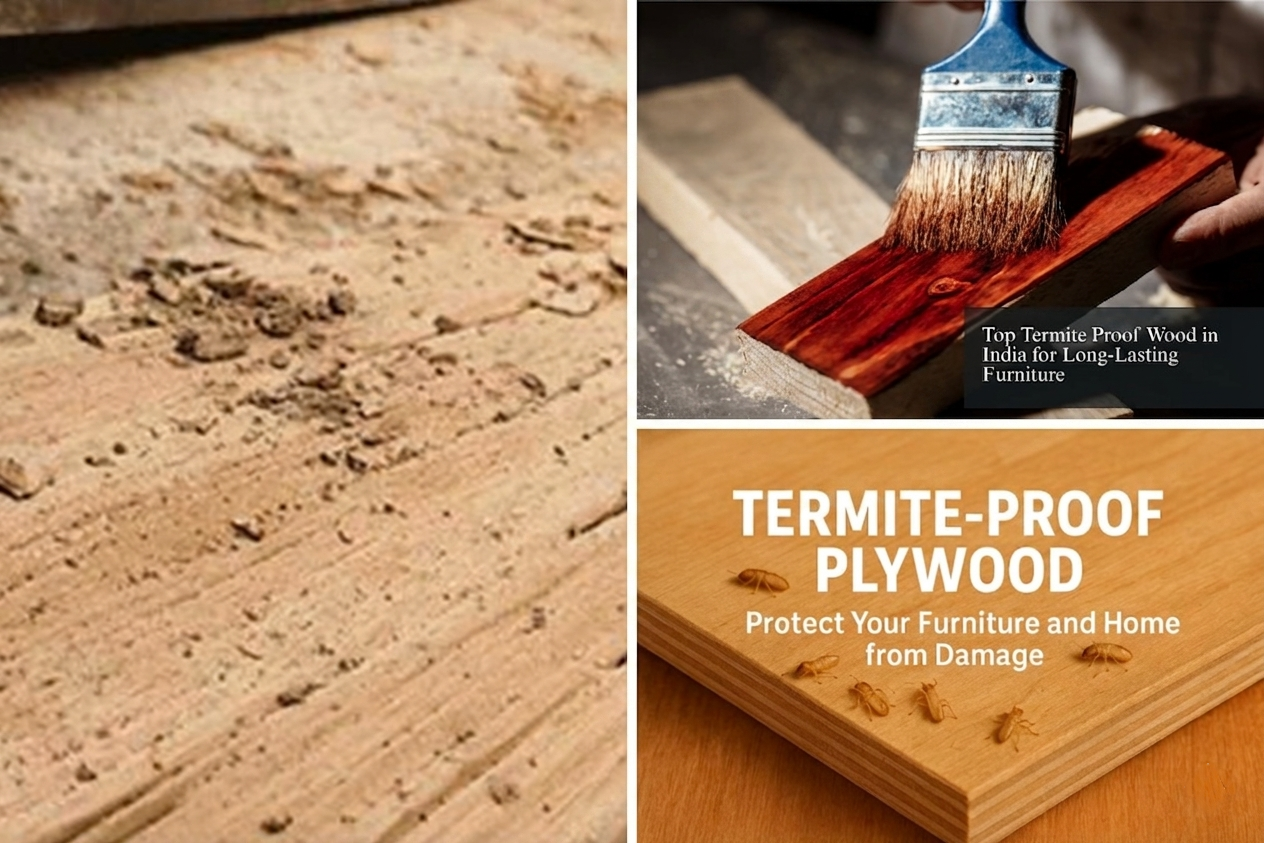
Furniture & Craftsmanship Guide | A Practical Guide for Indian Homes
Most people don’t think about termites until it’s already too late. A drawer that suddenly feels lighter than it should. A tap on a cabinet panel produces a strange, hollow sound instead of the solid thud you’d expect. A thin trail of fine, powdery dust was collecting quietly on the floor near a wardrobe leg. By the time any of these signs show up clearly enough to notice, a colony has often been working away inside the wood for months, sometimes longer.
This is the uncomfortable truth about termites in Indian homes: they’re patient, they’re hidden, and they’re remarkably common, especially given how much of the country sits in warm, humid conditions that termites genuinely thrive in. The good news is that protecting wooden furniture from termites isn’t complicated once you understand what actually works, as opposed to the long list of folk remedies and half-measures that circulate online without much evidence behind them.
This guide separates the genuinely effective approaches from the ones that mostly offer false reassurance, and walks through what real termite-proofing looks like, from the moment furniture is made to the years of ordinary upkeep that follow.
Why Termites Target Wooden Furniture in the First Place
Termites feed on cellulose, the structural fiber found in wood, paper, and cardboard. Wooden furniture, unfortunately, is exactly the kind of dense, accessible cellulose source that termite colonies are drawn to, particularly in conditions that combine warmth, darkness, and moisture -precisely the environment found in a great many Indian homes for large parts of the year.
Subterranean termites, the most common type affecting Indian households, typically travel from soil into a building through small cracks, foundation gaps, or direct contact between wood and ground, often building visible mud tubes as protected pathways between their colony and their food source. Drywood termites work a little differently, settling directly within the wood itself rather than tunneling in from soil, which makes them somewhat harder to detect early since there’s no soil contact or visible tube to give them away.
Either way, the underlying conditions termites need to thrive -warmth, moisture, and untreated or poorly seasoned wood -are conditions that show up constantly across Indian climates, which is exactly why termite protection deserves real attention rather than an afterthought.
Start With the Wood Itself, Not the Treatment
The single most effective termite-proofing decision happens long before any chemical treatment is applied: choosing the right wood species and ensuring it’s properly seasoned in the first place.
Certain woods carry natural compounds that make them genuinely unappealing to termites. Teak is the standout example here, owing to natural oils within the timber that act as a built-in deterrent. Well-seasoned sheesham also offers solid natural resistance, as does properly treated oak. This natural resistance isn’t absolute immunity, but it gives furniture a meaningful head start compared to softer, untreated woods that termites can work through far more easily.
Seasoning matters just as much as species. Wood that hasn’t been properly kiln-dried or air-seasoned retains more internal moisture, and that residual dampness makes the timber considerably more attractive to termites and other wood-boring pests. Dense, well-dried fibers are simply harder for termites to penetrate, which is one of several reasons properly seasoned solid wood furniture tends to hold up so much better over the years than furniture built from timber that was rushed through production.
Engineered Wood, Plywood, and the Termite Question
A lot of search traffic around termite protection circles back to one specific, practical question: Is engineered wood termite-proof, and how does it compare to solid timber when it comes to resisting these pests?
The honest answer is more nuanced than a simple yes or no. Standard plywood, particle board, and MDF are not inherently termite-proof on their own. However, a genuinely termite-proof plywood does exist in the market, manufactured using synthetic resins and chemical treatments specifically designed to resist both moisture and termite activity. These boards undergo treatment during manufacturing that ordinary commercial-grade plywood doesn’t.
When shopping for termite-proof board for cabinets, wardrobes, or kitchen units, look specifically for plywood graded as both boiling-water-resistant and chemically treated against borers and termites, rather than assuming any plywood labeled “waterproof” automatically offers termite resistance. The two properties are related but not identical, and the best waterproof and termite-proof plywood options are explicitly tested and certified for both, with this typically noted clearly in the product specification rather than left ambiguous.
For anyone specifically choosing termite-proof material for wardrobe construction, where enclosed, dark cavities create exactly the kind of environment termites favor, this distinction matters even more than it does for open furniture pieces exposed to light and air. The same logic applies to a termite-proof door, particularly exterior or ground-contact doors, where direct soil exposure significantly increases the risk compared to furniture kept well above floor level.
Chemical Treatments That Genuinely Work
Among the products specifically formulated for termite protection, a few categories have consistently demonstrated real effectiveness, while home remedies offer more reassurance than actual protection.
Borate-based preservatives are widely used and well-regarded for genuine termite proofing. Borate compounds are toxic to termites while posing relatively low risk to human and pet exposure when properly applied and dried, making them a sensible first line of defense, particularly when applied to raw wood before any final polish or paint goes on.
Anti-termite chemical treatments, applied directly to fabricated furniture before final finishing, create a genuine barrier that termites struggle to cross. These treatments are typically applied to raw wood or plywood, left to dry thoroughly, and then sealed beneath a protective topcoat that locks the treatment in while also adding moisture resistance.
Termite-proof paint and specialized wood polishes are available specifically for this purpose, forming a hard, glossy protective coat over finished furniture. These work best as part of an ongoing maintenance routine rather than a one-time fix, since the protective layer naturally wears down over years of use and benefits from reapplication on a reasonable schedule.
What separates these genuine treatments from less reliable folk remedies -diluted neem oil, vinegar mixtures, salt sprinkled on affected areas -isn’t that the folk remedies do nothing at all. Some natural oils do have mild repellent properties. The difference is that proper chemical treatments are designed specifically to penetrate and protect at a level that consistently outperforms kitchen-cupboard solutions, particularly once an infestation has already taken hold, rather than simply being a preventive measure.
Environmental Control: The Part Most People Skip
Even the best-treated piece of furniture remains vulnerable if the environment around it continues to favor termites. This is the part of termite-proofing that has nothing to do with the furniture itself and everything to do with the room it lives in.
Good ventilation matters enormously, since stagnant, humid air is exactly what termites and the fungal growth that often accompanies them both prefer. Fixing leaking pipes and addressing damp walls promptly removes the moisture source that draws termites toward a particular area of a home in the first place. Keeping wooden furniture elevated rather than in direct contact with damp flooring and avoiding placement directly against exterior walls where moisture can seep through both reduce the easy pathways termites rely on to reach a piece of furniture from the ground or from within a wall.
This is also why furniture stored outdoors, even temporarily, carries a meaningfully higher risk than furniture kept indoors in a controlled environment. Direct soil contact gives termites the most straightforward access route imaginable.
Spotting an Infestation Before It Spreads
Catching termite activity early makes an enormous difference to how much damage ultimately occurs, simply because colonies that are dealt with quickly haven’t had time to spread through a piece of furniture or into surrounding structures.
A few signs are worth checking regularly, particularly in older furniture, in furniture kept in a damp room, or furniture that hasn’t been inspected in a while. A hollow sound when tapping a panel that should sound solid is one of the more reliable indicators, since termites hollow out wood from the inside while often leaving the outer surface looking deceptively intact. Fine, powdery wood dust collecting near furniture legs or joints is another classic sign, often mistaken for ordinary household dust until someone looks closely. Visible mud tubes running along a wall or furniture leg indicate subterranean termite activity, and discarded wings near a window or door frame often indicate a termite swarm has recently occurred nearby.
Catching any of these signs early is the difference between a manageable, localized treatment and a far more extensive repair or replacement situation down the line.
When to Call in Professional Help
DIY treatments and preventive habits genuinely do most of the heavy lifting in termite protection, but there’s a point past which professional intervention becomes the more sensible option. If an infestation is already established, particularly one that’s spread beyond a single piece of furniture into walls, flooring, or structural woodwork, professional pest control treatment reaches areas that household remedies simply can’t access effectively.
Many households in termite-prone regions schedule periodic professional pest control as a preventive measure, typically every 1 to 2 years, rather than waiting for visible signs of damage. Given how quietly and persistently termite colonies can establish themselves, this kind of routine, scheduled check tends to catch problems considerably earlier than relying purely on noticing damage after the fact.
Building Protection from the Start
The most effective termite protection isn’t really a single product or a single habit. It’s a combination that starts with the wood itself, choosing naturally resistant, properly seasoned timber wherever possible, continues through genuine chemical treatment during the manufacturing process, and is maintained over the years through sensible environmental habits and periodic inspection.
Furniture treated this way from the very beginning carries a meaningfully lower risk profile than furniture where termite protection is only considered after a problem has already appeared. Old wooden furniture and antique wooden furniture that has survived decades intact have almost always benefited from exactly this kind of layered, ongoing care, rather than any single miracle treatment applied once and forgotten.
A Problem That’s Manageable, Not Inevitable
Termites are genuinely common in Indian homes, but a termite infestation in wooden furniture is far from inevitable. Choosing naturally resistant, well-seasoned wood, applying genuine chemical protection during construction, controlling the moisture and humidity around furniture, and keeping an eye out for early warning signs together account for the overwhelming majority of effective protection available.
The pieces that last generations in Indian households, the kind eventually described as treasured antique wooden furniture rather than discarded, damaged furniture, are almost never the ones that got lucky. They’re the ones that were properly treated from the start and looked after consistently ever since.
Looking for furniture genuinely built to withstand India’s climate from the inside out? Explore Twigs Direct’s handcrafted collection, where wood selection and seasoning are treated as seriously as the carving and finish that follow.

 Bangla