


How to Choose the Right Wood Finish for Your Climate and Lifestyle
Furniture & Craftsmanship Guide | A Practical Comparison for Indian Homes
Most people pick a finish for their wooden furniture the same way they pick a paint color — based on how it looks in the showroom. Glossy and rich, or soft and matte, whichever catches the eye first usually wins. The trouble is, a finish isn’t just decoration sitting on top of the wood. It’s doing real work underneath that shine, deciding how the piece holds up against spills, scratches, humidity, and years of ordinary use.
Get the finish wrong for your climate or your household, and even a beautifully made piece of old wooden furniture can start looking tired far sooner than it should. Get it right, and the same piece can stay looking genuinely good for decades, sometimes improving with age rather than declining. This guide walks through the main finish types available, how each one actually behaves, and how to think about which suits your specific home rather than just your taste.
What a Finish Is Actually Doing
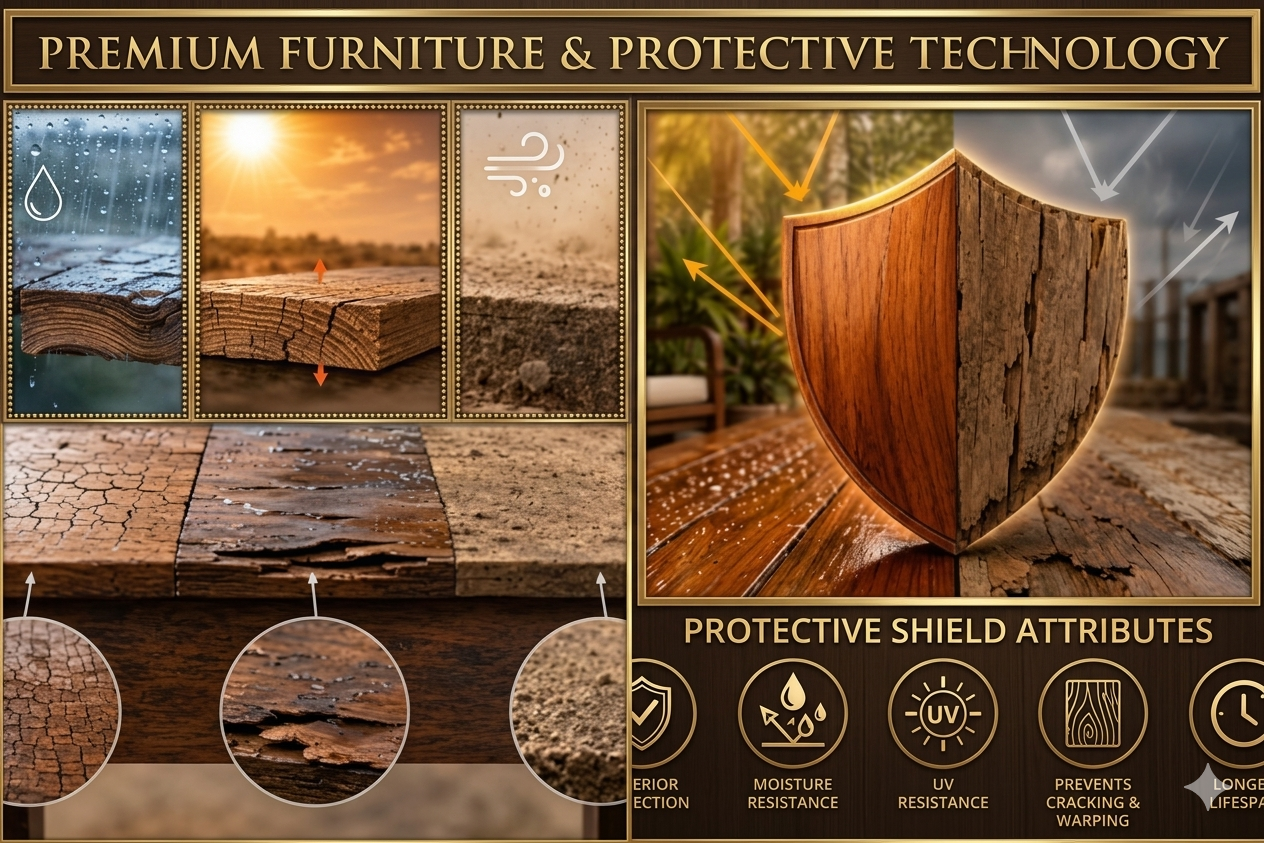
Before comparing options, it helps to understand the basic split in how finishes work. Some finishes, like oil and wax, penetrate into the wood itself, soaking into the surface fibers rather than sitting on top. Others, like lacquer and polyurethane, form a film that sits on the surface, creating a protective layer above the wood rather than within it.
This distinction explains almost everything else about how each finish looks, feels, and performs. Penetrating finishes tend to feel more natural under your hand, because you’re essentially touching treated wood rather than a coating. Film finishes tend to offer stronger protection because the surface layer absorbs the impact of spills and scratches before they ever reach the wood beneath.
Neither approach is universally better. The right choice depends entirely on how a piece will actually be used and where it will live.
Oil Finishes: Natural Feel, Hands-On Care
Oil finishes work by soaking into the wood grain rather than sitting on top of it, which is why a piece finished this way still feels like real wood to the touch rather than a coated surface. The oil enhances the natural color and brings out the figure and depth of the grain in a way film finishes often can’t replicate.
Teak oil, tung oil, and Danish oil are the most common choices for furniture, each with slightly different properties. Tung oil tends to be the hardest and most water-resistant of the natural oils, while Danish oil, being a blend of oil and varnish, applies a little more easily and offers somewhat more protection than pure oil alone.
The honest trade-off with oil is maintenance. It doesn’t protect against scratches and spills as well as a film finish, and it needs reapplication periodically to stay looking its best, usually every year or so, depending on how much the piece is used. For households that don’t mind this small ritual, oil rewards the effort with a finish that ages beautifully and is genuinely easy to refresh whenever it starts looking a little dry.
Best suited to: Households that prefer a natural, tactile look and don’t mind occasional upkeep. Lower-traffic pieces like side tables, decorative furniture, and statement pieces that aren’t subjected to constant daily wear.
Wax: The Gentlest Option, With the Least Protection
Wax sits even lighter than oil. Rather than penetrating deeply or forming a hard film, it fills the wood's surface pores with a thin, soft layer that can be buffed to a gentle, warm luster. Beeswax and carnauba wax are the most traditional choices, often blended together, with carnauba wax providing more shine and beeswax providing warmth.
Wax is often the original finish found on genuine antique wooden furniture, and it remains a sensible choice for restoring or maintaining pieces of that era, since reapplying wax is straightforward and doesn’t risk damaging an older surface the way stripping and refinishing with a modern coating might.
What wax doesn’t offer is real protection. It does very little against water, heat, or daily wear, and it scuffs easily. The advantage is that touching it up is just as easy as the damage itself — a fresh layer of wax restores the surface in minutes, with no sanding or stripping required.
Best suited to: Decorative or occasional-use furniture, antique pieces being maintained in their original finish, and as a final protective top layer over oil or other finishes, rather than as a standalone solution for anything used daily.
Lacquer: Glossy, Fast-Drying, and Genuinely Tough
Lacquer creates a hard, clear film on the surface of the wood and has been a favorite among furniture makers for centuries, valued for both its protective qualities and the rich, glossy depth it brings out in the grain beneath it. It dries quickly, which historically made it a practical choice for workshops producing furniture at scale, and a single coat already offers decent resistance to everyday spills and minor damage.
Lacquer is available in a wide range of sheens, from a soft satin to a near-mirror gloss, offering greater flexibility in the final appearance than people often expect. One thing worth knowing upfront is that traditional lacquer can develop a slight yellowish tinge over time, which is more noticeable on lighter woods. It’s also more prone to chipping under sharp impact than some other film finishes.
Best suited to: Pieces that need to look polished and feel low-maintenance day to day, particularly dining tables, cabinets, and furniture in busy, frequently used rooms.
Polyurethane: Built for Daily Wear and Tear
Polyurethane, often shortened to PU, is generally considered the toughest commonly available film finish for furniture. It forms a genuinely hard, resilient layer that holds up well against scratches, spills, and the kind of repeated contact that wears down softer finishes over time.
This durability comes with one practical trade-off: polyurethane is harder to repair when it eventually does get damaged. Where lacquer can often be touched up by blending a fresh coat into the existing layer, a damaged polyurethane surface usually needs to be sanded back to bare wood before recoating. It also tends to look slightly more synthetic than oil or lacquer, since the thicker film sits more visibly on top of the wood rather than letting the grain show through quite as naturally.
For Indian households specifically, this resilience matters in places exposed to higher humidity or coastal air, where a tougher protective layer genuinely earns its keep over years of use.
Best suited to: High-traffic furniture, households with children or pets, dining tables and desks used daily, and homes in humid or coastal regions where moisture resistance matters most.
Matching the Finish to Where You Actually Live
India’s climate varies enormously from one region to another, and this should genuinely influence which finish makes sense for your furniture, not just personal taste.
Coastal and high-humidity cities — Mumbai, Chennai, Kochi, Kolkata — put real pressure on wood through consistently moist air. A more protective film finish, like polyurethane or a well-applied lacquer, generally performs more reliably here than a natural oil finish, which offers comparatively little resistance to sustained humidity.
Dry, hot regions — Delhi NCR, Jaipur, much of central India — present a different challenge, with wood more prone to drying out and developing surface cracks if neglected. Oil finishes, reapplied periodically, can actually serve well here, since regular reapplication keeps the wood nourished in a way a hard-film finish doesn’t.
Hill stations and cooler, damper regions also benefit from the stronger protection of polyurethane or quality lacquer, given the combination of cooler temperatures and lingering moisture that can affect wood differently than dry heat does.
Lifestyle matters just as much as geography. A household with young children, frequent guests, or pets will generally get more practical value from a tougher film finish, simply because daily life puts more pressure on furniture surfaces. A quieter household, or furniture used occasionally rather than constantly, can comfortably enjoy the more natural look and feel of an oil or wax finish without the durability trade-off becoming a real problem.
A Few Practical Habits That Help Anyone Finish Last Longer
Regardless of which finish a piece carries, a handful of simple habits make a noticeable difference over the years.
Wipe spills promptly rather than letting them sit, particularly on oil and wax finishes, which offer less natural resistance to moisture than film finishes do. Keep furniture out of direct, prolonged sunlight where possible, since UV exposure eventually affects every finish type, just at different rates. Dust regularly with a soft, dry cloth rather than letting grime build up, since accumulated dirt can dull even a well-applied finish over time. And if a finish does start looking tired, understand which kind it is before attempting any kind of touch-up, since oil and wax respond well to simple reapplication, while a damaged lacquer or polyurethane surface usually needs more careful, sometimes professional attention.
There’s No Single “Best” Finish — Only the Right One for You
The most useful thing to take away from comparing these finishes is that none of them is objectively superior to the others. Each represents a genuine trade-off between natural look and feel, ease of maintenance, and long-term durability, and the right choice depends entirely on the specific piece, the room it lives in, your climate, and how your household actually uses it day to day.
A statement piece in a quiet study might be perfectly suited to a natural oil finish that deepens beautifully with age. A dining table feeding a busy family every single day probably deserves the tougher protection of polyurethane or a well-applied lacquer. Knowing the difference, and choosing deliberately rather than by appearance alone, is what separates furniture that ages gracefully from furniture that starts looking worn within just a few years.
Curious how genuine craftsmanship approaches finishing differently? Discover Twigs Direct’s handcrafted collection, where every wood and finish pairing is chosen specifically for the way real Indian homes are actually lived in.

 Bangla