


15 Benefits of Real Estate Asset Tokenization You Should Know
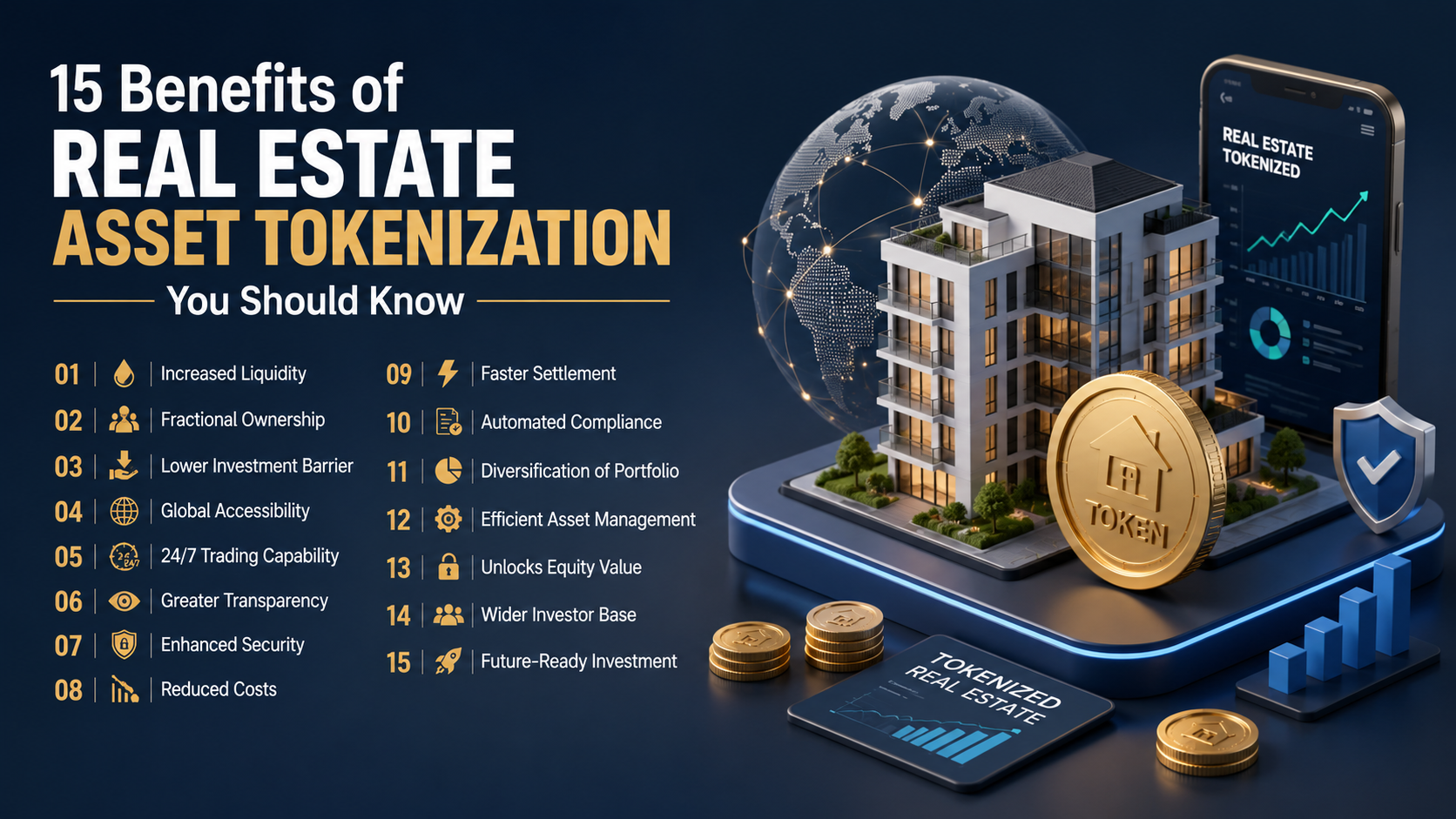
The real estate market has long been known for its high investment requirements, lengthy paperwork, and limited access for many investors. Buying or selling property often involves multiple intermediaries, legal documentation, financing procedures, and settlement periods that can take weeks or even months. As digital technologies continue to influence financial markets, property owners and investors are looking for practical ways to simplify ownership and investment management.
Real Estate Tokenization introduces a digital approach where ownership rights of a property are represented through blockchain-based tokens. Instead of requiring an investor to purchase an entire building or property, ownership can be divided into smaller portions, allowing more people to participate. This approach is gaining attention among commercial property owners, residential developers, investment firms, and financial institutions.
Businesses planning to enter this market often work with a Real Estate Tokenization company to develop secure digital platforms that manage token issuance, investor onboarding, compliance, and property administration. With increasing interest from investors across different regions, real estate asset tokenization is becoming a practical option for expanding investment opportunities while improving operational efficiency.
1. Lower Investment Entry Requirements
One of the biggest advantages of real estate asset tokenization is that investors do not always need large amounts of capital to participate. Instead of purchasing an entire property, investors can buy fractional ownership through digital tokens.
This creates opportunities for individuals who previously found commercial real estate beyond their financial reach. Property developers also benefit by attracting a larger pool of investors instead of depending on only a few institutional buyers.
Many organizations offering Real Estate Tokenization Services help structure investment models that comply with financial regulations while making participation easier for different categories of investors.
2. Fractional Ownership Creates More Investment Options
Traditional real estate investments usually involve complete ownership or large partnership agreements. Tokenization divides ownership into smaller units that represent proportional shares of a property.
This gives investors the freedom to spread their capital across multiple projects instead of placing all their funds into a single property. Diversifying investments across residential buildings, commercial offices, warehouses, or hospitality properties becomes much more practical.
Businesses involved in real estate tokenization development often design ownership structures that accurately represent each investor's share and associated rights.
3. Improved Market Liquidity
Real estate has historically been considered an illiquid asset because selling property often requires significant time and legal procedures.
Tokenized ownership can simplify secondary market transactions where regulations permit. Instead of selling an entire building, investors may transfer part or all of their digital ownership interests through approved marketplaces.
This additional flexibility makes property investment more attractive to investors who value quicker exit opportunities compared to conventional real estate transactions.
4. Faster Fundraising for Property Owners
Developers frequently spend months raising capital before beginning construction or purchasing new assets.
With Real Estate Tokenization, fundraising can involve a larger investor base through fractional ownership offerings. Rather than negotiating with a limited number of institutional investors, developers may attract hundreds or thousands of qualified participants depending on applicable regulations.
A professional Real Estate Tokenization Development company can assist with platform planning, compliance processes, token issuance, and investor management throughout the fundraising cycle.
5. Better Portfolio Diversification
Investors often seek different property categories to reduce financial risk. Instead of allocating a large budget to one apartment complex, tokenization allows investments across various property types and geographic regions.
For example, an investor could own portions of office buildings, residential apartments, shopping centers, industrial warehouses, and vacation properties simultaneously.
This broader investment approach helps reduce dependence on the performance of a single asset.
6. Digital Ownership Records
Managing paper documents across multiple investors can become difficult as property portfolios grow.
Blockchain technology records ownership information digitally, making it easier to maintain historical transaction records. Every ownership transfer is documented within the platform according to the rules established during implementation.
Organizations involved in Real Estate Tokenization Development Services generally include digital record management, investor dashboards, document storage, and reporting features as part of the overall solution.
7. Wider Global Investment Opportunities
Property investment has traditionally been limited by geographical barriers, administrative procedures, and local investment restrictions.
Tokenized offerings can attract eligible investors from multiple regions while following applicable legal requirements. This allows developers to reach a broader audience than traditional fundraising campaigns.
International participation may increase interest in premium real estate projects that previously depended on regional investment networks.
8. Reduced Administrative Work
Property investments involve extensive documentation, ownership tracking, dividend distribution, investor communication, and compliance reporting.
Real Estate Tokenization Platform Development helps organize many of these administrative activities within a single digital environment. Investor information, ownership records, payment history, compliance documentation, and reporting can all be managed more efficiently than traditional manual processes.
As investment portfolios expand, centralized digital management reduces repetitive administrative tasks while improving operational consistency.
9. Better Access to Commercial Real Estate
Commercial properties such as office buildings, shopping complexes, hotels, industrial facilities, and mixed-use developments often require substantial capital. This prevents many individual investors from participating in these opportunities.
With real estate asset tokenization, ownership can be divided into smaller portions that match different investment budgets. Investors gain exposure to commercial real estate without purchasing an entire property. At the same time, property owners have another option for raising capital from a broader investor community.
This approach supports both experienced investors seeking portfolio diversification and first-time investors looking to enter the commercial real estate market.
10. More Efficient Income Distribution
Managing rental income for multiple investors can become difficult when handled manually. Calculating ownership percentages, preparing payment records, and maintaining financial statements often require considerable administrative effort.
Digital token ownership simplifies this process by linking each investor's ownership share with the distribution model established for the property. Rental income, dividends, or profit-sharing arrangements can be managed according to predefined investment agreements and applicable regulations.
A reliable Real Estate Tokenization company can develop platforms that include investor dashboards, payment tracking, financial reporting, and document management, helping property managers organize these activities more effectively.
11. Improved Investor Confidence Through Better Record Keeping
Investors appreciate having access to organized information before making financial decisions. Digital platforms provide property documents, ownership history, financial reports, legal agreements, and investment updates in one location.
Rather than requesting paperwork from multiple parties, investors can review available records through their accounts. This organized approach supports informed decision-making and reduces confusion during property ownership and investment management.
Good documentation also benefits auditors, legal advisors, and regulatory authorities when reviews are required.
12. Access to a Larger Investor Community
Traditional property fundraising often depends on banks, institutional investors, or private investment groups. While these funding sources remain valuable, they can limit the number of potential participants.
Real Estate Tokenization allows developers to present investment opportunities to a wider audience, subject to applicable legal and regulatory requirements. Fractional ownership makes participation possible for investors with different financial capacities.
This broader participation may shorten fundraising timelines and reduce dependence on a limited number of large investors.
13. Flexible Property Financing Options
Property developers regularly seek financing for new construction, redevelopment projects, commercial acquisitions, or residential communities.
Along with traditional financing methods, tokenization introduces another approach for raising capital. Developers can structure investment offerings that align with project requirements while giving investors ownership interests represented through digital tokens.
Businesses involved in real estate tokenization development often assist clients with platform planning, token issuance, compliance workflows, investor onboarding, and asset management throughout the investment lifecycle.
14. Better Asset Management
Managing multiple properties across different locations requires continuous monitoring of ownership records, investor communications, financial reports, and legal documentation.
A centralized digital platform makes these activities easier to organize. Property managers can monitor investments, distribute reports, update project information, and communicate with investors through a single interface.
Many organizations offering Real Estate Tokenization Development Services include management tools that support document storage, reporting, compliance tracking, payment records, and investor administration, making day-to-day operations more organized.
15. Long-Term Growth Potential
Digital investment models continue to receive attention from financial institutions, property developers, investment firms, and technology providers. As regulations continue to mature in many regions, tokenized real estate is expected to become part of a wider investment ecosystem.
Businesses that begin planning today are better positioned to understand compliance requirements, investor expectations, platform management, and operational processes before market participation becomes more widespread.
Choosing experienced professionals for planning, legal coordination, technology implementation, and ongoing platform management helps organizations prepare for future opportunities in the digital property market.
Conclusion
Real Estate Tokenization is changing how property ownership and investment are managed by introducing fractional ownership, digital record keeping, broader investor participation, and more efficient property administration. From raising capital to improving investment accessibility and portfolio diversification, the benefits continue to attract developers, financial institutions, and investors across different markets. As interest in real estate asset tokenization grows, selecting the right technology partner becomes an important part of long-term success. Blockchain App Factory provides Real Estate Tokenization Services that help businesses plan, develop, and manage secure tokenization platforms while supporting compliance, investor management, and digital asset administration.
Frequently Asked Questions
1. What is real estate asset tokenization?
Real estate asset tokenization is the process of representing ownership rights of a property as digital tokens on a blockchain network. These tokens can represent fractional ownership, allowing multiple investors to own portions of the same property.
2. Who can benefit from Real Estate Tokenization?
Property developers, commercial real estate firms, investment companies, real estate funds, individual investors, and financial institutions can all benefit from Real Estate Tokenization by improving investment accessibility and property management.
3. Why should businesses work with a Real Estate Tokenization Development company?
A Real Estate Tokenization Development company assists with platform planning, blockchain integration, compliance features, investor onboarding, token issuance, security measures, and ongoing platform support throughout the project.
4. What are Real Estate Tokenization Platform Development solutions?
Real Estate Tokenization Platform Development refers to creating digital platforms that manage property token issuance, investor registration, ownership records, reporting, document management, and investment administration within a single system.
5. Are Real Estate Tokenization Services suitable for residential and commercial properties?
Yes. Real Estate Tokenization Services can be used for residential apartments, commercial buildings, office spaces, retail centers, industrial facilities, hotels, vacation properties, and mixed-use developments, depending on applicable regulations.
6. How does fractional ownership work in tokenized real estate?
A property is divided into digital ownership units represented by tokens. Investors purchase the number of tokens that matches their investment amount, giving them proportional ownership based on the offering structure.
7. What should businesses consider before starting a tokenization project?
Businesses should evaluate legal requirements, property valuation, investor eligibility, blockchain selection, cybersecurity, platform functionality, regulatory compliance, and choose an experienced partner before beginning a tokenization initiative.

 Bangla