


Bar Cabinet Buying Guide: What to Check Before You Order One
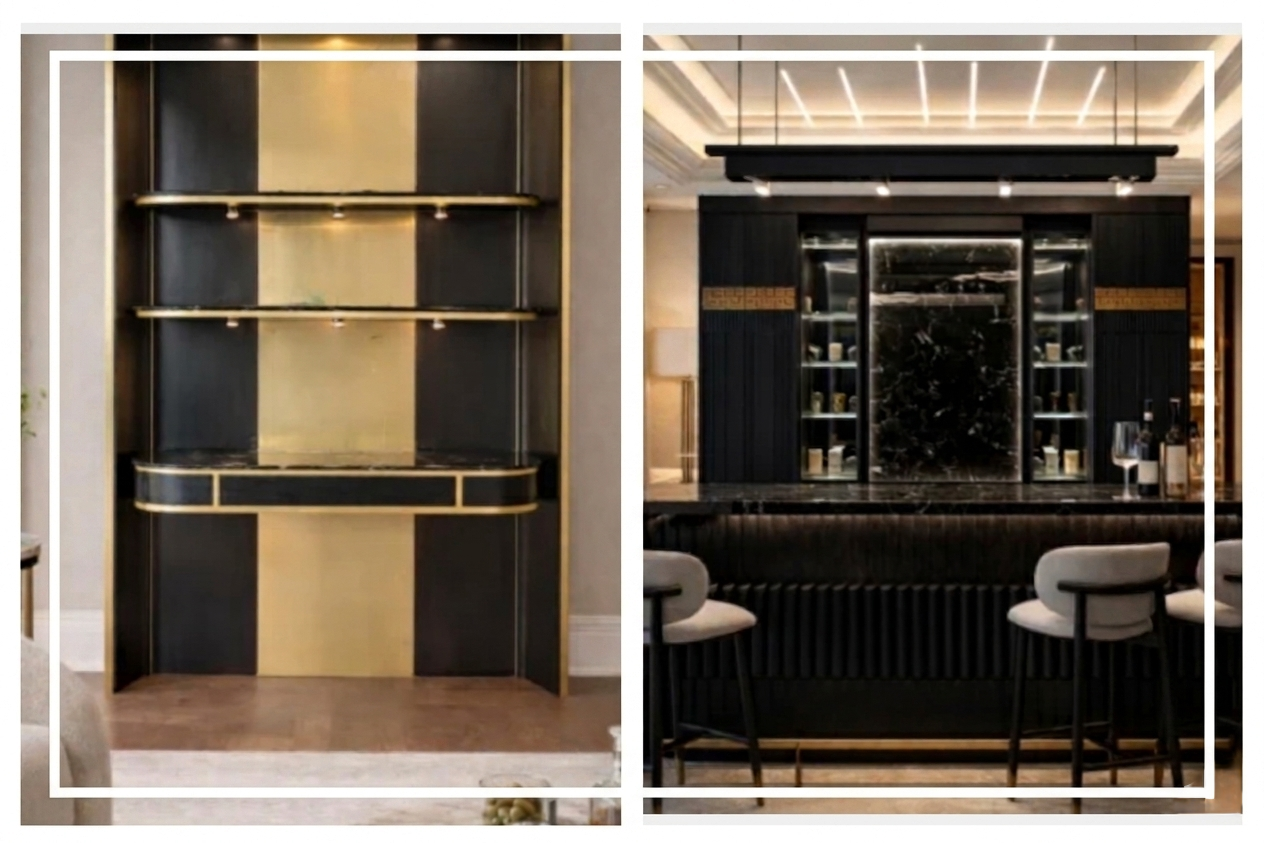
Sizing, storage layout, and material checks for choosing a home bar cabinet.
Home bars have moved from "nice to have" to a genuine fixture in Indian living rooms and entertaining spaces over the last few years, and a bar cabinet is usually the piece that anchors the whole setup. Unlike a sofa or bed, most people have never bought one before, so they end up guessing on size, storage layout, and material and regretting at least one of those decisions within a few months.
This guide covers what you should actually check before you commit to a bar cabinet.
Decide Cabinet vs Counter vs Trolley First
Bar furniture generally falls into three categories, and conflating them is the most common early mistake. A bar cabinet is a closed, freestanding storage unit, usually with doors, shelves, and sometimes a fold-out or pull-out serving surface best for living rooms where the bar needs to be tucked away when not in use. A bar counter is a taller, open or semi-open unit designed for standing or stool-height service, suited to larger rooms or dedicated entertaining areas. A bar trolley is mobile and compact, good for smaller apartments where a fixed piece does not make sense.
If storage and concealment matter more than display, a cabinet is the right call. If the bar is meant to serve as both a visual feature and a gathering point, a counter is a better option.
Storage Layout Matters More Than Overall Size
A bar cabinet that looks generously sized in photos can still be impractical if the internal layout does not match how you actually store bottles and glassware. Before buying, think through what you need space for: standard glass bottles are roughly 30 cm tall, so shelf spacing needs to comfortably clear that, ideally with a few inches to spare for taller bottles. Stemware needs either a hanging rack or at least 20 cm of vertical clearance when stored upright.
A mix of open shelving for display bottles, closed cabinet space for everyday storage, and a dedicated glass rack or felt-lined drawer for stemware covers most home bar needs without wasted space. Cabinets with adjustable shelving are worth prioritizing over fixed shelves, since bottle and glass collections tend to change over time.
Wood Quality Affects More Than Looks Here
A bar cabinet sees more contact with liquid spills and condensation rings than almost any other piece of furniture in the house, which makes finish quality genuinely functional rather than just aesthetic. A solid wood cabinet with a properly sealed, scratch- and moisture-resistant lacquer finish will hold up far better over years of use than a veneer or laminate finish, which can lift or discolor where glasses are repeatedly set down without coasters.
If buying in person, run a finger across the top surface near any edge a properly sealed finish feels smooth and slightly cool, while a poorly sealed one often has a slightly tacky or uneven texture.
Lighting Changes How Much You Use It
A surprising number of bar cabinets sit unused simply because they are dark and uninviting once the doors are open. Built-in LED strip lighting inside the cabinet, ideally with a warm tone rather than cold white, makes the bottles and glassware visible and noticeably increases how often the bar actually gets used for entertaining rather than just storage. If the cabinet you are considering does not have built-in lighting, check whether the shelving is open enough to retrofit a simple battery-powered LED strip later.
Placement and Room Fit
Bar cabinets typically range from 30 to 45 inches wide and 16 to 20 inches deep for compact designs, and can be larger for statement pieces meant as a room's focal point. Before ordering, measure the intended wall space and leave at least 24 inches of clearance in front of the doors for them to open fully and for someone to stand comfortably while pouring drinks.
A few practical placement considerations:
-
Avoid direct sunlight on the cabinet, since UV exposure fades both the wood finish and bottle labels over time.
-
Keep at least a small gap from radiators, kitchen heat sources, or direct AC vents, since temperature swings can affect both the wood and the contents.
-
If the cabinet has a fold-out serving shelf, confirm there is enough clearance for it to extend fully when open.
A Reference Point for Build and Finish
For a sense of what solid wood construction, proper shelf spacing, and finish quality look like in a bar cabinet, Twigs Direct's bar cabinet collection is worth a look as a comparison point on joinery and finish, regardless of where you eventually buy.
Final Thought
A bar cabinet earns its keep when it is actually used rather than admired once and then ignored. Get the storage layout right for your actual bottle and glassware collection, prioritize a moisture-resistant finish over a purely decorative one, and consider lighting early rather than as an afterthought, and it becomes a piece that genuinely gets used at every gathering rather than collecting dust in the corner.

 Bangla