


The Digital Transformation of Corporate Finance - Understanding the Expense Management Software Market
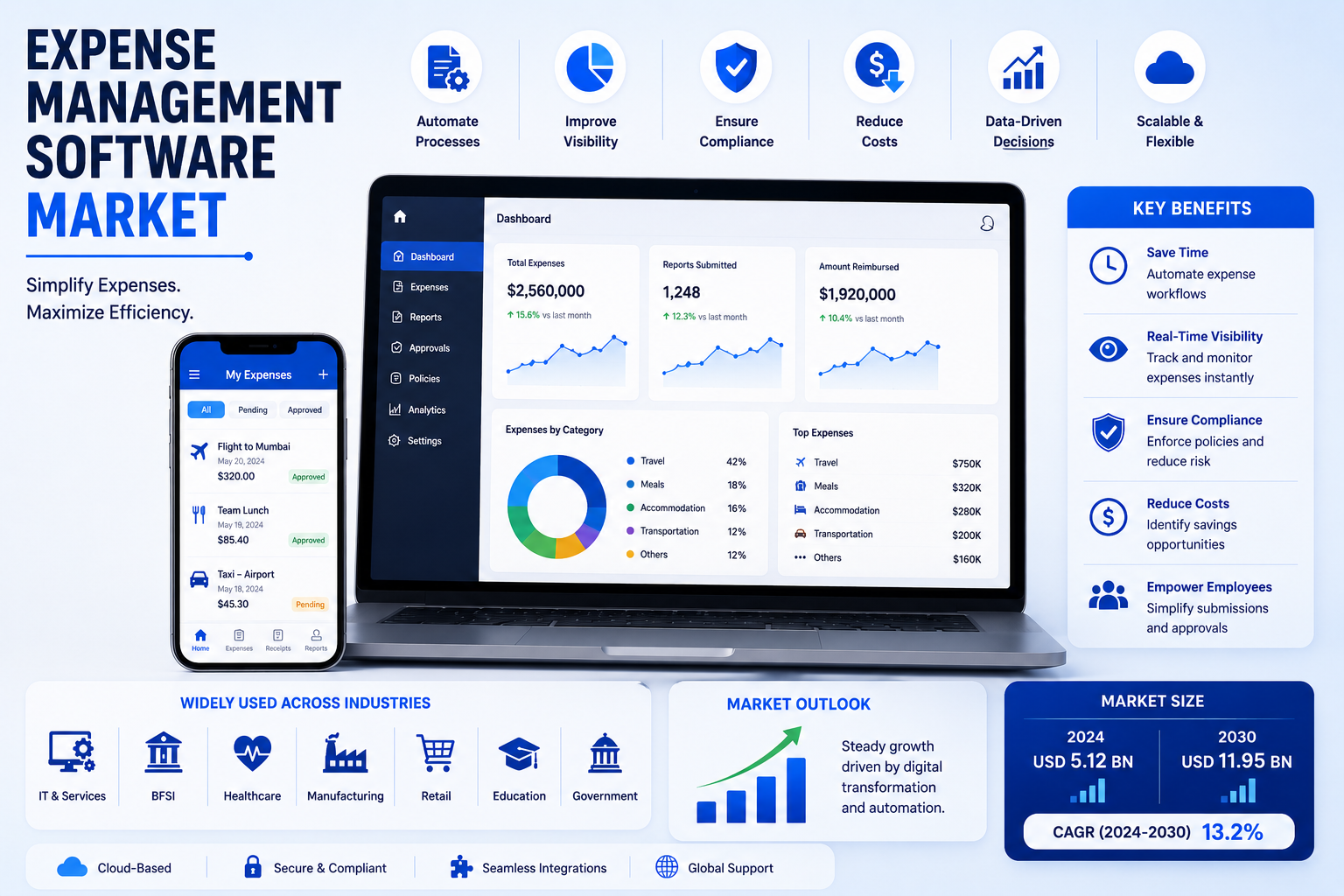
The Expense Management Software Market is experiencing unprecedented growth as organizations worldwide accelerate their digital transformation initiatives. According to Market Research Future, the Expense Management Software Market reached USD 8.18 billion in 2025 and is projected to hit USD 23.03 billion by 2035, registering a compound annual growth rate of 10.90% during the forecast period. This remarkable expansion reflects a fundamental shift in how businesses approach financial operations, moving away from manual, error-prone processes toward automated, intelligent solutions.
At its core, expense management software automates the entire lifecycle of business expenses—from receipt capture and submission to approval workflows and reimbursement. The technology addresses a critical pain point for organizations of all sizes: the administrative burden associated with tracking, reporting, and reconciling employee expenditures. Traditional methods involving spreadsheets and paper receipts have proven inefficient, costly, and increasingly inadequate in today's fast-paced business environment.
The market's growth trajectory is driven by several converging factors. Cloud-based solutions have emerged as the dominant deployment model, capturing 69.0% of the market in 2025. These platforms offer unparalleled flexibility, enabling employees to submit expenses from anywhere while providing finance teams with real-time visibility into spending patterns. The shift to cloud architecture has democratized access to sophisticated expense management capabilities, making them accessible to small and medium enterprises alongside large corporations.
Regulatory pressures are accelerating adoption across regions. The European Union's ViDA (VAT in the Digital Age) directive, which mandates structured e-invoicing for all intra-community B2B transactions by 2028, affects an estimated 16 million businesses. Similarly, India's GST e-invoicing mandate has processed over 3.5 billion invoices since its launch, creating a natural upgrade cycle for compliant platforms. These regulatory requirements transform expense management from a discretionary investment into an operational necessity.
The competitive landscape features established enterprise leaders alongside innovative FinTech disruptors. SAP Concur, Coupa Software, and Emburse represent the traditional powerhouse, with deep ERP integrations and global footprints. Meanwhile, card-linked platforms like Brex, Ramp, and Navan have raised substantial funding, leveraging embedded finance to eliminate manual data entry by capturing transaction data at the point of sale. This convergence of software and financial services represents a paradigm shift in how corporate spending is managed.
As organizations navigate economic uncertainties, expense management software provides the visibility and control needed to optimize spending, ensure compliance, and drive strategic decision-making. The market's continued evolution promises even greater automation, intelligence, and integration in the years ahead.

 Bangla