


13 Critical Success Factors in Real Estate Tokenization Projects
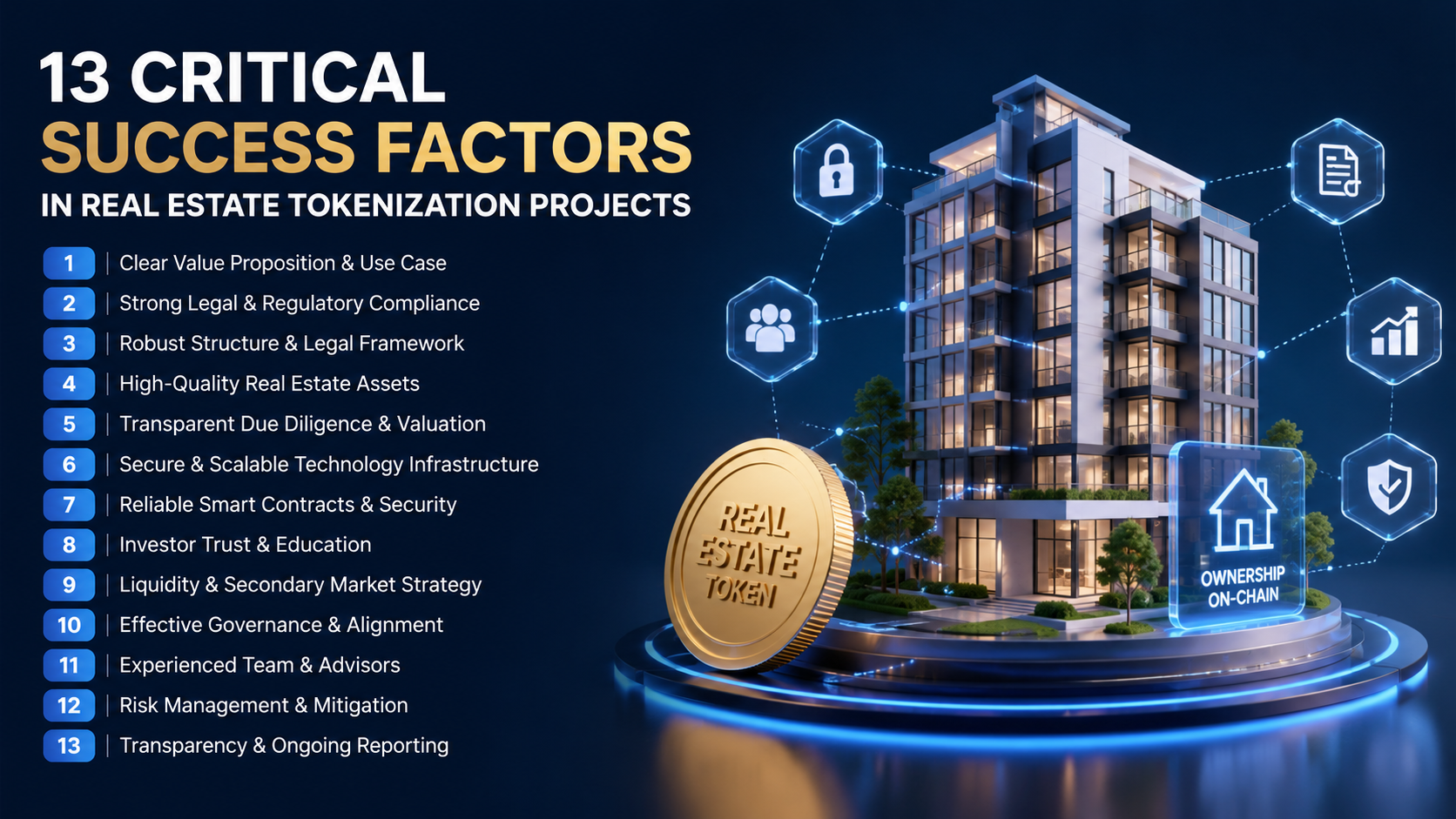
Real estate investment is gradually moving toward digital ownership models where physical properties are represented through blockchain-based digital tokens. This approach has attracted property developers, institutional investors, real estate firms, and technology companies looking for new investment structures. While the concept has gained considerable attention, many projects fail to achieve their intended business objectives because planning often focuses only on technology while overlooking legal, operational, and investment considerations.
Real Estate Tokenization is much more than converting a property into digital tokens. Every successful project begins with careful planning, regulatory evaluation, investor management, and selecting the right technical framework. These elements work together to create a reliable ecosystem for both property owners and investors. Businesses working with a Real Estate Tokenization company generally achieve better project outcomes because experienced teams understand both blockchain infrastructure and real estate operations.
Whether the objective is fractional ownership, commercial property investment, residential developments, or cross-border investment opportunities, several practical factors determine whether a project gains investor confidence and delivers long-term value. The following success factors highlight the areas every organization should consider before launching a real estate tokenization initiative.
1. Selecting the Right Property
Every tokenization project begins with the asset itself. A valuable property does not automatically become a successful digital investment. Investors examine occupancy rates, rental income, maintenance history, appreciation potential, and market demand before purchasing tokens.
Commercial buildings with reliable tenants, residential rental portfolios, warehouses, hotels, and mixed-use developments generally attract greater interest because they generate measurable cash flow. Proper valuation supported by independent assessment also improves investor confidence.
Organizations should avoid tokenizing properties with unresolved legal disputes, ownership conflicts, or uncertain financial performance.
2. Regulatory Planning from the Beginning
Real estate investments operate within strict legal frameworks, and tokenized assets are no different. Securities regulations, investor eligibility, taxation, anti-money laundering requirements, and ownership rights differ across countries.
Ignoring legal obligations can delay a project or even stop public distribution altogether. Working alongside experienced legal professionals during project planning reduces future complications.
Many organizations choose a Real Estate Tokenization Development company that has previous experience working within regulated environments, making compliance planning easier throughout the project lifecycle.
3. Defining Ownership Rights Clearly
Every investor should understand exactly what their token represents. Does it provide fractional ownership? Revenue sharing? Rental income? Governance rights? Profit distribution after property sales?
Ambiguity creates confusion and discourages investors from participating.
Project documentation should explain:
-
Ownership percentage
-
Voting rights
-
Dividend distribution
-
Exit procedures
-
Property management responsibilities
-
Token transfer conditions
Clear documentation builds confidence among institutional and retail investors alike.
4. Reliable Property Valuation
Accurate valuation forms the financial foundation of any tokenization project. Overpricing discourages investment, while undervaluation affects fundraising potential.
Independent property valuation supported by current market data creates realistic token pricing. Periodic reassessments also provide investors with updated information regarding portfolio performance.
Professional valuation reports become even more valuable when attracting institutional investors who perform extensive due diligence before participating.
5. Choosing the Appropriate Blockchain Infrastructure
Blockchain selection affects transaction costs, processing speed, interoperability, smart contract functionality, and long-term maintenance.
Public blockchains provide wider accessibility, while permissioned environments may suit enterprise-level property management requirements. Some projects also combine both approaches depending on business objectives.
The technical decision should align with investor expectations, regulatory requirements, transaction frequency, and future expansion plans rather than simply following market trends.
Organizations investing in real estate tokenization development should evaluate blockchain compatibility before beginning software development.
6. Smart Contract Quality
Smart contracts automate ownership transfers, income distribution, compliance verification, and investment management. Since these contracts directly control financial activities, development quality cannot be overlooked.
Poorly written contracts may contain vulnerabilities that expose investors and property owners to unnecessary risks.
Professional code reviews, security testing, external audits, and repeated validation significantly reduce potential issues before deployment.
Businesses investing in Real Estate Tokenization Platform Development generally include independent security assessments before launching production systems.
7. Investor Verification Procedures
Every investment platform should verify investor identity before allowing participation. Identity verification supports regulatory compliance while reducing fraudulent activity.
Know Your Customer (KYC) and Anti-Money Laundering (AML) procedures should become part of the onboarding experience instead of appearing as separate administrative tasks later.
Efficient verification processes also improve investor satisfaction because documentation is completed before investment transactions begin.
Organizations offering Real Estate Tokenization Development Services usually integrate identity verification systems with investor dashboards to simplify account approval and compliance management.
8. Simple and User-Friendly Investment Platform
Technology should make investing easier, not more complicated. Many investors may be interested in digital real estate but have limited experience with blockchain applications. A platform with a complicated registration process or confusing investment workflow may discourage participation.
A well-designed interface should allow users to register, complete identity verification, review available properties, purchase tokens, monitor investments, and receive distributions without unnecessary steps. Property information, financial reports, and transaction history should be available from a single dashboard.
Organizations offering Real Estate Tokenization Services often focus on creating investment portals that are easy to navigate while maintaining the operational requirements of blockchain-based transactions. A positive user experience contributes to investor retention and encourages repeat investments in future projects.
9. Liquidity Planning
One of the reasons investors consider tokenized real estate is the possibility of trading ownership more efficiently than traditional property investments. However, liquidity does not occur automatically after token issuance.
Project owners should determine how investors can sell or transfer their tokens. This may involve regulated secondary marketplaces, approved trading platforms, or internal trading mechanisms that comply with applicable regulations.
Liquidity planning should be explained before fundraising begins. Investors appreciate knowing their available exit options rather than making assumptions about future trading opportunities. A project with realistic liquidity planning often receives greater confidence from both retail and institutional investors.
10. Reliable Property Management
The performance of a tokenized property depends on the quality of its day-to-day management. Even if the technology performs well, poor maintenance, declining occupancy, or ineffective financial management can reduce investor returns.
Property managers should maintain regular inspections, collect rental income efficiently, supervise maintenance activities, manage tenant relationships, and provide periodic financial updates.
Consistent operational performance supports investor confidence throughout the investment period. Regular communication regarding occupancy rates, maintenance expenses, rental collections, and market conditions also helps investors understand the property's ongoing performance.
11. Financial Reporting and Regular Communication
Investors expect timely information after purchasing digital property tokens. A lack of communication often creates uncertainty, even when the investment itself performs well.
Regular reporting may include rental income, operating expenses, occupancy statistics, maintenance costs, property appreciation, tax updates, and dividend distributions. Monthly or quarterly reports provide investors with measurable information instead of relying on assumptions.
Open communication also helps project operators address investor questions before they become larger concerns. A Real Estate Tokenization company that maintains consistent reporting standards generally develops better long-term relationships with its investor community.
12. Security Across the Entire Platform
Security extends far beyond blockchain technology. Every component connected to the investment platform should receive equal attention, including user authentication, administrative access, digital wallets, application programming interfaces, cloud infrastructure, databases, and payment integrations.
Multi-factor authentication, encrypted communication, periodic security assessments, access control policies, and continuous monitoring contribute to a safer investment environment.
Security planning should continue after deployment through regular software updates and vulnerability assessments. Organizations involved in Real Estate Tokenization Platform Development typically include ongoing maintenance plans so newly identified risks can be addressed without disrupting platform operations.
13. Working with Experienced Industry Partners
Successful projects usually involve specialists from multiple industries rather than relying on a single service provider. Legal advisors, blockchain developers, cybersecurity professionals, real estate consultants, auditors, compliance experts, and property managers each contribute valuable knowledge throughout the project.
Selecting an experienced Real Estate Tokenization Development company can simplify coordination among these stakeholders. Previous project experience often helps identify potential challenges before they affect timelines or investment activities.
Businesses should evaluate service providers based on technical capability, regulatory knowledge, project portfolio, communication practices, post-launch support, and industry understanding rather than selecting partners based only on development costs. Long-term collaboration often produces better project outcomes than focusing solely on initial implementation expenses.
Conclusion
Real Estate Tokenization continues to gain attention as businesses seek modern approaches to property investment and ownership. However, long-term success depends on much more than issuing digital tokens. Property selection, legal planning, valuation, investor communication, platform security, financial reporting, liquidity planning, and experienced project partners all contribute to a well-managed initiative. Organizations that approach these areas with careful preparation are better positioned to build investor confidence and maintain sustainable operations. Businesses planning real estate asset tokenization should also work with experienced professionals who understand both blockchain technology and the real estate industry. Blockchain App Factory provides Real Estate Tokenization Services, including real estate tokenization development, consulting, platform implementation, and ongoing technical support for organizations seeking reliable digital property investment solutions.
Frequently Asked Questions
1. What is Real Estate Tokenization?
Real Estate Tokenization is the process of converting ownership or investment rights in a property into digital blockchain-based tokens. These tokens represent fractional ownership or investment interests, allowing multiple investors to participate in a real estate asset.
2. Why is legal compliance important in real estate tokenization?
Real estate investments are subject to securities laws, taxation rules, investor protection regulations, and anti-money laundering requirements. Addressing these legal obligations during planning helps avoid delays and regulatory issues after the platform is launched.
3. How does a Real Estate Tokenization company support businesses?
A Real Estate Tokenization company assists with project planning, blockchain integration, smart contract development, compliance guidance, investor portal development, security assessments, and ongoing platform maintenance throughout the project lifecycle.
4. What types of properties are suitable for tokenization?
Commercial offices, apartment buildings, hotels, warehouses, shopping centers, mixed-use developments, and rental portfolios are commonly selected because they often generate measurable income and attract investor interest.
5. Why is platform security important?
Investment platforms handle financial transactions, investor information, and digital assets. Security measures such as encrypted communication, multi-factor authentication, regular audits, and monitoring help protect both investors and platform operators.
6. What services are included in Real Estate Tokenization Development Services?
Real Estate Tokenization Development Services commonly include business consultation, blockchain integration, smart contract development, investor dashboard creation, compliance features, wallet integration, property management modules, testing, deployment, and ongoing maintenance.
7. How does Real Estate Tokenization Platform Development benefit property businesses?
Real Estate Tokenization Platform Development provides a structured digital environment for managing token issuance, investor onboarding, property information, compliance activities, transaction records, and investment reporting, making property investment more accessible for qualified participants.

 Bangla