


How Real Estate Tokenization Works: A Practical Guide for Investors
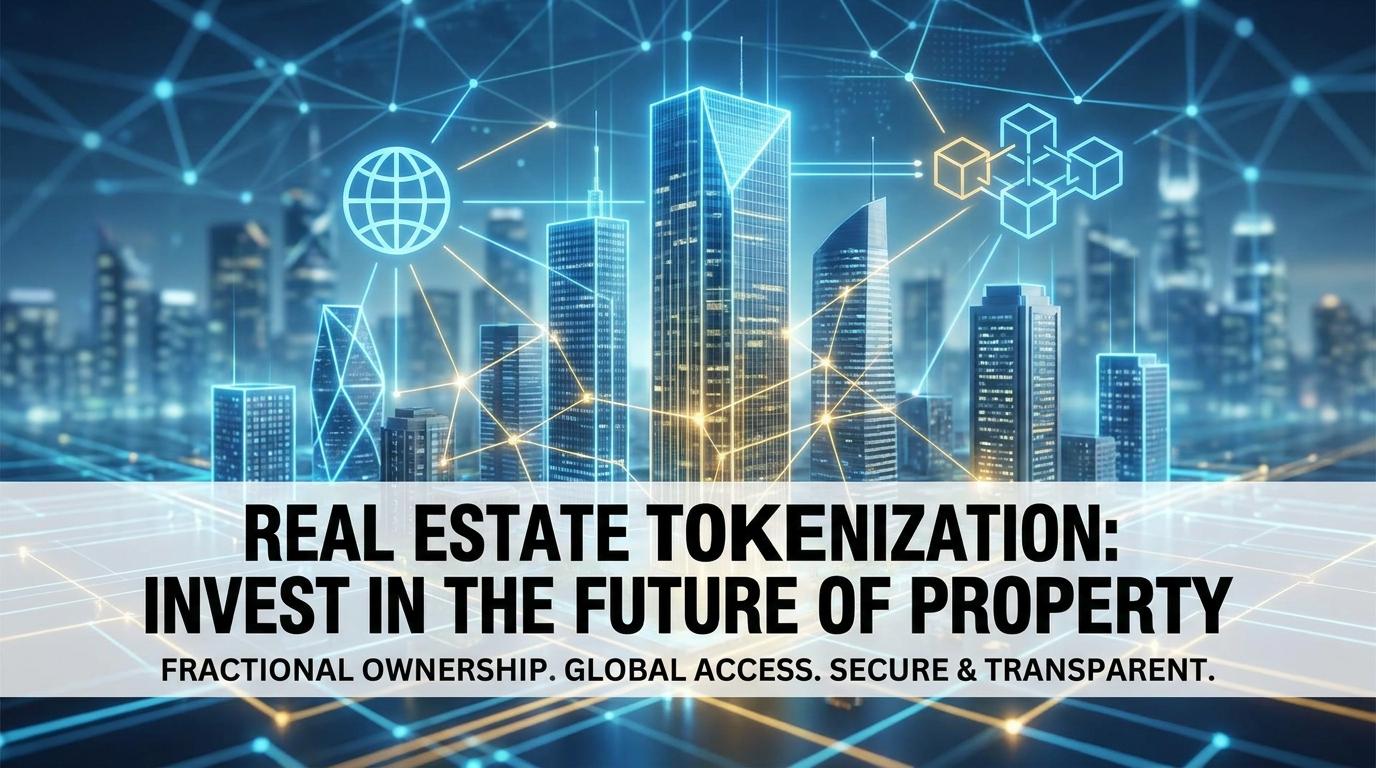
Real estate has long been one of the most trusted wealth-building assets, but it is also one of the hardest markets for ordinary investors to access efficiently. Buying property usually requires large upfront capital, long legal processes, bank financing, brokers, title verification, and years of patience before meaningful returns are realized. Even when investors own property, selling it quickly is difficult because real estate is naturally illiquid. Real estate tokenization attempts to solve these long-standing problems by using blockchain technology to divide property-linked ownership or economic rights into digital tokens that can be issued, transferred, and managed more efficiently.
In simple terms, tokenized real estate converts rights connected to a property into blockchain-based tokens. These tokens may represent fractional ownership in a legal entity that owns the property, a share of rental income, participation in a real estate fund, debt rights, or another legally structured financial interest. The idea is not that a building physically moves onto a blockchain. Instead, blockchain becomes the digital recordkeeping and transaction layer for rights that are still legally anchored in the real world. This is why tokenization is powerful but also complex: the technology can automate transfers and distributions, but the asset itself still depends on legal documents, property management, compliance, custody, and investor protections.
Real Estate Tokenization, Real Estate Tokenization Company, and Real Estate Tokenization Services
For investors and property owners, understanding Real Estate Tokenization begins with recognizing that it is both a financial structure and a technology system. A tokenized property project requires asset selection, legal structuring, investor onboarding, smart contract development, blockchain deployment, compliance controls, and post-launch asset administration. This is why many businesses work with a Real Estate Tokenization company rather than trying to build the entire system internally. The right partner helps transform a traditional property investment model into a compliant digital asset ecosystem.
Professional Real Estate Tokenization Services usually include token design, smart contract creation, investor dashboard development, wallet integration, KYC/AML verification, payment gateway setup, secondary market planning, and regulatory consultation support. These services matter because tokenization is not simply about creating tokens. A poorly designed token can fail legally, commercially, or technically. A well-designed tokenization project clearly defines what investors own, how income is distributed, how transfers are restricted, how disputes are handled, and how the token connects to the underlying real estate asset.
Why Real Estate Tokenization Is Gaining Momentum
The growing interest in tokenized real estate is part of a larger movement toward real-world asset tokenization. The World Economic Forum describes asset tokenization as creating a digital representation of a real-world asset on a distributed ledger, making it programmable, traceable, and transferable peer to peer. Deloitte has predicted that tokenized real estate could grow from less than US$0.3 trillion in 2024 to US$4 trillion by 2035, reflecting a projected compound annual growth rate of 27%.
The appeal is clear. Tokenization can lower investment entry barriers by allowing fractional participation. Instead of buying an entire apartment, office building, warehouse, or hotel, investors may be able to buy smaller tokenized interests. This can open real estate exposure to a wider investor base, including those who want diversification but cannot commit large capital to a single property. For asset owners and developers, tokenization can create new fundraising channels, attract global investors, and improve transparency around ownership and transactions.
However, investors should avoid the misconception that tokenization automatically makes real estate risk-free or instantly liquid. Recent academic research on real-world asset markets emphasizes that tokenization and liquidity are separate outcomes. A token may exist on-chain, but that does not guarantee active secondary trading, broad investor participation, or easy exits. For real estate investors, this distinction is essential. Tokenization can improve market design, but it cannot eliminate vacancy risk, falling property values, poor management, legal disputes, or weak demand.
Step 1: Selecting the Property or Real Estate Asset
The tokenization process begins with choosing the right asset. This could be a residential rental property, commercial building, hotel, land parcel, real estate debt instrument, development project, or diversified property fund. From an investor’s perspective, the quality of the underlying asset matters more than the novelty of the token. A weak property does not become a strong investment simply because it is tokenized.
Asset due diligence should examine location, title clarity, occupancy rate, rental yield, maintenance costs, debt obligations, insurance, tax liabilities, zoning restrictions, and long-term appreciation potential. For commercial properties, investors should also study tenant quality, lease terms, renewal schedules, and sector trends. A tokenized office building in a declining business district may carry more risk than a traditional property in a stronger location. The blockchain layer improves transparency and transferability, but the real estate fundamentals still drive returns.
Step 2: Creating the Legal Structure
The next step is legal structuring. In many projects, the property is held by a special purpose vehicle, limited liability company, trust, fund, or similar entity. Investors do not usually receive direct title to a fraction of the physical property. Instead, they receive tokens representing rights connected to the entity or investment contract. These rights may include profit sharing, rental income, redemption rights, voting rights, or economic exposure to the asset.
This legal structure is one of the most important parts of tokenized real estate. In the United States and many other jurisdictions, tokenized real estate interests often qualify as securities when investors contribute money with an expectation of profit based on the work of others. A 2026 SEC statement notes that tokenized securities may be issued by or on behalf of the original issuer or by third parties, and market participants must still consider federal securities law obligations. In practice, this means tokenized real estate offerings may need registration or an exemption, proper disclosures, transfer restrictions, and investor eligibility checks.
Step 3: Valuation and Token Design
After the property and legal wrapper are established, the issuer determines how tokens will be designed. Suppose a property is valued at $10 million and the issuer creates 1 million tokens. Each token may represent a proportional economic interest based on the structure. However, valuation is not always that simple. Developers must account for debt, reserves, legal expenses, management fees, taxes, platform fees, and future capital expenditure.
Token design also determines whether holders receive rental distributions, capital gains after a sale, governance rights, or only economic exposure. Some tokens may be designed for accredited investors only, while others may follow different regulatory pathways depending on jurisdiction. The token standard also matters. Security tokens often include compliance features such as whitelisting, transfer controls, lock-up periods, and identity verification. These restrictions can reduce free trading but are often necessary for legal compliance.
Step 4: Smart Contract Development and Blockchain Deployment
Once the legal and financial model is defined, developers create smart contracts that manage token issuance, ownership records, transfers, and automated functions. Smart contracts can enforce rules such as who is allowed to buy tokens, when tokens can be transferred, and how distributions are calculated. This is where blockchain adds operational efficiency. Instead of relying entirely on manual ledgers, ownership updates can be recorded transparently and securely on-chain.
The blockchain chosen for deployment should be evaluated carefully. Public blockchains can provide transparency and broad ecosystem access, while permissioned or private networks may offer stronger control for regulated institutions. Gas fees, security, scalability, wallet support, investor familiarity, and integration with exchanges or marketplaces all affect the investor experience. A strong tokenization platform should also include cybersecurity audits, smart contract testing, and contingency procedures in case of technical failures.
Step 5: Investor Onboarding and Compliance
Before investors purchase tokens, they typically complete onboarding. This may include identity verification, anti-money laundering checks, accreditation verification, tax documentation, wallet setup, and review of offering documents. For regulated securities, compliance is not optional. FINRA has emphasized that crypto-asset communications to retail customers must be fair, balanced, and provide a sound basis for evaluating the facts.
For investors, onboarding is a useful checkpoint. A serious platform should provide clear documents explaining the asset, issuer, rights, fees, risks, transfer limits, distribution policy, and exit options. If a project promotes guaranteed returns, instant liquidity, or vague ownership rights, investors should be cautious. Real estate tokenization is innovative, but it must still meet the standards of sound investment analysis.
Step 6: Token Sale and Capital Raising
Once compliance checks are complete, tokens are offered to eligible investors. The sale may happen through a private placement, security token offering, regulated crowdfunding model, or institutional distribution process. Investors pay using fiat currency, stablecoins, or other approved payment methods, depending on the platform and jurisdiction. After purchase, tokens are delivered to a digital wallet or held through a custodial account.
The famous St. Regis Aspen tokenization is often cited as an early example of real estate security tokenization in the United States. Cornell’s real estate analysis noted that Aspen Coins were priced at $1 per coin, with investors required to be accredited and make a minimum purchase of 10,000 tokens. This example shows both the promise and limitations of early tokenized real estate: it demonstrated fractional digital participation in a prestigious property, but access remained limited by securities rules and investor eligibility requirements.
Step 7: Income Distribution and Asset Management
After the token sale, the property must still be managed like any other real estate asset. Tenants must pay rent, maintenance must be handled, taxes must be filed, insurance must be maintained, and property managers must execute the business plan. Tokenization can make income distribution more efficient, but it cannot replace responsible asset management.
If the property generates rental income, net proceeds may be distributed to token holders after expenses. Smart contracts can automate parts of this process, but most projects still require off-chain accounting to calculate distributable income accurately. For example, rent may be collected through traditional banking channels, expenses may be paid off-chain, and only the final investor distribution may be reflected digitally. This hybrid structure is common because real estate remains rooted in legal and physical systems.
Step 8: Secondary Trading and Exit Options
One of the biggest promises of real estate tokenization is improved liquidity. In theory, investors could sell tokens more easily than selling a share in a private property deal. In practice, liquidity depends on whether there is a compliant secondary marketplace, enough buyer demand, clear pricing, and regulatory permission for transfers. Academic research on tokenized RWAs has found that many tokenized assets still experience limited trading activity and concentrated ownership, meaning investors should not assume they can exit at any time.
Exit options may include secondary market sales, issuer buybacks, property refinancing, or full property sale. Each method has different risks. Secondary markets can be thin, buybacks depend on issuer liquidity, refinancing depends on interest rates, and property sales depend on market conditions. Investors should review exit mechanics before buying, not after they need liquidity.
Benefits for Investors
The strongest investor benefits of real estate tokenization are accessibility, diversification, transparency, and operational efficiency. Fractional ownership can allow investors to participate in property opportunities with smaller amounts of capital. Blockchain records can improve visibility into ownership history and token transfers. Smart contracts can reduce administrative friction in distributions and compliance workflows. Tokenized models may also help investors diversify across multiple properties instead of concentrating capital in one asset.
RealT, for example, presents itself as a platform for fractional investment in tokenized real estate assets with blockchain-secured passive income. While models differ across platforms, the broader concept is similar: use blockchain rails to make property investment more divisible, programmable, and accessible.
Risks Investors Should Understand
The risks are equally important. Real estate tokenization involves property risk, legal risk, platform risk, smart contract risk, liquidity risk, valuation risk, and regulatory risk. A token does not guarantee that a property will remain occupied, appreciate in value, or distribute income consistently. If the legal structure is weak, token holders may have unclear claims. If the platform fails, investors may face operational disruption. If smart contracts contain vulnerabilities, ownership or transfer functions could be affected.
Investors should ask practical questions before participating: Who owns the property? What exactly does the token represent? Are investor rights documented clearly? Is the offering compliant? Are smart contracts audited? Who manages the property? What fees are charged? Is there a real secondary market? How are disputes resolved? These questions separate serious investment opportunities from speculative marketing.
Conclusion
Real estate tokenization is reshaping how investors access, own, and trade property-linked assets, but its success depends on more than blockchain technology alone. The strongest projects combine quality real estate, sound legal structuring, transparent financial design, compliant investor onboarding, secure smart contracts, and reliable asset management. For investors, tokenization offers a practical path toward fractional ownership and portfolio diversification, but careful due diligence remains essential. For businesses planning to launch a property tokenization platform, Blockchain App Factory provides best services by combining blockchain development expertise, tokenization strategy, smart contract implementation, and end-to-end platform support for real estate-focused digital asset ventures.
FAQs
1. What is real estate tokenization?
Real estate tokenization is the process of converting ownership rights, income rights, or investment interests linked to a property into blockchain-based digital tokens. These tokens can represent fractional participation in a real estate asset, fund, or legal entity.
2. Do token holders directly own the property?
Not always. In many cases, token holders own rights in a company, fund, or investment contract connected to the property rather than direct title to the physical asset. The exact rights depend on the legal structure and offering documents.
3. Is tokenized real estate regulated?
In many jurisdictions, yes. If tokens represent an investment with expected profits from the efforts of others, they may be treated as securities. This means issuers may need registration, exemptions, disclosures, investor checks, and transfer restrictions.
4. Can investors sell real estate tokens anytime?
Not necessarily. Although tokenization can improve transferability, actual liquidity depends on secondary market availability, regulatory restrictions, buyer demand, and platform rules. Investors should review exit options before buying.
5. What should investors check before buying tokenized real estate?
Investors should review the property fundamentals, legal structure, token rights, fees, compliance status, smart contract audits, platform credibility, income distribution method, and secondary trading options. Tokenization improves access, but due diligence remains essential.

 Bangla