


Material Innovation in Modern Automotive Lighting Tooling
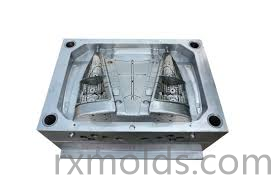
In the development of modern vehicle lighting systems, manufacturing accuracy and optical performance are closely connected, making the Automotive Lighting Mold Manufacturer an essential contributor to the creation of reliable and efficient lighting components. Automotive lighting products require highly precise structures that can support complex visual designs while maintaining consistent optical functions during long-term use. From material selection to cavity processing, every stage of mold development influences the final quality of lighting assemblies. Advanced engineering methods combine mechanical strength, thermal control, and surface precision to ensure that molds can meet the requirements of modern automotive production environments.
Material engineering is one of the most important aspects of automotive lighting mold development. Tool steel and alloy materials are carefully selected based on their ability to maintain stability during repeated injection molding processes. These materials need to provide excellent resistance against wear, thermal stress, and deformation while preserving accurate cavity structures. Surface treatment technologies, including polishing, hardening, and texture processing, improve mold durability and enhance optical transfer performance. A properly engineered cavity surface helps achieve clear light transmission and reduces potential visual defects in finished lighting components. The relationship between material properties and production conditions determines the long-term reliability of the tooling system.
Optical design is another critical factor in automotive lighting mold manufacturing. Modern vehicle lamps often include complex internal structures that control light distribution and visual effects. Mold surfaces must accurately reproduce these details to ensure uniform illumination and stable optical performance. Engineers use digital simulation methods to analyze light behavior before manufacturing begins, allowing them to optimize cavity design and reduce unnecessary adjustments. Micro-structured surfaces inside the mold can influence light diffusion patterns, helping create balanced illumination while maintaining the intended appearance of the final product.
Thermal management technology also plays an important role in maintaining production consistency. During injection molding, temperature changes can affect material flow, cooling behavior, and dimensional accuracy. Efficient cooling structures within the mold help maintain stable processing conditions and reduce variations between production cycles. Engineers carefully design cooling systems according to mold structure and material characteristics to achieve balanced heat distribution. This improves production efficiency while supporting consistent quality across large manufacturing volumes. Thermal stability is especially important for automotive lighting components because optical performance depends heavily on precise geometry.
Precision machining technologies provide the foundation for producing advanced lighting molds. CNC machining and electrical discharge machining allow manufacturers to create detailed cavity structures with high accuracy. These technologies support the production of complex automotive lamp designs while maintaining repeatability during mass production. Quality inspection methods, including three-dimensional measurement and surface analysis, ensure that each mold meets strict engineering requirements. Automated manufacturing systems further improve consistency by reducing processing variation and increasing production efficiency.
The maintenance and optimization of tooling systems are also important for long-term manufacturing performance. Regular evaluation of mold conditions helps identify potential wear issues and supports timely improvements. Data collected from production processes can be used to refine future designs and enhance operational stability. In this environment, the Automotive Lighting Mold Manufacturer plays a key role in supporting innovation, quality control, and efficient automotive lighting production. Taizhou Renxin Mould Co., Ltd. provides professional mold engineering capabilities and precision manufacturing solutions, with more technical information available at https://www.rxmolds.com/product/ supporting the continuous development of global automotive lighting applications.

 Bangla