


Reducing Supply Chain Risk in Nutraceuticals Through Better Ingredient Traceability
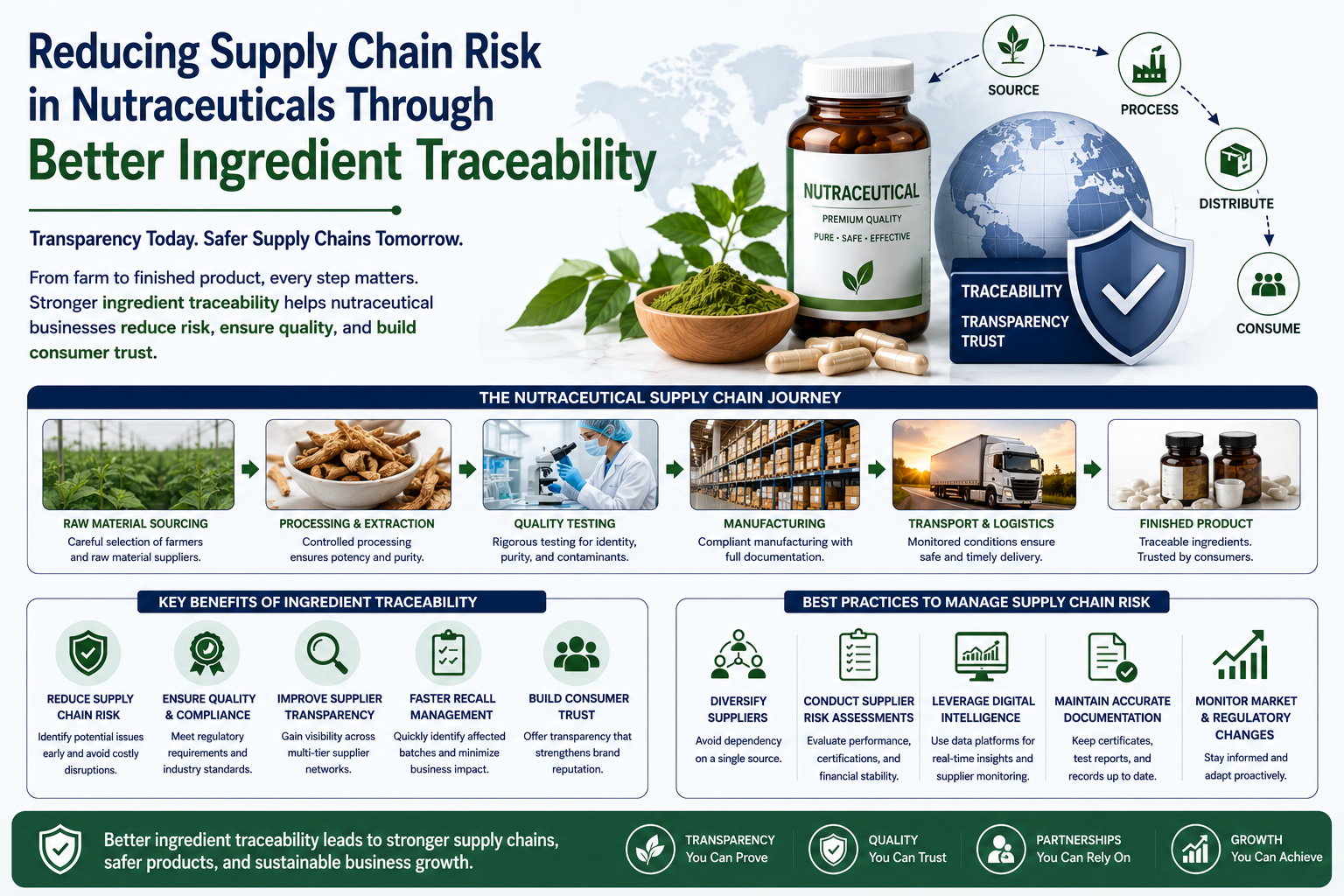
The nutraceutical industry depends on a complex global network of farmers, ingredient manufacturers, processors, distributors, and logistics providers. While this interconnected supply chain enables businesses to source high-quality ingredients from around the world, it also introduces significant risks. Delays, quality issues, regulatory changes, and supplier disruptions can affect production schedules, increase costs, and impact consumer trust.
As the industry continues to expand, managing supply chain risk nutraceutical companies face has become a strategic priority. One of the most effective ways to strengthen supply chain resilience is by improving ingredient traceability, giving businesses greater visibility into every stage of the sourcing journey.
Understanding Supply Chain Risk in the Nutraceutical Industry
Nutraceutical supply chains involve multiple stakeholders before an ingredient reaches the finished product. A disruption at any point—from cultivation and processing to transportation or manufacturing—can create ripple effects throughout the supply chain.
Common risks include:
- Raw material shortages
- Supplier disruptions
- Ingredient substitution
- Regulatory compliance challenges
- Product recalls
- Transportation delays
- Quality inconsistencies
Without complete visibility into ingredient origins and supplier networks, businesses may struggle to identify risks before they become costly problems.
Why Ingredient Traceability Matters
Ingredient traceability is the ability to track raw materials throughout the entire supply chain—from their origin to the finished product. It provides manufacturers with documented information about where ingredients come from, how they are processed, and who handled them at each stage.
An effective traceability system supports:
- Product authenticity
- Regulatory compliance
- Quality assurance
- Faster recall management
- Supplier transparency
- Consumer confidence
As customers increasingly expect transparency regarding product sourcing, traceability has become an important competitive advantage.
Improving Supplier Visibility
Many organizations have visibility only into their direct suppliers. However, disruptions often occur further upstream, where ingredient producers, processors, or secondary suppliers encounter unexpected challenges.
Improving supplier visibility enables businesses to:
- Verify ingredient origins
- Monitor supplier performance
- Evaluate certification status
- Assess supplier reliability
- Identify potential sourcing risks early
This deeper understanding helps procurement teams make informed decisions and reduce exposure to unexpected disruptions.
Strengthening Quality and Compliance
Quality and regulatory compliance are essential in the nutraceutical industry. Manufacturers must ensure that every ingredient meets strict specifications and complies with applicable standards.
Ingredient traceability makes it easier to:
- Validate product documentation
- Verify certifications
- Confirm ingredient identity
- Support quality audits
- Maintain regulatory records
Having detailed sourcing information readily available simplifies compliance while reducing the risk of costly errors.
Building a More Resilient Supply Chain
Managing supply chain risk nutraceutical businesses encounter requires more than responding to disruptions after they occur. Companies should adopt proactive strategies that improve operational resilience.
Best practices include:
- Diversifying supplier networks
- Establishing qualified backup suppliers
- Monitoring ingredient availability
- Conducting supplier risk assessments
- Using digital sourcing intelligence
- Maintaining accurate documentation
These measures help businesses continue operations even when unexpected supply chain challenges arise.
Leveraging Digital Business Intelligence
Modern technology has transformed the way organizations manage supplier relationships and sourcing decisions. Digital business intelligence platforms provide centralized access to supplier information, ingredient data, certifications, and market insights.
These platforms enable businesses to:
- Compare qualified suppliers
- Monitor market developments
- Track certification updates
- Identify sourcing alternatives
- Improve procurement planning
By replacing fragmented spreadsheets and manual research with connected intelligence, organizations gain greater visibility across the entire supply chain.
Enhancing Consumer Trust
Today's consumers want greater transparency about the products they purchase. They increasingly expect brands to demonstrate responsible sourcing, quality assurance, and regulatory compliance.
Businesses that invest in ingredient traceability can provide stronger evidence of product authenticity and quality. This not only reduces operational risk but also builds long-term trust with customers, retail partners, and regulatory authorities.
Transparent sourcing practices have become a valuable differentiator in an increasingly competitive nutraceutical market.
Looking Ahead
As global supply chains become more complex, businesses must continue investing in technologies and processes that improve visibility and reduce uncertainty. Better supplier collaboration, digital intelligence, and comprehensive traceability systems will play a central role in creating more resilient sourcing strategies.
Companies that proactively manage supply chain risk will be better prepared to respond to disruptions, protect product quality, and maintain consistent operations.
Final Thoughts
Managing supply chain risk nutraceutical organizations face requires a proactive approach built on transparency and reliable information. By strengthening ingredient traceability, businesses gain deeper visibility into supplier networks, improve compliance, reduce sourcing risks, and enhance product quality.
As the nutraceutical industry continues to evolve, organizations that prioritize traceability and data-driven supply chain management will be better positioned to adapt to market changes, strengthen customer confidence, and achieve sustainable long-term growth.

 Bangla