


Solid Wood Dining Table Buying Guide for Indian Homes
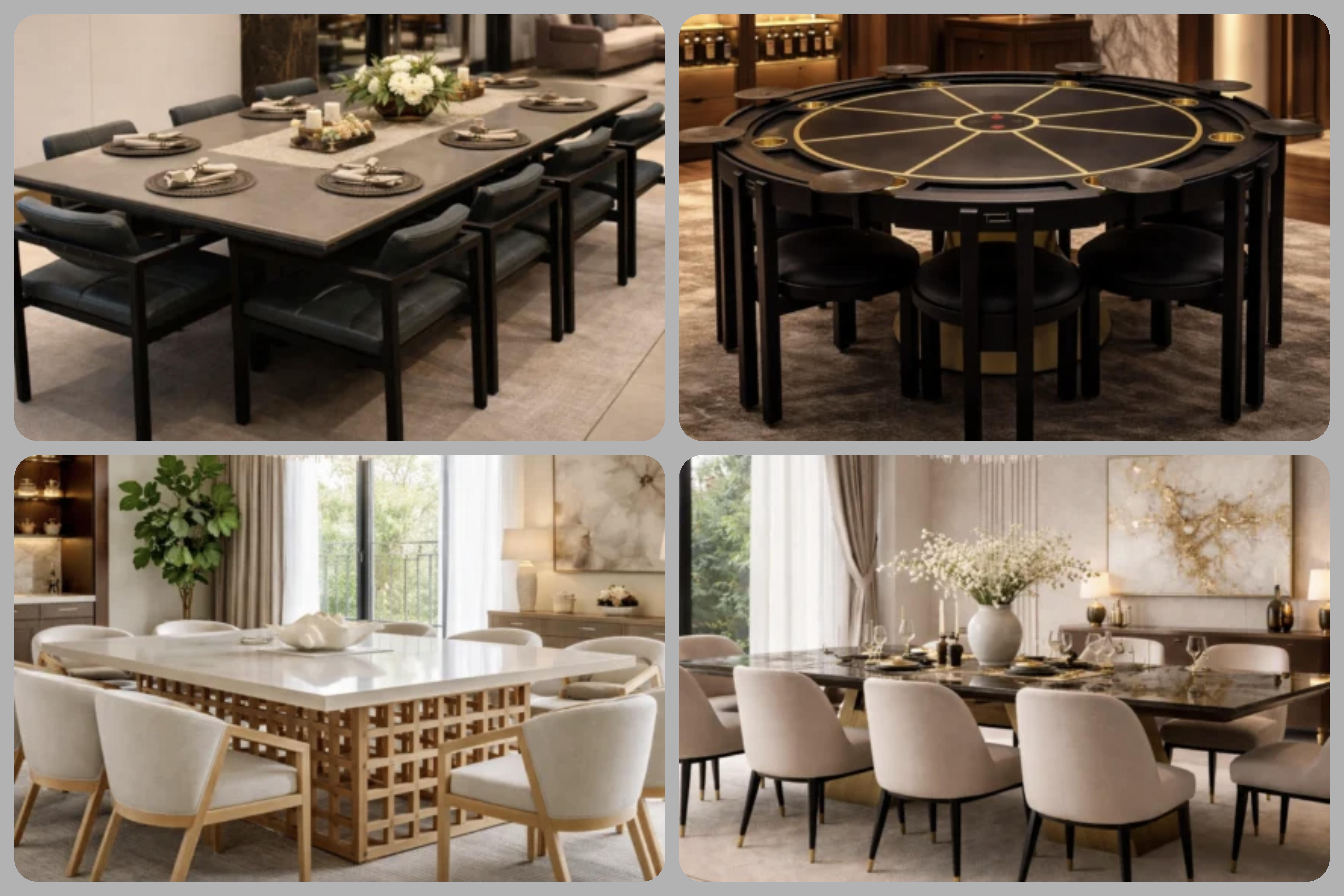
How to choose the right dining table size, wood type, and finish for your family and dining room.
A dining table is one of those purchases that rarely gets replaced; most households buy one and keep it for ten, fifteen, or even twenty years. That longevity is precisely why it is worth taking more care over the decision than most people do. Too often, the choice comes down to what looks good in a store photo, without factoring in real family size, actual dining room dimensions, or what daily life around the table will look like five years from now.
Here is a more grounded way to approach the decision.
Size for Your Real Family, Not an Ideal One
The most common mistake in dining table sizing is buying for the number of people who occasionally eat together rather than for those who eat together daily. A couple who hosts twelve people twice a year does not need a table that seats twelve permanently ,but they might benefit from an extendable table that seats six day-to-day and expands for larger occasions.
As a baseline, allow 24 inches of width per seated person along the table edge and at least 12 inches of table depth on each side for comfortable placement of plates and glasses. A four-seater table typically runs around 48 by 30 inches. A six-seater sits comfortably at 60 to 72 inches in length. An eight-seater needs at least 84 inches of length to avoid elbows constantly overlapping.
Leave at least 36 inches of clearance between the table edge and any wall or fixed furniture, so chairs can be pulled out and people can walk behind seated diners without squeezing.
Wood Species and What Each Actually Means for Daily Use
Sheesham, also called Indian rosewood, is one of the most widely used species for dining furniture in India, and for good reason: it is dense, hard, and resistant to warping, with visually rich grain patterns. It handles daily knocks and the occasional hot dish (with a trivet) well and takes stains and polishes cleanly. Mango wood is a more affordable solid wood option with a lighter, more varied grain that suits contemporary or farmhouse-style rooms. Teak is the most moisture- and weather-resistant of common Indian hardwoods, making it excellent for coastal homes or rooms that see high humidity, though it carries a premium price.
What to avoid: "natural wood" or "solid wood" as a label without the species specified can mean anything from quality hardwood to low-grade rubber wood or compressed sawdust board. Always ask for the specific species name before ordering.
Finish: Lacquer, Oil, or Wax
The table's finish determines both how it looks day-to-day and how much maintenance it needs. A polyurethane lacquer finish creates a hard, sealed surface that resists stains and moisture better than any other finish, making it practical for households with children or frequent entertaining. An oil finish penetrates the wood and gives a more natural, matte look, but needs periodic re-oiling every year or two to maintain protection. A wax finish is the softest looking and most natural, but requires the most maintenance and offers the least protection against spills.
For most Indian dining households, a properly applied lacquer finish is the most practical choice; for those who prefer a more natural wood aesthetic and are willing to maintain it, an oil finish is a fair trade-off.
Extendable Tables: Worth It in the Right Context
A butterfly leaf or fold-out extension mechanism adds versatility for households that entertain seasonally or regularly host extended family visits. The key thing to check on an extendable table is the joint quality where the extension meets the main table surface: a well-engineered table will sit perfectly flush with no noticeable height difference or gap at the join. A poorly engineered one will show a visible step or wobble at the leaf, which becomes more pronounced over time.
If you do opt for an extendable table, store the leaf standing upright in a dry location rather than flat under the table, where it can accumulate moisture and slightly warp out of alignment.
Table Base Style and Stability
The base design affects both visual style and practical stability. A four-leg table is the most stable configuration and the easiest to seat around with standard chairs. A pedestal or trestle base creates more legroom since there are no corner legs to work around, but the single central support needs to be built to a substantial standard to avoid wobble, especially for larger table sizes. Cross-base and hairpin-leg designs are visually lighter but suit smaller tables; at large sizes, these base styles can lack the rigidity needed for daily family use.
Before buying a table online, specifically check for reviews or product notes about stability, since base wobble is the most commonly cited quality issue in dining table purchases and is difficult to assess from photos alone.
A Reference Point for Build Quality and Finish
For a sense of what well-proportioned solid sheesham dining tables look like across different sizes and base styles, Twigs Direct's dining table collection is a useful comparison point on grain quality, finish options, and structural build, whether or not you buy from them directly.
Final Thought
A dining table that is sized right for the room, built from a named solid wood species, and finished appropriately for the household's daily use will outlast two or three rounds of cheaper alternatives. Take the extra time on the size calculation, ask for the specific wood species, and the table will still be a good decision a decade from now.

 Bangla